
By Mohamed Abdiqafar Haji Hussein
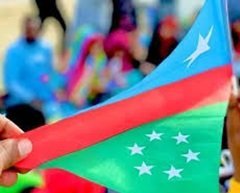
President Hassan Sheikh Mohamud and South West State President Abdiaziz Hassan Laftagareen have maintained a close political alliance. Notably, President Laftagareen stood alongside President Hassan during the constitutional change process, even as two key federal member states Puntland and Jubaland have rejected it. While President Hassan sought to advance his agenda, President Laftagareen did not oppose it. Until recently, he served as the deputy chairperson of President Hassan’s Union for Peace and Justice Party (JSP). Although their underlying priorities may have differed, they aligned in pursuing President Hassan’s objective of advancing the constitutional changes and pushing toward a one-person, one-vote election by any means necessary.
Nevertheless, just two months before the end of President Hassan’s term, Laftagareen appeared to shift course. If he intended to act, this presented a strategic window. With the president’s term nearing expiration, no election model had been agreed upon by all stakeholders. At the same time, Jubaland President Ahmed Madobe, who had conducted his own election and secured another five-year term, met with President Hassan at Villa Somalia, despite earlier federal objections to that process. And over time, Ahmed Madobe’s re-election appeared to gain broader acceptance, notwithstanding its procedural shortcomings.
Against this backdrop, Laftagareen seemingly calculated that President Hassan was increasingly focused on extending his own tenure, leaving limited room to intervene in South West’s internal affairs.
The opposition had also declared that they would no longer recognize President Hassan Sheikh’s presidency after May 15, 2026. Having this in mind, Laftagareen took a bold step, moving to hold his own election in defiance of the president’s program. In addressing the public, Laftagareen explained the reasoning behind his decision. He argued that there was no consensus among the federal member states on the proposed electoral framework, and that a one-person, one-vote system was not feasible under the current circumstances.
He also claimed that President Hassan was the one who asked him to delay the South West election. Laftagareen waited, trying to see what would happen. However, he later realized he could not wait any longer since the president’s term was close to expiring. The South West constitution required him to hold an election, leading him to conclude that this was the right time. As a result, he was re-elected for another term.
However, many people did not welcome the election Laftagareen held because it was not conducted properly. He refused presidential candidates and other politicians from South West entry into Baidoa. Additionally, a plane carrying Aden Madobe, the Speaker of Parliament, who said he wanted to mediate the issue, was reportedly returned to Mogadishu.
Laftagareen appointed his close ally—reportedly his cameraman—to lead the election committees. Within 72 hours, 78 parliamentarians were selected, along with a speaker of parliament. There was said to be only one other candidate, reportedly one of his ministers, running against him. To those familiar with Somali politics, it was clear that the election could not be accepted as legitimate.
President Hassan Sheikh immediately rejected that election and made his own moves. He concluded that, if Laftagareen remained president of South West, it would weaken his own position, as three states and the majority of presidential candidates would then be against his program.
Most stakeholders from South West who were in Mogadishu encouraged the president to take action. The newly appointed army commander was someone the president believed could take control of Baidoa. Somali forces had new helicopters and drones ready to be used. Some district leaders had already publicly stated that they would cooperate with the federal government.
The Ethiopian forces in the area, whom Laftagareen might have relied on, were reportedly neutralized through prior understanding with the federal government. With all this in mind, the president made his move. He took Baidoa without any reported casualties, and Laftagareen left the city, effectively ending his presidency.
After Laftagareen left Baidoa, many Somali people expected President Hassan Sheikh to do the right thing. There was hope that he would allow the people of South West to decide their own future. To avoid a power vacuum, the existing administration could have organized consultations among all stakeholders to agree on an election model based on the South West constitution.
The people of South West could have accepted the outcome of such a process. It would have allowed them to build their own government from the bottom up. Genuine reconciliation could have followed, creating an opportunity for the president to do the same with the opposition—sitting down together to agree on a level playing field for elections.
But none of that happened.
Instead, the government continued implementing its agenda in South West, using it as a testing ground. Prime Minister Hamza Abdi Barre issued a statement appointing his deputy to lead the South West administration. The people of South West were not given the opportunity to elect their own leaders.
They had been told that a one-person, one-vote election would be held, allowing them to choose their leaders. But, in reality, that will likely not be the case. Under the system being planned, people will vote for parties, not individuals. The party that wins will then select who will lead.
In this case, if President Hassan’s party wins, only someone from his party could lead South West. This is the agenda behind the one-person, one-vote system that President Hassan is proposing. In principle, this system is not very different from the process Laftagareen used since the final decision still rests in limited hands. The only difference is that one carries a better name—direct election. The broader goal appears to be to test this model in South West and later apply it to other states.
But President Hassan Sheikh seems to be forgetting what he has long argued—that Somalia is different from other countries because its government collapsed and must be rebuilt from the bottom up. One person’s vision cannot define the state. The only way forward is through consensus among all stakeholders.
Somali people experienced a dictatorship that lasted 21 years, and they understand the consequences of centralized rule. The president himself once accused his predecessor, Mohamed Abdullahi Farmaajo, of trying to remain in power after his term expired, even with parliamentary approval. One person can dictate, but the question remains: for how long, and with what outcome? Yet now, the president appears to be moving in the same direction he once criticized.
For Somalia to move forward, the facts on the ground must be considered. President Hassan Sheikh’s term is set to expire on May 15, 2026. After that date, many people will question his legitimacy if there is no agreed extension. The 2012 provisional constitution, under which he was elected, still requires completion through a process accepted by all stakeholders.
His mandate was to finalize that constitution into one agreed upon by all. But now, three federal states and most presidential candidates have rejected that process, arguing they were not included. It has also been reported that a quorum was lacking when the constitution was passed. Under such conditions, even if the president remains in power after May 15, 2026, the question of his legitimacy will remain.
With that in mind, the president faces a choice. He can continue with a “my way or the highway” approach, which many believe will not work, or he can sit down with all stakeholders and agree upon an election model that most candidates accept. As expected, no one wants a repeat of the 2022 election, which had many widely acknowledged flaws. Every election Somalia has held since 2012 has introduced improvements to address past problems. This upcoming election should be no different. For example, in 2022, there were reports that 101 delegates meant to elect one parliamentarian ended up voting for multiple seats within a short time. With better voter registration systems today, such issues can be addressed.
There are many reforms that can be agreed upon—if there is genuine dialogue. The goal should be to create an election process that is transparent, fair, and accepted by all stakeholders. Whoever is elected can then move forward with finalizing a constitution that all Somalis can support.
Mohamed Abdiqafar Haji Hussein
Email: mohabdhus@gmail.com
Atlanta , Georgia.