
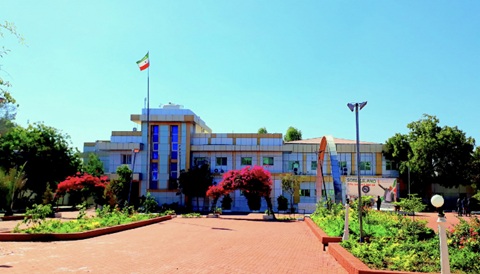
By publishing detailed annual crime statistics, Somaliland’s police have demonstrated a degree of institutional transparency and public accountability that remains conspicuously absent in Somalia’s Federal Government. The contrast goes beyond policing, exposing deeper differences in governance, professionalism and political legitimacy.
Hargeisa (WDN) — Somaliland’s Police Force has released its annual crime report for 2026, providing a detailed account of criminal incidents, arrests and road accidents recorded across the territory. Presented during celebrations marking the 33rd anniversary of the establishment of the police force, the report offers an important public record of the security challenges facing Somaliland.
According to the report, police registered 22,380 cases of various crimes during the year, including 82 murder cases involving 88 suspects. Police officials said 83 suspects had been apprehended, while four remained at large.
The report also recorded 254 rape cases reported to the police. Following investigations, 82 cases were found to lack sufficient evidence, according to the police account. Some of the cases have proceeded through Somaliland’s courts.
Road accidents represented another major concern. Police recorded 5,893 accidents during 2026, resulting in 149 deaths and injuries to 4,375 people.
The publication of these figures deserves recognition. The significance of the report is not that it portrays Somaliland as free from crime or security challenges. Rather, it demonstrates the willingness of a public institution to document those challenges, present figures to the public and provide an account of its work. Transparency begins with acknowledging problems, not concealing them.
A telling contrast with Somalia’s Federal Government
The report also invites a broader comparison with Somalia’s Federal Government, whose institutional weaknesses have repeatedly undermined public confidence in governance. More than two decades after the establishment of the federal transitional institutions, Somalia continues to struggle to build a professional, accountable and dependable public administration capable of consistently reporting on its performance.
The problem is not simply the absence of reports. It reflects a deeper institutional deficit: weak accountability mechanisms, corruption, political interference and public appointments too often influenced by clan considerations rather than professional qualifications, competence and the principle of placing the right person in the right position.
Somaliland’s experience offers a contrasting institutional model. Its political system has, over many years, developed around electoral competition and the principle of one person, one vote, with successive elections providing a basis for determining political authority and, when voters choose, transferring power. This has helped make political transitions more predictable and given electoral outcomes a measure of institutional credibility.
Somalia, by contrast, remains trapped in recurring disputes over constitutional arrangements, electoral legitimacy and the rules governing political succession. President Hassan Sheikh Mohamud’s administration has faced serious criticism over its handling of constitutional changes and the electoral process, including concerns about the independence and credibility of the election arrangements established under its authority.
The central issue is the legitimacy of political authority. A government cannot strengthen democratic institutions by changing constitutional rules without broad political agreement or by concentrating control over the electoral process in institutions whose independence is disputed. Political authority must rest on an agreed constitutional framework, credible elections and the consent of the people.
Institutions matter more than political declarations
The contrast is particularly important in the security sector. Somalia has depended on foreign military forces and international security assistance for much of the past two decades. Despite enormous international investment and prolonged security support, the Federal Government has struggled to establish fully self-sustaining national security institutions capable of independently guaranteeing the country’s security.
This dependence cannot be explained by security threats alone. Political fragmentation, weak public institutions, corruption and the absence of consistent accountability have all complicated efforts to build effective national forces. A state cannot develop a dependable security system without professional leadership, reliable financing, institutional discipline and a political order that commands public confidence.
Somaliland’s police report does not, by itself, prove that every institution in Somaliland is effective or free from shortcomings. Its importance lies in demonstrating a willingness to publish institutional performance data and expose the scale of the challenges confronting the authorities. That is a basic but essential feature of responsible governance.
Somalia’s Federal Government should take note. Rather than relying on political rhetoric, constitutional maneuvers and external security guarantees, it must focus on building institutions that serve the public, operate professionally and are accountable for their performance. Public appointments should be based on merit, not clan calculations; security personnel should receive dependable salaries; and government institutions should regularly publish credible reports on their activities and results.
Ultimately, the strength of a government is measured not by the authority its leaders claim, but by the institutions they build and the services those institutions deliver. Somaliland’s latest police report is a welcome example of public accountability. It highlights the work of an institution willing to place information before the public, while underscoring the much larger task facing Somalia: building a state in which professionalism, transparency, constitutional legitimacy and public service take precedence over political and clan interests.
WardheerNews
Leave a Reply