
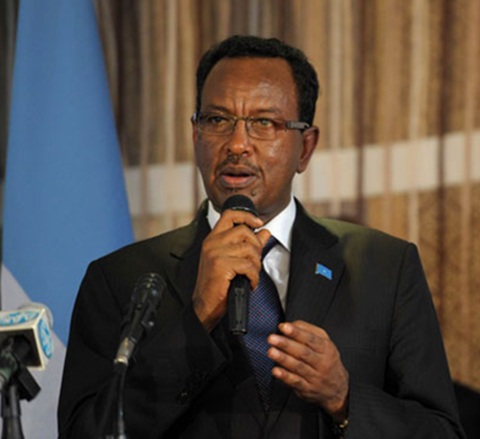
Abdi Farah Shirdon, the former prime minisiter of Somalia, says a negotiated constitution, genuine reconciliation, lasting security, national unity and effective state institutions are essential to rebuilding Somalia’s Third Republic as disputes over elections and constitutional changes deepen.
Mogadishu – (WDN) – Presidential candidate and former Somali Prime Minister Abdi Farah Shirdon, widely known as Saacid, has outlined five priorities he believes are essential to rescuing and rebuilding Somalia’s Third Republic, as the country faces an increasingly serious political impasse over its constitutional future, electoral arrangements and the relationship between the Federal Government and opposition leaders.
In a statement published on X, Shirdon identified five interrelated principles that he considers essential to rebuilding the Somali state:
1. A constitution based on consensus: A constitutional framework reached through broad political agreement and inclusive consultation, rather than unilateral decisions imposed by one political side.
2. Genuine national reconciliation: A sustained effort to rebuild political trust, address grievances and restore cohesion among Somalia’s political leaders and communities.
3. Sustainable security: A stable security environment supported by capable national forces and institutions able to protect the country and its population.
4. National unity: A renewed commitment to preserving Somalia’s territorial integrity, political cohesion and shared national interests.
5. Strong and effective state institutions: Government institutions with the authority, independence and capacity to perform their constitutional responsibilities transparently and effectively.
“These five principles together form the foundation of a functioning Somali state,” Shirdon said.
A Political Crisis Beyond Constitutional Disagreements
Shirdon’s intervention comes at a particularly sensitive moment for Somalia. Political tensions have intensified over constitutional amendments, the proposed electoral framework and the legitimacy of the country’s political transition. Disagreements between the Federal Government and opposition leaders have deepened, raising concerns about the absence of a broadly accepted political settlement.
The dispute is no longer simply about the wording of constitutional provisions or the technical design of an electoral system. At its core is a fundamental question: who has the political legitimacy to determine Somalia’s future, and through what process should that authority be exercised?
A constitution that lacks broad political acceptance risks becoming a source of division rather than the foundation of national unity. Similarly, electoral arrangements that are contested by major political stakeholders could deepen mistrust, undermine institutional legitimacy and further complicate relations between the Federal Government and Federal Member States.
The consequences extend beyond political competition. Somalia’s ability to address its security challenges, strengthen public institutions and maintain national cohesion depends heavily on cooperation among its political leaders. Prolonged confrontation risks diverting attention and resources from urgent national priorities while creating opportunities for extremist groups to exploit political fragmentation.
Shirdon’s five principles therefore amount to more than a general appeal for reform. They highlight the fundamental conditions required for Somalia to move beyond recurring political crises and build a state whose institutions command public confidence and whose constitutional order rests on genuine national agreement.
Somalia cannot build a stable republic on a contested constitution, political exclusion and fractured national leadership. The immediate challenge is not simply to reach an agreement on elections or constitutional amendments, but to restore the political trust and national consensus without which neither can command lasting legitimacy.
WardheerNews
Leave a Reply