
By Abdirashid Hashi
I do not usually feel compelled to respond to opinions I disagree with. But when Dayib Sh. Ahmed, a friend whose views I respect, shared his recent article published on WardheerNews, Turkey Came to Save Somalia. Now, It Owns It, I took it as an invitation to engage.
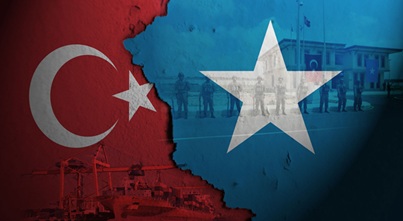
It was not the provocative title alone that caught my attention. I was struck by the sweeping conclusions drawn from facts that deserve a different interpretation. His portrayal of Türkiye’s engagement as a form of colonial domination overlooks much of what that partnership has meant for Somalia and fails to place its commercial interests within the broader relationship between our two countries.
I have followed Turkish-Somali relations as both a participant and an observer. As Director of Communications in President Sheikh Sharif Sheikh Ahmed’s office, I attended meetings between senior Somali and Turkish officials, including those between Somalia’s president and Türkiye’s president, prime minister and foreign minister. Subsequently, as a cabinet minister, I had a front-row seat as relations developed and deepened. In 2012, after leaving government service, I joined the International Crisis Group as an Africa analyst and wrote Assessing Turkey’s Role in Somalia, one of the earliest in-depth studies of the emerging relationship.
Dayib argues that humanitarian solidarity has become economic exploitation, military dependence and geopolitical domination. He presents Turkish companies’ operation of Mogadishu’s port and airport, military cooperation and petroleum agreements as evidence of a “modern colonial reality,” a “Faustian bargain” and “plunder.” A Faustian bargain, in ordinary language, is a deal with the devil: surrendering something of fundamental value for material gain.
These are serious accusations that deserve examination against the facts, the history of the relationship and what Somalia has actually gained.
My starting point is simple: countries pursue their interests. Türkiye does, as do the United States, China, Ethiopia and the UAE. Somalia has done the same. The question is not whether Türkiye benefits, but whether Somalia benefits too, and whether the relationship advances our national interests.
Had Dayib confined his argument to the need for better agreements, transparency and responsible management, I would have had little reason to respond. I have made those arguments myself, as far back as 2012 and as recently as 2026. Instead, he portrays Türkiye’s engagement itself as predatory.
I believe Somalia is overwhelmingly a net beneficiary of this partnership. The record explains why.
What Türkiye Actually Did for Somalia
Remember Somalia in 2011. Mogadishu was emerging from devastating conflict. Al-Shabaab had controlled much of the capital. Famine was killing our most vulnerable citizens, while much of the international diplomatic and humanitarian machinery serving Somalia operated from Nairobi.
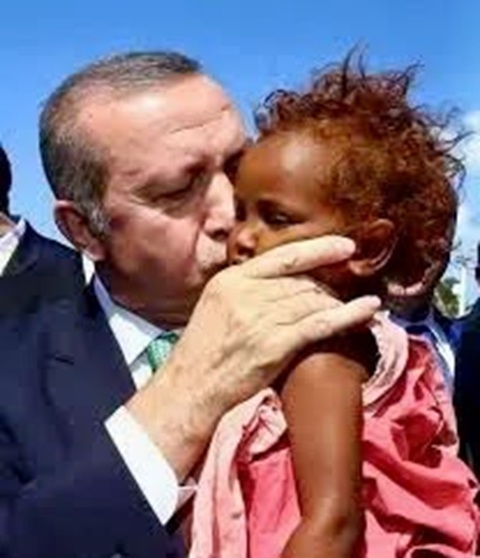
Then-Prime Minister Recep Tayyip Erdoğan arrived in Mogadishu with his family, ministers, humanitarian organizations and businesspeople. At a time when Somalia was widely regarded as too dangerous to visit, it was an extraordinary gesture and a turning point. His visit demonstrated that outsiders could establish a meaningful presence in Mogadishu and that Somalis deserved solidarity, dignity and a helping hand.
More importantly, action followed. Türkiye reopened its embassy and subsequently built one of its largest diplomatic missions in Mogadishu. Turkish Airlines connected Somalia to international aviation networks. The Turkish state and humanitarian organizations rehabilitated hospitals, schools, roads and other infrastructure. The Digfeer Hospital, now the Erdoğan Hospital, became a major medical facility, while scholarships opened educational opportunities for thousands of Somali students.
In my 2012 Crisis Group study, Hassan Sheikh Mohamud, then a civil society leader, described the Turkish intervention as a “paradigm shift.” He contrasted assistance delivered through distant agencies with Turkish personnel “driving ambulances and water trucks” and delivering food themselves.
Then-Prime Minister Abdiweli Mohamed Ali Gaas recalled a Western diplomat asking: “What do the Turks want?”
Abdiweli told me Türkiye had offered more scholarships in one year than the diplomat’s country had provided Somalia in scholarships, seminars, workshops and symposiums since independence in 1960. He then exclaimed: “And they are asking me what the Turks want!”
The relationship expanded into security cooperation. Türkiye trained thousands of Somali soldiers and police officers, including Gorgor and Haramcad personnel, contributed to salaries, as it continues to do today, supplied military equipment, including drones and armoured vehicles, and established TURKSOM, one of its largest overseas military training facilities. It also provided direct budgetary support, including monthly payments of millions of dollars beginning in 2013.
By July 2022, Türkiye reported that its humanitarian and development assistance to Somalia had exceeded $1 billion since 2011. Its wider engagement also involves military training, equipment, an extensive diplomatic presence and, more recently, petroleum exploration and associated naval deployments. The total commitment is substantial, although no consolidated figure covering all these activities is publicly available.
What precisely is colonial about supporting a hospital that treats Somalis, educating our students or training an army Somalia desperately needs? How does helping a country rebuild its institutions establish that Türkiye owns it?
Commercial Agreements in Perspective
Dayib presents Turkish companies’ operation of Mogadishu’s seaport and airport as evidence of Ankara’s control over Somalia’s economic gateways.
There are legitimate questions about these concessions, their financial reporting and government oversight. Somalia’s Auditor General has raised concerns about the availability of independently audited financial statements and outstanding concession payments. Such findings should be addressed, not dismissed.
The Somali government has a responsibility to insist on proper audits, transparent reporting and the best possible commercial terms. Agreements should be reviewed by qualified legal, financial and technical experts, and better terms negotiated wherever possible. But imperfect commercial agreements do not establish that Türkiye has colonized Somalia.
Some perspective is necessary. Türkiye’s economy was worth approximately $1.6 trillion in 2025, larger than the combined economies of Sweden, Finland and Denmark. Even if Albayrak and Favori, the companies operating the port and airport, together earned say annual profits of $30 million from Somalia (and they probably earned less) that would be a minuscule sum relative to the Turkish economy. This does not excuse unfair terms, but it puts these commercial interests in perspective.
Petroleum Exploration
Dayib also cites reports of a 90 or 95 percent allocation to Türkiye as evidence that Somalia has surrendered its natural wealth. The crucial distinction is that the reported petroleum provision concerns cost recovery, allowing Türkiye to recover its investment from petroleum revenues before profits are shared.
I have criticized that ratio myself, suggesting an 85–15 arrangement instead. But cost recovery is not ownership, and a cost-recovery ceiling should not be mistaken for the permanent division of petroleum revenues. A high ceiling still deserves scrutiny because it can limit Somalia’s early receipts.
Deep offshore exploration is expensive and risky. Companies and governments can spend hundreds of millions of dollars on surveys, drilling, vessels and technical operations without finding commercially recoverable petroleum. If exploration fails, Somalia does not automatically become liable to reimburse those expenditures. The allocation of risk and recoverable costs depends on the agreement.
For decades, political instability, insecurity and uncertain regulation have discouraged sustained petroleum exploration in Somalia. Türkiye is undertaking exploration off our coast, committing specialized vessels, technical personnel and naval protection. That matters and is costly.
After I publicly criticized the 90 percent provision, a Somali professor in Canada specializing in petroleum engineering and geology offered another perspective. Türkiye’s greatest contribution, he told me, might be establishing whether Somalia possesses commercially recoverable reserves. A successful discovery could attract other major companies and strengthen Somalia’s negotiating position.
Yes, we should scrutinize cost recovery, profit sharing, taxation, environmental safeguards and the rights of future Somali governments and citizens. But we should also recognize the value of an investor willing to undertake exploration where others have hesitated.
Somalia’s Real Vulnerabilities
Somalia faces far more immediate threats to its sovereignty and survival than the tiny Turkish commercial investment in Mogadishu. Without digressing Türkiye is the second biggest investor in Ethiopia wirh more than 200 Turkish companies on the ground, with investments amounting to 2.5 billion dollars.
Al-Shabaab remains a formidable threat. Our security institutions are weak and heavily dependent on external assistance. International financial and military support is diminishing, while political divisions, armed confrontations and regional rivalries are deepening. Constitutional and electoral disputes remain unresolved, and humanitarian challenges continue to worsen the plight of an already vulnerable population.
These are the realities against which our foreign relationships must be judged. Türkiye did not create these vulnerabilities. They are the product of decades of our own mistakes and misfortunes. Türkiye, on the contrary, has helped us rebuild a state that had all but collapsed.
The relationship has also had an important diplomatic dimension. Following Ethiopia’s January 2024 memorandum with Somaliland, which threatened Somalia’s sovereignty and territorial integrity, Türkiye concluded a defence and maritime cooperation agreement with Somalia. Ankara subsequently mediated between Somalia and Ethiopia, helping to defuse the dispute. Ethiopia stepped back from its earlier approach to Somaliland, although its pursuit of access to the sea continues, with attention increasingly turning towards Assab in Eritrea.
Recognizing the value of Türkiye’s support and solidarity is therefore not an act of subservience. It advances Somalia’s national interests. No country or individual wants an unreliable partner who takes support for granted, responds to goodwill with accusations and refuses to accept responsibility for its own failures.
Protecting a Valuable Partnership
None of this places Türkiye’s policies beyond criticism. Dayib and others have raised legitimate concerns about commercial agreements, transparency, military cooperation and Ankara’s close identification with the incumbent Somali government. I share some of these concerns.
Türkiye must ensure that its military assistance serves Somalia’s national security, not domestic political interests. Some policies it has pursued or tolerated, and some positions amplified by its media, may already have backfired. Its recent mediation efforts between President Hassan Sheikh Mohamud and the opposition, together with the change of ambassador, may signal a welcome reassessment. Türkiye must remember that its greatest asset in Somalia is the trust and goodwill of the Somali people, not its relationship with any particular individual or administration.
Turkish engagement has been among the most consequential positive developments for Somalia in recent decades. The presence of Turkish-operated F-16 fighter jets in Mogadishu, alongside Bayraktar drones and other military assets, sends a powerful message in a region where Somalia has long been vulnerable to external interference. Of course, this is no substitute for building Somalia’s own defence capabilities, but it provides a measure of deterrence that should not be underestimated.
Without Türkiye’s engagement, Somalia would have been more exposed to Al-Shabaab, external meddling and threats to its territorial integrity. That makes Türkiye a force for good in Somalia, and one whose friendship I, for one, deeply appreciate.
Abdirashid Hashi
⸻
Abdirashid Hashi is a former minister in Somalia’s Federal Government and a political analyst and commentator. He can be followed on X (formerly Twitter) at @AnalystSomalia.