
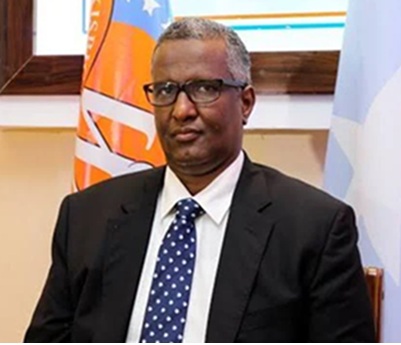
The Wadajir Party leader says the president’s latest address focused on preserving his hold on office while overlooking the country’s mounting security, economic and humanitarian crises.
Mogadishu (WDN)- Somalia’s political crisis is deepening as opposition leaders increasingly challenge the direction in which President Hassan Sheikh is steering the country. Opposition leader and MP Abdirahman Abdishakur sharply criticized the president’s address on Monday night, accusing him of prioritizing his political survival over the urgent challenges the nation is facing.
Abdishakur, leader of the Wadajir Party, argued that the president’s speech focused largely on remaining in power while giving insufficient attention to the hardships confronting ordinary Somalis. He cited flooding, rising prices, fighting in South West State, the deteriorating situation in Hiiraan and the continuing threat posed by Al-Shabaab.
His criticism comes amid growing political divisions over Somalia’s constitutional future, electoral arrangements and the increasingly strained relationship between the federal government and key political stakeholders.
Dialogue without compromise?
Abdishakur also accused Hassan Sheikh of confusing consultation with genuine political negotiations. He argued that Somalia needs more than meetings and discussions: it requires substantive negotiations in which opposing sides make concessions and work towards an inclusive political agreement.
The distinction is significant at a time when disputes over constitutional changes, elections and the distribution of political authority have deepened divisions between Mogadishu, federal member states and opposition figures.
Consultation, Abdishakur’s argument suggests, is insufficient if the government has already decided its course and expects other parties merely to endorse it. Genuine negotiations require a willingness to reconsider positions, accommodate competing interests and reach an agreement that commands broad national support.
Without such a settlement, political dialogue risks becoming a procedural exercise while the underlying crisis continues to intensify.
National interest versus the struggle for power
The Wadajir leader called on Somali politicians and citizens to work towards a national agreement, warning against sacrificing the country’s interests for the sake of retaining the presidency.
He framed the dispute as a fundamental question about political responsibility and the nature of public office: presidential power is temporary, he argued, but the nation belongs to successive generations of Somalis.
The message comes as Somalia faces overlapping political, security and humanitarian pressures. While leaders remain locked in disputes over power and the electoral process, citizens continue to confront insecurity, economic hardship and the consequences of natural disasters.
Abdishakur’s intervention reflects the opposition’s broader concern that the struggle over who governs Somalia is overshadowing the more urgent question of how the country should be governed.
The challenge now is whether the president and his opponents can translate calls for national reconciliation into a negotiated settlement. Without compromise, the political confrontation risks further weakening confidence in federal institutions at a time when national unity and coordinated action are particularly important.
For Abdishakur, the principle is clear: the presidency is a temporary responsibility, not an entitlement to be defended at the expense of the nation.
WardheerNews