
By Ahmed A. Yusuf
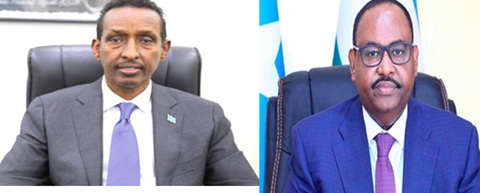
Former Somali Foreign Minister Ahmed Isse Awad has challenged Puntland President Said Abdullahi Deni’s address to the 59th session of the Puntland House of Representatives, arguing that it lacked reliable data and failed to acknowledge the region’s economic and political difficulties. But in seeking to expose what he considers omissions, Awad may have applied the wrong standard to the wrong occasion.
Although there are legitimate concerns about Puntland President Said Deni’s leadership failures, mismanagement and missed opportunities, Awad has failed to substantiate his allegations with credible evidence or compelling arguments, as this article highlights.
A presidential address opening a parliamentary session is not a technical report prepared by a director-general of a ministry of commerce, public works or finance. Such officials are expected to provide detailed statistics, expenditure breakdowns, implementation schedules and sector-specific performance indicators. A president addressing parliament has a broader responsibility: to explain the state’s direction, assess its principal achievements and challenges, articulate security and political priorities, and set out a vision for the future.
That does not exempt a president from accountability. Nor does it mean that claims of progress should escape scrutiny. But a comprehensive political address should not be judged as though it were an audited ministry report. The appropriate question is whether the president offered a credible account of Puntland’s condition, identified the challenges facing the administration and outlined a meaningful course of action.
Awad’s response raises some legitimate questions, particularly about public finances and the regular payment of salaries. Yet his criticism requires a more careful assessment of context, evidence and the responsibilities of the officeholder delivering the speech.
A presidential address is not a security inventory
One of Awad’s objections was that Deni failed to disclose the number of security personnel recruited and trained under his administration. That criticism overlooks an important consideration: detailed information about the size, deployment, organisation and capabilities of security forces can be sensitive government information.
Security establishments around the world do not routinely disclose every operational detail simply to demonstrate progress. Such information may expose capabilities, reveal weaknesses or provide adversaries with intelligence. Puntland, which continues to confront serious security threats, has understandable reasons to exercise discretion.
The president can be expected to report on strategic objectives, operational achievements and the general direction of security policy without publishing a detailed inventory of personnel. Parliament may have legitimate oversight responsibilities, but sensitive figures can be examined through appropriate confidential procedures rather than necessarily disclosed in a public address.
Awad’s demand for troop numbers is therefore not, by itself, evidence that Deni’s account was inadequate. The more useful questions are whether the security institutions are functioning, whether threats are being contained, whether public safety has improved and whether government resources are being used responsibly.
Those questions can be examined without turning a presidential speech into a public disclosure of sensitive security information.
Puntland’s infrastructure record deserves recognition
Perhaps the most striking weakness in Awad’s criticism is the way it approaches Puntland’s infrastructure achievements.
He argues that roads in Garowe were financed through World Bank funding and that the Ceel Daahir road project began under former president Abdiweli Mohamed Ali Gaas. His broader implication is that Deni should not present infrastructure development as an achievement of his administration if projects were initiated earlier or funded through external sources and public charges. This argument confuses the origin of a project with the responsibility for delivering it.
Infrastructure development is rarely the work of a single administration. Roads can take years to plan, finance, construct and maintain. A predecessor may initiate a project, a donor may provide financing, and a successor government may continue or complete the work. Public revenue may also contribute. Proper attribution matters, but it does not follow that a government deserves no credit for infrastructure delivered during its tenure simply because it did not originate every project.
The relevant questions are whether a project advanced, whether it was completed or improved, whether the funds were used effectively and whether people benefited from the result.
Puntland’s road network has made a visible contribution to mobility and economic connections between its principal towns. The region’s own Puntland Development Plan 2026–2030 recognises both the progress achieved in infrastructure investment and the substantial gaps that remain. It records government contributions to the sector while acknowledging that paved roads still account for a limited share of the overall network. That is a more balanced picture than either unqualified praise or blanket dismissal.
The practical significance of Puntland’s road development is evident in the ability to travel between major centres. The Garowe–Bosaso corridor, stretching roughly 500 kilometres, is a critical connection between the capital and Puntland’s principal commercial port. The Garowe–Galkayo road is equally important for movement between regions and for commercial links with central Somalia.
From the perspective of residents and travellers familiar with these routes, the ability to make long road journeys with comparatively greater confidence is a tangible public benefit. The same applies to travel through parts of Bari, including areas where unpaved roads remain important to access rural communities.
The claim that Puntland’s infrastructure has no equal among Somalia’s federal member states is a comparative judgment that would require systematic, state-by-state evidence to establish conclusively. But the broader point stands: Puntland’s road development and the relative accessibility of its major centres are important achievements that should not be discounted merely because projects involved earlier administrations, external financing or public contributions.
The Puntland Highway Authority’s account of road rehabilitation also documents work on key corridors funded through locally generated government revenue. That illustrates why infrastructure assessment should recognise multiple sources of funding and the continuity of public projects across administrations.
A fair assessment should acknowledge the progress while also asking how roads will be maintained, how rural communities will be connected and what further investment is required.
Security is measured by people’s experience, not only by statistics
Puntland’s security record also deserves to be considered in practical terms. For many residents, security is not an abstract number in a government report. It is the ability to travel, trade, visit relatives, reach markets and move between towns without facing unacceptable risks. The relative confidence with which people can travel along major roads, including routes between Garowe and Bosaso and between Garowe and Galkayo, is part of the public’s experience of governance.
Supporters of Deni’s administration argue that this degree of mobility reflects the work of Puntland’s security institutions. They also point to the president’s ability to visit different parts of the region, including areas of Bari, as an indication of the administration’s reach.
Such observations should not be mistaken for proof that every road is safe or that Puntland has eliminated insecurity. The region continues to face threats, including armed groups, clan tensions and incidents affecting security personnel and civilians. The European Union Agency for Asylum’s assessment of Puntland’s security situation records both security operations and incidents of violence during the period it examined.
Nevertheless, the existence of security challenges does not erase every achievement. The relevant task is to assess progress and shortcomings together, rather than using individual incidents to dismiss an entire security record or using official claims to deny continuing problems.
Awad is entitled to question Deni’s account. But a persuasive critique should compare conditions over time, examine documented incidents and assess whether the government has improved its ability to protect residents. It should not rely solely on broad assertions or selective examples.
Businesspeople’s concerns matter—but anecdotes are not an economic assessment
Awad’s claim that Puntland is experiencing its worst economic conditions since its establishment is especially consequential. He attributes this assessment to conversations with Puntland businesspeople.
Businesspeople are important sources of information. They experience changes in trade, consumer demand, credit, transport costs, taxation and investment conditions directly. Their concerns should not be dismissed, especially when they describe falling sales, rising costs or difficulties maintaining operations. But individual conversations, however sincere, do not establish the overall condition of an economy.
A businessperson’s experience may reflect the circumstances of a particular sector, location or company. Another trader may face different conditions. A reliable assessment of Puntland’s economy requires broader evidence, including government revenue and expenditure, port activity, trade volumes, employment, prices, private investment and the performance of major economic sectors.
The distinction matters because a regional government’s revenue can fall even when its administration has not caused the underlying shock.
Puntland’s economy is connected to international trade, maritime transport, livestock exports, remittances and regional commerce. Instability around the Bab el-Mandeb Strait and the Red Sea can affect shipping routes, insurance costs, delivery times and the prices of imported goods. The International Monetary Fund’s analysis of Somalia’s trade and shipping patterns documented increased delivery times associated with Red Sea disruptions. More recent reporting by the Associated Press on Somali businesses responding to maritime insecurity describes how instability around Bab el-Mandeb and the Strait of Hormuz is prompting businesses to reconsider established shipping routes.
Such external pressures can affect trade and economic activity across Somalia, including Puntland’s port-linked economy. Their precise impact on Puntland’s public revenue must be established through data, not assumed. But they demonstrate why a decline in revenue, if confirmed, cannot automatically be attributed to the regional administration alone.
A serious economic critique should distinguish between external shocks, domestic policy decisions and structural weaknesses. It should ask how the government has responded to these pressures, whether its spending priorities are appropriate and whether it has taken measures to protect businesses and households.
Deni’s administration should publish reliable figures to allow that assessment. But Awad should not present the testimony of individual businesspeople as though it were a comprehensive economic survey.
Public finances and salaries still require scrutiny
There are, however, questions that deserve direct answers. Awad disputed the president’s account of salary payments, arguing that security personnel and civil servants had not consistently received their wages. This is a substantive issue because salary arrears can affect morale, service delivery and the relationship between the government and its employees.
The administration should address the question with clear information on salary obligations, payment schedules and outstanding arrears, while protecting any sensitive personal information. If payments have been delayed, the government should explain why and outline how it intends to resolve the problem.
The same standard applies to public infrastructure expenditure. Where roads are funded through government revenue, donor support or charges collected from road users, the administration should provide transparent accounts of how those resources are allocated and spent.
Acknowledging Puntland’s infrastructure achievements does not mean granting the government immunity from scrutiny. It means assessing its record fairly: recognising projects that have delivered public benefits while asking clear questions about costs, funding, maintenance and value for money.
Deni’s wider political message should not be lost in a dispute over figures
Deni’s address was not limited to economic performance or security. He also discussed clan reconciliation, visits to Mudug, Bari and Raas Caseyr, and the need to consult Puntland residents before making decisions that affect the region’s future.
He further warned that Hassan Sheikh Mohamud’s political course posed a threat to Somalia’s statehood and called for wider Somali consultation on how to address the national crisis.
These are political questions that cannot be measured solely through statistical tables. Their value depends on whether the president’s commitments lead to meaningful action.
If Deni promises consultation, Puntland’s residents should expect to be consulted on major decisions. If he calls for national dialogue, his administration should be prepared to support a process that brings together a broad range of political stakeholders. If he argues that Somalia’s federal system is at risk, he should help develop a practical proposal for resolving the constitutional and electoral disputes that divide the country.
Awad was right to scrutinise the president’s statements. But his response should also have examined the strategic substance of the speech, including the political proposals Deni put forward, rather than concentrating so heavily on the absence of technical details that would normally be expected in sector-specific reports.
The right standard is balanced accountability
A president’s speech should not be accepted uncritically. Political leaders must explain their decisions, acknowledge shortcomings and demonstrate that their promises are supported by action. But criticism is strongest when it applies the appropriate standard and distinguishes evidence from opinion.
Awad’s questions about public finances, salary payments and unresolved grievances deserve answers. His concerns about the economy should be examined against comprehensive data. His claims about security operations and road financing should be tested against verifiable records.
At the same time, a presidential address opening parliament should be assessed in the context of its purpose: setting out the state’s direction, explaining the government’s priorities and addressing major political and security questions. Demanding a public headcount of security forces is not necessarily an appropriate measure of transparency, and a collection of businesspeople’s complaints is not enough to establish that Puntland is experiencing its worst economic period.
Puntland has real challenges, and its government should not conceal them. But the region also has infrastructure, institutions and security arrangements whose achievements deserve recognition. A balanced assessment must be capable of acknowledging both.
The purpose of scrutiny should be to improve governance, not to diminish every achievement because it was partly funded by donors, initiated by a predecessor or financed through public contributions. Nor should it be to shield the administration from legitimate questions.
The central issue is not whether Deni’s speech contained every statistic Awad wanted. It is whether Puntland’s leadership can demonstrate progress, confront its weaknesses honestly and translate its political commitments into tangible results for the people it governs. That is the standard by which both the president’s record and his critics’ arguments should be judged.
Ahmed A. Yusuf
Email: aayuusuf44@gmail.com
Leave a Reply