
By Keynan Jama, International Trade Lawyer and Litigator
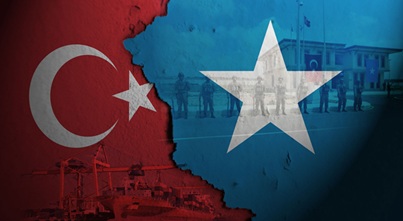
WardheerNews recently published an opinion piece under the headline “How Somalia’s Flag Was Sold to Turkey.” The title makes a serious allegation. The evidence behind it is very thin. The article points to a signed agreement in March, a ship registered three days later, and a drone strike in September, months later and far away. None of those facts, taken alone or together, proves a conspiracy.
This analysis separates what the article confirms from what it infers. It then explains what the law actually says under UNCLOS, a relevant international tribunal ruling, and the sanctions rules the article cites but misapplies.
Transparency remains a legitimate demand. The agreement should be published. Ship owners should be screened. Public records should be kept. Those are fair points. But calling the arrangement a “sale” of the flag is a leap the facts do not support.
What the Article Actually Shows
Strip away the framing, and the confirmed facts are narrow. On their own, they prove very little if anything.
- March 30, 2026: Somalia’s minister for ports signed an agreement with Somali Ship Register Limited. The signatory was a Turkish national.
- April 2, 2026: The ship GUNEY, previously flagged in Honduras, became the first vessel under Somalia’s revived flag.
- September 9, 2026: Drones struck the tug TEDY near Odesa. Two Azerbaijani crew died. No Somali was on board.
- Turkey also holds separate deals with Somalia covering port and airport management, military training, oil rights, and fishing rights.
Each fact checks out. None of them, by itself, proves foreign control of the registry. The real question is what the article builds on top of them.
Where Reporting Ends and Guessing Begins
The headline itself
The claim is that Somalia’s flag was sold to Turkey. A government hiring a private company to handle ship paperwork is common. It happens all over the world. Liberia’s registry has been run by a U.S. company since 1948. The Marshall Islands hired a private firm in 1990. Both are among the biggest ship registries on the planet. Nobody calls that a sale.
Under UNCLOS Article 94, the flag state keeps full legal responsibility no matter who does the paperwork. The article even admits this: “private administration is not automatically disreputable.” That is an odd thing to write directly under a headline claiming the flag was sold.
The three-day gap
The agreement was signed March 30. A ship joined the registry April 2. Three days. The article treats this as suspicious. It is not. New registries almost always line up a first ship before launch. That is how a registry proves it actually works. Fast timing is not proof of a secret plan. It is ordinary marketing.
No document backs the claim. No message, no record, nothing beyond a calendar. A calendar is not evidence.
The burden of proof, flipped
The article argues that the burden belongs on the government to prove Somali officials can refuse, suspend, and deregister a ship against Turkish commercial or political pressure. Read that again. The government must prove it can resist pressure. But nobody has shown that pressure even exists.
The article asks Somalia to disprove a threat nobody demonstrated. That is backwards. In law, and in plain fairness, the accuser brings the evidence, even in the court of public opinion. Not the other way around.
A claim built so it cannot lose
The article admits there is no public evidence that Ankara formally directs Somali Ship Register Limited. It then says that does not matter, because control can be “informal.” No evidence supports the claim. And no evidence could ever disprove it either. That is not analysis. That is a circular trap.
Using tragedy as proof of something it does not prove
Two men died on a tugboat near Odesa. That is a real loss, and it deserves respect. But the article admits elsewhere that no Somali was aboard. A ship’s crew does not need to match its flag. The strike, in the article’s own words, “does not prove that the registry was inappropriate.” Russia’s statement never even named the ship.
So why open and close the whole piece with this attack? Because grief moves readers. Timelines do not. That is the function it serves here.
Stacking unrelated facts to imply a plot
Turkey runs Somalia’s main port and airport. It trains and helps command Somalia’s military. It holds rights to offshore oil and fish stocks. Now it handles the registry too. Listed together, it sounds coordinated. It sounds planned and omnipotent.
But separate deals, negotiated separately, do not become one conspiracy just by sitting in the same paragraph. The article also notes that the minister who signed the deal later became Speaker of the House. The implication is obvious: a reward. But the implication is not evidence. Careers move for a hundred reasons.
Borrowing the sound of law
The article names six criteria from a 1970 British inquiry. It says Somalia’s registry matches several of them. That sounds official. It sounds legal. Two lines later, the article admits these criteria are “descriptive… not a binding legal test.” No treaty enforces them. No court applies them. Sounding like law does not make something law.
What the Law Actually Says
UNCLOS Article 91 and the M/V Saiga case
Article 91 requires a “genuine link” between a ship and its flag state. The article leans hard on this rule. So look closely at the case it cites: M/V Saiga (No. 2), decided by the International Tribunal for the Law of the Sea in 1999. The tribunal’s actual ruling was that a weak genuine link does not cancel a ship’s registration, and other states cannot use it to deny recognition. The article cites this case correctly. Then it argues the opposite of what the case actually says.
UNCLOS Article 94 and delegated paperwork
Article 94 puts the legal duty on Somalia, not on the company that processes the forms. Hiring a private administrator does not, by itself, break that duty. A real breach needs proof: a botched safety inspection, an ignored complaint, a failed investigation. None of that shows up in the article.
Once again, Liberia, the Marshall Islands, and Panama all delegate this way. It is the norm. It is not a red flag.
Paris MOU port checks
Registries get ranked—white, grey, or black list—only after thirty inspections over three years. Somalia’s new registry has no track record yet. So warnings about blacklisting apply to any brand-new registry, anywhere in the world, after due process. They say nothing specific about Turkey.
OFAC sanctions rules
Sanctions rules apply when a ship or its owner is already flagged by regulators. Nobody named in the article—not the ship, not the company, not the registrar—is under sanctions. The rule the article cites is real. It just does not fit the case at hand.
Fair Points Worth Keeping
Strip away the conspiracy, and some of the article’s advice still holds up. These are worth acting on regardless of the Turkey angle, innuendos, fragile time-links and misapplications of the laws:
- Publish the registry agreement and its terms in full.
- Keep a real-time, public list of registered ships.
- Make sure Somali officials, not the private company, hold final say on adding or removing a ship.
- Screen every ship owner for sanctions and true ownership before registration.
- Fund the investigation and enforcement work the law already requires.
This is basic good governance. Liberia and the Marshall Islands built the same safeguards over time. None of it needs a “sold” headline to justify doing it.
Conclusion
The facts in the article check out. The dates. The ship. The strike. The other Turkish deals. All real. What does not check out is the leap from those facts to a hidden sale of Somali sovereignty.
That leap runs on timing, implication, and a burden of proof turned upside down. Even the article’s own legal source—the Saiga ruling—argues against its conclusion, not for it. The better response is not to dismiss the article outright. It is to take its fair points on transparency seriously, and to reject the parts it never actually proved.
Keynan Jama
Email: keynanj123@gmail.com
——–
Keynan is International Trade Lawyer and Litigator
Leave a Reply