
By Abdullahi A. Nor
Somalia’s constitutional crisis has evolved into something far greater than a dispute over election dates or political rivalries. At its core lies a fundamental question that will shape the country’s democratic future for generations: Can a constitutional republic function if the limits placed on executive power are no longer respected?
That question has taken on renewed urgency following remarks by opposition leader Abdirahman Abdishakur Warsame, who defended the Somali Future Council’s proposal for an inclusive caretaker arrangement or an alternative transitional political mechanism should negotiations over elections remain deadlocked. His argument is straightforward: Somalia’s crisis is political, and only a political settlement grounded in constitutional legitimacy can resolve it.
Whether one agrees with the opposition’s proposal is ultimately secondary to the larger constitutional debate it has exposed. The controversy is no longer simply about who governs Somalia next. It is about whether constitutional authority is determined by law or by the political preferences of those already in office.
For more than three decades, Somalis have struggled to rebuild a nation shattered by civil war, institutional collapse, and political fragmentation. Through countless reconciliation conferences, constitutional negotiations, and state-building efforts, one principle has remained at the heart of Somalia’s democratic aspirations: no individual should stand above the Constitution.
Today, that principle faces one of its greatest tests. The debate reignited by Abdirahman Abdishakur is not simply another disagreement over elections or a contest between the government and the opposition. It is a much deeper argument about the very nature of the Somali state. Is Somalia a constitutional republic governed by law, or is it becoming a political system where the continued exercise of power depends primarily on the will of the individual occupying Villa Somalia? That question goes to the heart of the country’s democratic future.
In every constitutional democracy, political authority derives from law rather than personality. Presidents govern because constitutions authorize them to do so—not because they personally decide when their mandate begins or ends. When constitutional terms expire, governments continue only within clearly defined caretaker limitations as per Article 103 of the PFCS until a new political settlement or election restores full democratic legitimacy. That is how constitutional republics preserve stability.
Monarchies function differently. In monarchies, continuity revolves around the ruler. In republics, continuity revolves around institutions. Somalia’s Provisional Constitution was drafted precisely to prevent the return of unlimited executive authority. After decades of authoritarian rule followed by state collapse, Somali political leaders deliberately chose a constitutional order built upon negotiated legitimacy, institutional checks, and power-sharing.
The Constitution was never intended to become a document that leaders interpret according to political convenience. It was intended to establish rules that apply equally to everyone—including those holding the highest office. That is why the current constitutional dispute has become so significant. Abdirahman Abdishakur argues that Somalia’s crisis cannot be solved with additional military operations, larger donor packages, or increased security assistance. His central argument deserves careful consideration. Political crises are ultimately resolved through political agreements.
History repeatedly demonstrates that security operations may suppress violence temporarily, while financial assistance may stabilize institutions for a period. Neither, however, can substitute for political legitimacy. No amount of foreign funding can persuade citizens that disputed constitutional authority is legitimate. No military victory can permanently overcome a crisis of governance. No external actor can negotiate constitutional consensus on behalf of Somalis.
That explains why the Somali Future Council recently proposed alternatives that include either the establishment of an inclusive caretaker government or, should that prove politically impossible, a temporary national mechanism to oversee the country’s electoral transition until a broad political settlement can be reached.
Predictably, critics immediately portrayed these proposals as an attempt to drag Somalia back into the era of transitional governments. That criticism fundamentally misunderstands the proposal. The issue is not whether Somalia should become transitional again. The issue is whether Somalia should remain constitutional.
Every mature democracy recognizes that exceptional political disputes occasionally require temporary arrangements designed to preserve institutional legitimacy while political disagreements are resolved. Caretaker governments exist precisely because constitutions recognize that elections cannot always occur exactly as planned. What is extraordinary is not proposing temporary constitutional mechanisms.
What is extraordinary is expecting an administration whose constitutional mandate has expired to continue exercising unrestricted executive authority while simultaneously overseeing an election in which it is itself a principal political actor. That is precisely where public concern has intensified.
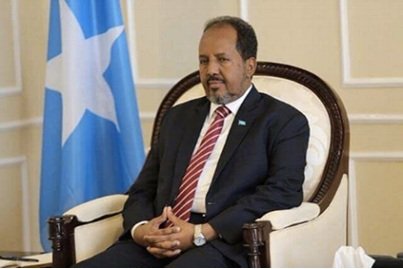
Many Somalis increasingly fear that constitutional limits are being treated as political inconveniences rather than binding legal obligations. Whether one supports or opposes President Hassan Sheikh Mohamud politically is almost beside the point.
The more important question is institutional. If constitutional limits can be ignored today because one political leader considers them inconvenient, what prevents future leaders from doing exactly the same thing? Constitutions lose their value the moment they become optional. The country already faces extraordinary challenges.
Al-Shabaab remains one of Africa’s most resilient insurgent movements. Relations between the Federal Government and several Federal Member States remain deeply strained. International partners have repeatedly expressed concern about the absence of broad political consensus.
Questions surrounding elections, constitutional amendments, and institutional legitimacy continue to dominate Somalia’s political landscape. Adding a constitutional legitimacy crisis to this already volatile environment serves no national interest.
Somalia’s democratic future will ultimately be determined not by who wins the next election, but by whether every political actor—including those currently exercising executive authority—accepts that public office is temporary, constitutional authority is limited, and political legitimacy must continuously derive from law rather than personal preference.
That is the defining difference between democratic leadership and personal rule. It is also the defining difference between governing a constitutional republic and governing as though one occupies a throne. Somalia has already sacrificed too much in pursuit of constitutional government to allow that distinction to become blurred. The country deserves institutions that outlive individual leaders, elections that command broad confidence, and constitutional rules that bind everyone equally.
Only then will Somalia complete the democratic journey it began more than three decades ago—not toward the rule of one individual, but toward the enduring supremacy of the Constitution.
Abdullahi A. Nor
Email: abdulahinor231@gmail.com