
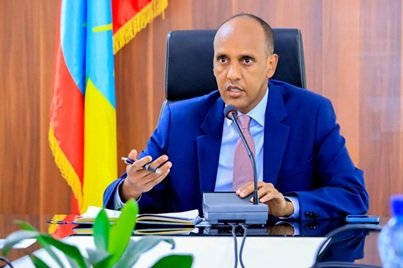
By Feysal Omer
Once seen as a flashpoint of insecurity, marginalization, and heavy-handed rule, Ethiopia’s Somali Regional State has undergone one of the most significant and peaceful political transformations in the country’s recent history. Six years after Ethiopia launched sweeping national reforms, the region—known locally as DDS has become a case study in stability, institutional rebuilding, and inclusive development.
A Turning Point After Decades of Repression
For decades, the Somali Region was shaped by authoritarian control, severe human rights abuses, chronic underdevelopment, and an entrenched mistrust between citizens and the state. The reforms that swept Ethiopia in 2018 marked a turning point. With the dismantling of repressive security structures and the introduction of political openness, the region began to redefine its governance and rebuild its relationship with the public.
Today, officials, aid agencies, and communities alike describe DDS as one of Ethiopia’s most improved regions—economically, politically, and socially.
Infrastructure and Services: A Rapid Development Push
Economic revitalization has been a cornerstone of the region’s post-2018 agenda. The government has invested in road networks, water systems, health services, and urban modernization at an unprecedented pace.
Thousands of kilometers of all-weather roads now link remote rural communities—many of which had long been isolated—to markets, clinics, and schools. Jigjiga, the regional capital, has undergone visible transformation through new corridor developments, improved drainage networks, wider roads, and expanded public services.
Access to essential services has improved sharply. New hospitals and health centers, supported by mobile clinics, have extended healthcare to previously unreachable pastoralist areas. The education sector has grown through the construction of schools, the hiring of qualified teachers, and support for pastoralist children.
Water access, once among the region’s most critical challenges, has been strengthened through solar-powered pumping stations, expanded boreholes, and large-scale upgrades of urban networks.
Meanwhile, vocational training, small-business grants, and pastoral livelihoods programs have broadened economic opportunities for youth and women. Mega-projects—including fertilizer and natural gas initiatives—have begun to take shape, signaling new industrial potential.
A Remarkable Security Turnaround
Perhaps the most striking change since 2018 has been the dramatic improvement in security. A region once synonymous with conflict—both inter-clan and political—has emerged as one of Ethiopia’s most stable.
Authorities attribute this shift to a combination of inclusive governance, community-led peacebuilding, and professionalization of the security forces. Inter-communal conflicts have declined sharply, while coordinated efforts with federal institutions have strengthened border stability.
Regional security forces have undergone major restructuring, emphasizing discipline, accountability, and respect for human rights. These reforms, combined with community policing, have helped rebuild trust between citizens and law enforcement.
Justice and Human Rights: Turning a Dark Page
The Somali Region’s justice sector has seen some of the most symbolic—and substantive—reforms. The closure of notorious detention centers, once linked to systemic torture and arbitrary detention, marked a decisive break with the past.
Courts have been reorganized, judicial independence strengthened, and mobile courts deployed to ensure legal access in remote districts. Human rights institutions have been empowered to monitor abuses, while civil society organizations operate with a freedom previously unseen in the region.
Legal reforms protecting women and children, combined with public-awareness initiatives, have further broadened the region’s rights landscape.
Cultural Revival and Religious Freedom
A cultural renaissance has unfolded alongside political reform. Somali poetry, music, literature, and oral traditions—long suppressed—have re-emerged across festivals, schools, and community gatherings. Cultural preservation initiatives now focus on safeguarding pastoralist heritage and elevating the region’s contribution to Pan-Somali identity.
Equally transformative has been the restoration of religious freedom. Mosques and religious institutions operate without political interference, and peaceful coexistence among faith groups is widely acknowledged as one of the reform period’s successes.
Democratic Institutions Take Shape
Institutional rebuilding has been central to the region’s trajectory. The executive, legislature, and judiciary have each undergone restructuring aimed at improving professionalism, transparency, and accountability.
The regional parliament is now more assertive in its oversight role, while executive institutions have been streamlined to improve service delivery. Judicial bodies operate with increased independence, supported by training programs for judges, prosecutors, and legal officers.
Anti-corruption drives and digital governance reforms—such as citizen feedback platforms—have expanded transparency and public participation.
Political space has also widened, enabling multi-party competition and civil-society engagement.
Growing Trade and Investment
Improved security and governance have made the Somali Region increasingly attractive to investors. Streamlined business regulations have energized sectors such as livestock, renewable energy, manufacturing, hospitality, and real estate.
Cross-border trade continues to grow, supported by major corridors linking DDS with Djibouti, Somaliland, and the Ethiopian interior. Upgraded livestock markets and financial institutions—including microfinance providers and expanding commercial banks—have boosted regional commerce.
A Regional Success Story in the Horn of Africa
The Somali Region’s transformation since 2018 is one of Ethiopia’s most noteworthy reform success stories. From infrastructure and public services to security the region’s progress demonstrates what inclusive governance and accountable leadership can achieve in historically marginalized areas.
As DDS continues to consolidate peace and expand development, its experience offers important lessons for the wider Horn of Africa: stability grows through trust, prosperity follows good governance, and enduring peace requires the full participation of all communities.
Feysal Omer
Email: faysal387@gmail.com
Member of the Somali Region Parliament