
WardheerNews Editorial
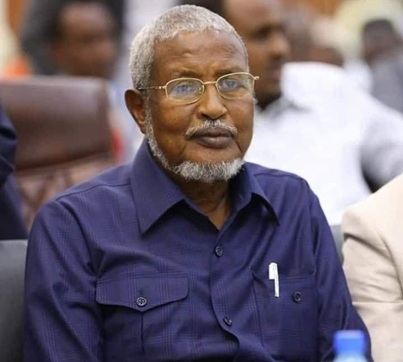
The recent stream of clan bravados that Mogadishu belongs to one clan and asking others to leave and go back to their home base is a brazen act of hate speech and a menace to nation-building. This recent outburst by Senator Haji Muse Sudi Yalaxow a former Mogadishu Warlord, which was targeted at parliamentarians from the Puntland region of Somalia, is not the first. Neither is he the only bigoted individual touting such hate speech against what he calls outsiders. It is a widely held viewpoint in Mogadishu by those who “claim” to own it.
Who owns or should own Mogadishu?
Mogadishu is one of the oldest cities in the Horn of Africa and the earliest recipient of Islam in Africa. Since then, demographic changes and an omnipresent diversity have been of its greatest attributes. Its population has never been homogeneous at any time. However, different outsiders claimed the majority in various epochs of the city’s long history.
In the 13th century, thousands of immigrant settlers and traders, including Arab immigrants from the Sham and Hijaz regions, were notable. Somali clans, including the Galadi, Tuni, Rer-Xambuar, Shanshi, Ajuran, and others, were well-represented in past epochs. Then came the largely pastoral Hawiye clans between the 14th and 16th centuries.
Throughout the 18th and 19th centuries, the city was administered by the Omani king. It was then that other Somalis from the riverine regions came to work as laborers and domestic servants. Historians also document that maritime trade between Mogadishu, Hobyo, Ras Hadun/Eyle, and Berbera flourished as far back as the 13th century.
By the 19th century, new waves of immigrants came from all over the Middle regions of the country. Mogadishu emerges as a regional hub for Somalis coming from as far as Harar, Djibouti, and Berbera for religious scholarship. Along with Harar, Bardheere, Sheikh, and Mercca, Mogadishu proved to be the center for learning and spreading Islam.
Each wave of new immigrants brought capital, skills, civilization, and many intangible benefits. Likewise, the new environment changed, albeit positively, for immigrants. Most of those who left their regions were the best and brightest. To its benefit, Mogadishu absorbed all those positive attributes and thrived in return.
Following the end of World War II, the magic of the Somali Youth League (SYL) had sprung. The fever and fire of a “nation in search of a state,” which had begun with the movement of Sayyid Mohammed Abdulle Hassan, rekindled. Again, Mogadishu was chosen as the home for a united Somali nation under one flag.
The coming of Osman Y. Kenadid added fuel to the fervor, and Mogadishu learnt from him and his team’s defiant nationalist spirit towards the colonial power. Subsequently, unity between the incoming groups and the indigenous residents was cemented based on Somali ideals.
Somalilanders followed suit. The likes of Michael Mariam and Salol, Liberation fighters for Western Somalis such as Sheikh Ali Sufi, Makhtall Dahir, Haji Abdi Buh, Ali Gudaal, Farha Waies, etc., transformed Mogadishu from a parochial to an inclusive cosmopolitan space.
As such, Mogadishu became the home of the nation’s collective memorial statues, national banks that housed everyone’s assets, and higher learning institutions. Most importantly, in time as the modern capital city of about 30 million Somalis, significant capital from all over Somali region was invested.
Once Somalia became independent in 1960, brothers in the North (Somaliland) quickly joined the union and enhanced the ever-widening bowl (xeedho) of Soomaalinimo or the oneness of Somalis. Mogadishu was, as such, anointed the “capital” of Somalis in search of a viable state.
The ancient Muqadisho that marveled Ibna Batuta and exhibited the centuries-old civilization in the 13th century, those who defended it from the Portuguese in the 16th century, those who chose it as their site for the liberation of the nation, and ultimately that city which Europeans called the “pearl of the Indian Ocean” remained until recently our collective asset.
However, all that has been conveniently forgotten. In 2010, the late Prime Minister of Somalia, Ali Khalif Galaydh, from Buuhoodle (Northwest of Somalia), was asked to show the visa with which he entered Mogadishu. The same fellow who dared to decidedly taint Mogadishu’s hitherto coveted position as the place where Somalia gathered did so with impunity.
As if that was not enough desecration of Mogadishu, former PM Ged Ali doubled it down and claimed that Mogadishu pays alimony or dowry to the rest of Somalia. Again, he got a pass.
In November 2025, the godfather of this discriminatory attitude Yalaxow once again fired up and told his colleagues in the Somali National Assembly to leave his hometown, Mogadishu. Instead of stopping and condemning such racist and ignorant blurbs, the former President of Hirshabele took the matter to a new height- he started to campaign for a movement to build a statue for Muse Sudi Yalaxow to honor his racist attitude.
Adding insult to injury, neither the elite of the capital nor the administration denounced these hate ideologies. Silence in the absence of injustice is an endorsement of it.
What do other Somalis, who feel discriminated against, bullied, and othered in Mogadishu, do?
This question comes at a critical time. Somaliland insists not to come back to the fold of Mogadishu, while Puntland weighs tough choices between separation and confederation. Jubaland, in its day-to-day affairs, is closer to Nairobi than Mogadishu. These hate speeches at the parliament could not have come at a worse time.
Recommendations
1) The administration of Hassan Sheikh Mohmoud and Hamza Abdi Barre must rebuke Haji Muse Yaloxaw for his hate speech; in addition, the leadership of the parliament should sanction him, including suspension and monetary fines.
2) The religious community and the elite and political class that claim Mogadishu need to show solidarity with aggrieved parties and condemn the acts of Muse Yalaxow, Former PM Ali Gedi, and former President of Hirshabeelle, Ali Osoble.
3) Other regional administrations must ensure that their legislative members are not harmed in Mogadishu. They need to think wether or not recalling their representatives for a serious consultation is option whose time has came.
WardheerNews
Email: admin@wardheernews.com
Read more of WardheerNews editorial from WDN archives