
The disappearance of nine members of an official Somali delegation in Kosovo raises troubling questions about the abuse of diplomatic privileges, the sale of access to government delegations and the growing lack of accountability within Somalia’s public institutions.
Mogadishu (WDN) – The disappearance of nine members of a Somali government delegation in Kosovo has prompted the authorities in Prishtina to ask Mogadishu for urgent assistance in establishing their whereabouts. But for anyone familiar with the persistent weaknesses and corruption within Somalia’s public administration, the incident is hardly unprecedented. It reflects a pattern in which official travel, diplomatic privileges, and government delegations have increasingly become vulnerable to abuse.
In a diplomatic letter to the Federal Government of Somalia, Kosovo’s Ministry of Foreign Affairs and Diaspora said the nine individuals left their accommodation at Dua Village in Prishtina at approximately 7:10 p.m. on 27 October without notifying the officials responsible for overseeing their visit.
Their absence was discovered the following day, when Kosovo officials were preparing transport to take the delegation to Prishtina International Airport for its scheduled departure. Preliminary inquiries indicated that the nine had left the accommodation voluntarily and may have travelled to another location within Kosovo. However, they did not report to the airport’s VIP section, where arrangements had been made for their departure.
Kosovo’s Foreign Ministry said attempts to obtain information from senior members of the Somali delegation had proved unsuccessful. At the time its diplomatic letter was prepared, the authorities had no confirmed information about the nine individuals’ whereabouts, immigration status or whether they had left Kosovo.
The Somali delegation arrived in Kosovo on 25 October. It was led by State Minister for Public Works and Housing, Said Mohamed Mahmoud, and Deputy Minister of Ports, Fartuun Abdulqadir Farah. Both officials reportedly departed Kosovo on 28 October, while the whereabouts of the nine other delegation members remained unconfirmed.
Kosovo has since urged the relevant Somali authorities to treat the matter as a priority, provide any available information and help establish the individuals’ safety and legal status.
When diplomatic privileges become commodities
The incident raises a much wider question: how did nine people become part of an official government delegation, and what procedures were followed to establish their eligibility to travel under its authority?
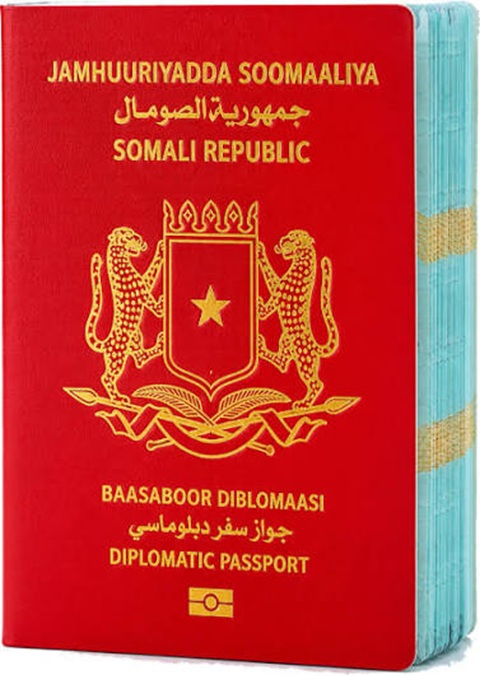
Somalia’s diplomatic passport system and official delegations have long been vulnerable to allegations of political patronage, favouritism and corruption. The excessive distribution of diplomatic passports, including to people whose official functions and eligibility may be questionable, has undermined the credibility of a document intended to facilitate legitimate state business.
There are also persistent concerns that access to official delegations can be exploited as a commodity, with individuals allegedly paying to secure places on government-sponsored trips. Such arrangements, if substantiated, would turn diplomatic travel into a lucrative channel for private interests rather than an instrument of public service.
The consequences extend well beyond embarrassment. When people whose official responsibilities are unclear travel under the cover of a government delegation, host countries are entitled to question who they are, why they are there and whether the arrangements comply with immigration and diplomatic procedures.
Kosovo and the wider migration question
The disappearance also raises questions about whether some individuals may have used the delegation’s official travel arrangements, as an opportunity to remain abroad or pursue onward migration. Kosovo may be viewed by some migrants as a possible transit point on routes towards other parts of Europe. However, there is no confirmed evidence that the nine individuals intended to use Kosovo as a gateway to Europe, or that they have attempted to do so.
That distinction matters. Their disappearance, as reported by Kosovo, is established; their motives and ultimate destination are not. Those questions require investigation rather than speculation.
Nevertheless, the possibility that official delegations could be exploited for irregular migration highlights the need for rigorous screening, transparent selection procedures and clear accountability for every person included in government travel arrangements.
A government that must account for its own delegations
The Federal Government should not treat Kosovo’s diplomatic request as a routine administrative matter. It must establish who authorised the nine individuals’ inclusion in the delegation, what official duties they were expected to perform, whether they held valid travel documents and who was responsible for supervising them during the visit.
The relevant ministries should also publish clear procedures governing the composition of official delegations and the allocation of diplomatic passports. Every person travelling under government authority should have a verifiable official role, and every trip should be supported by transparent records and accountable expenditure.
Somalia cannot expect its diplomatic institutions to command international respect while allowing official privileges to be distributed without credible oversight. Nor can it rebuild public confidence when government travel arrangements are open to allegations of commercialisation and patronage.
The disappearance of nine delegation members in Kosovo may eventually be explained. But the deeper issue will remain unless Mogadishu confronts the corruption and institutional failures that make such incidents possible.
A diplomatic passport is a state credential, not a purchasable ticket to privilege. And a government delegation must serve the interests of the country, not provide a convenient cover for private arrangements.
WardheerNews
Leave a Reply