
By Eng Mohamed Ali Mirreh
Lord Ashcroft’s recent article on Somaliland has attracted international attention, but it presents a selective and deeply incomplete picture of the political realities in the region. His portrayal of Somaliland as a unified, democratic, and historically justified statehood project overlooks essential historical facts, regional dynamics, and the lived experiences of communities outside Hargeisa. A more accurate and responsible assessment reveals a far more complex reality, one that cannot be reduced to the romanticized narrative offered in his commentary.
Ashcroft frames Somaliland as a “former British protectorate” seeking to restore its independence, but this framing is historically inaccurate. The British Somaliland Protectorate was home to five major Somali clans, not one. When Britain granted independence in June 1960, it did so with the explicit understanding that these clans would unite with their Somali brothers and sisters in the south to form the Somali Republic. This union was voluntary, popular, and rooted in a pan‑Somali aspiration shared across the protectorate. The modern Somaliland project, however, is not a revival of that multi‑clan entity. It is a secessionist movement dominated by a single clan headquartered in Hargeisa. Other regions of the former protectorate—Awdal, Sool, Sanaag, and parts of Togdheer—have consistently rejected the secessionist narrative. No amount of political lobbying or selective storytelling can transform a one‑clan administration into a legitimate successor state.
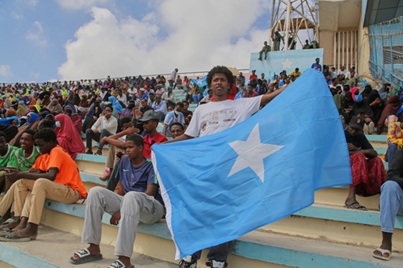
Ashcroft’s impressions are based entirely on his visit to Hargeisa, the political and demographic center of the secessionist. He did not visit Awdal region, where protests erupted in Borama during the same “independence celebrations” he praises. He did not visit the eastern regions, where the secessionist narrative has been rejected for decades. He did not visit the Northeast State, where the idea of Somaliland independence is considered long dead. Had he traveled beyond Hargeisa, he would have encountered a very different reality—one of resistance, exclusion, and demands for reintegration with the Somali Republic. Presenting Hargeisa’s perspective as representative of the entire region is not only misleading but erases the voices of communities who reject the secessionist project.
Ashcroft highlights Somaliland’s “peaceful transfers of power” and “functioning institutions” as evidence of statehood, but elections held within one clan’s territory, excluding other clans and regions, cannot be used as a basis for international recognition. If local elections were sufficient to justify sovereignty, every clan or district in Africa could declare itself a state. This is precisely why the African Union rejects such precedents. Statehood requires broad‑based legitimacy, territorial cohesion, and the consent of all major communities—not the political dominance of one group.
Ashcroft’s argument also ignores the profound consequences of legitimizing clan‑based secession. For Somalia, it undermines decades of international investment in reconciliation and federal state‑building, emboldens other clan‑based separatist movements, and risks reigniting conflict in regions that reject Hargeisa’s authority. For Africa, it opens a Pandora’s box of separatist claims, contradicts the African Union’s foundational principle of maintaining colonial borders, and threatens stability in countries such as Ethiopia, Nigeria, Cameroon, and the Democratic Republic of Congo. No responsible international actor can support a precedent that encourages fragmentation across the continent.
Ashcroft emphasizes Somaliland’s strategic location, its port at Berbera, its ties with Taiwan, and its mineral potential. These factors may be of interest to foreign governments, but they do not constitute a legal or historical foundation for sovereignty. Strategic value cannot override the rights of other clans, the historical record, or the need for regional stability. If geography alone justified independence, dozens of African regions would qualify.
Contrary to Ashcroft’s implication that Somaliland is being unfairly ignored, the international community has studied the issue extensively. The African Union has rejected recognition. The UN, EU, IGAD, and Arab League support Somalia’s territorial integrity. Western governments understand that endorsing clan‑based secession would destabilize the Horn of Africa. The issue is not a lack of awareness—it is a recognition of the dangers for wars.
The clearest evidence against Ashcroft’s narrative comes from the regions he did not visit. While Hargeisa celebrated, Borama protested. While he praised “unity,” the eastern regions resisted. While he spoke of “democratic institutions,” entire communities were excluded from the political process. A state cannot be built on the consent of one clan and the rejection of the others.
Lord Ashcroft’s article reflects the perspective of secessionist elites and foreign influencers, not the lived reality of the diverse communities within the former British Somaliland Protectorate. His narrative is selective, incomplete, and ultimately harmful to regional stability. Somaliland is not the “functioning success story” he describes. It is a clan‑based political project that cannot—and must not—be elevated to statehood at the expense of Somalia’s unity and Africa’s stability. International readers deserve a full, accurate picture—not a curated tour of Hargeisa.
Eng Mohamed Ali Mirreh
Email: m.mmirreh@gmail.com
Northeast State