
By Mohamed A Yasin
At a moment when Somalia’s opposition is under increasing pressure to present a united front against the federal government, a new political dispute threatens to undermine months of efforts aimed at building a broad coalition capable of influencing the country’s future direction.
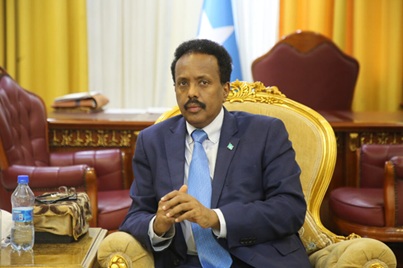
Reports emerging from political circles in Mogadishu indicate that serious disagreements have surfaced within the Future Council, one of the country’s most prominent opposition platforms, over the proposed participation of former President Mohamed Abdullahi Farmaajo in an upcoming government-opposition dialogue expected to take place in Halane under the facilitation of Turkish diplomats.
The disagreement may appear procedural on the surface, centering on the number of delegates each political bloc should send to the talks. In reality, however, it reflects a much deeper struggle over influence, leadership, and the future structure of Somalia’s opposition movement.
Although the opposition coalition includes a diverse range of political figures, including many who served in senior positions under former Presidents Mohamed Abdullahi Farmaajo and Hassan Sheikh Mohamud, disagreements have reportedly emerged over representation in the ongoing negotiations. According to sources familiar with the negotiations, some members of the Future Council have objected to Farmaajo’s political camp being granted representation equal to that of the opposition coalition itself.
The issue has reportedly become one of the most contentious subjects in preparations for the talks, raising concerns that internal rivalries could overshadow the larger political challenges facing the country. The dispute comes at a time when many Somalis are increasingly demanding greater unity among opposition groups. Critics argue that while the federal government remains organized around a clear political agenda, opposition figures continue to spend valuable time debating personalities, positions, and political status rather than focusing on common objectives.
The controversy has exposed a recurring problem within Somali opposition politics: the tendency for individual ambitions and factional interests to take precedence over collective strategy.
Former Prime Minister Hassan Ali Khaire and MP Abdirahman Abdishakur are reported to be among those who have questioned the proposal to grant Farmaajo’s camp representation equal to that of the Future Council. Supporters of this position argue that the coalition has spent months organizing meetings, coordinating political positions, and engaging in consultations, while Farmaajo’s political network has only recently become involved in the process.
Those close to this camp maintain that representation should reflect political participation and organizational investment rather than simply the prominence of individual political figures. However, opponents of that argument see the matter differently. They argue that no opposition alliance can credibly claim to represent Somalia’s entire political opposition while simultaneously attempting to limit the participation of one of the country’s most recognizable political figures. Whether one supports or opposes Farmaajo politically, they argue, his influence within Somali politics remains undeniable.
More importantly, they warn that excluding or marginalizing major political actors would send the wrong signal at a time when opposition unity is being tested by increasingly complex political developments. The controversy has also reignited debate about who has the authority to determine the composition of Somalia’s opposition movement.
The exclusionary approach argue that no individual politician or faction possesses a monopoly over opposition politics. They contend that the opposition should be broad enough to accommodate differing viewpoints and political traditions while remaining focused on shared concerns regarding governance, constitutional issues, elections, and national reconciliation.
For many analysts, the issue is not merely whether Farmaajo attends the talks. The larger question is whether Somalia’s opposition can develop a culture of political cooperation that transcends personal rivalries and historical disagreements. The challenge is particularly significant because opposition alliances in Somalia have often struggled to maintain cohesion once questions of leadership and representation emerge.
Former President Sharif Sheikh Ahmed has reportedly adopted a more conciliatory position. Widely regarded as one of the most experienced political figures in the country, Sharif is said to favor a broader and more inclusive opposition platform that accommodates all major stakeholders. His approach reflects a belief shared by many political observers that effective opposition politics requires coalition-building rather than gatekeeping.
Indeed, several analysts point out that opposition movements become strongest when they expand their political base rather than narrow it. Attempts to determine who qualifies as a “legitimate” opposition figure often create new divisions that ultimately benefit the incumbent government. This reality has not gone unnoticed among political commentators.
A growing number of analysts argue that the debate over Farmaajo’s participation risks distracting attention from the substantive issues that originally brought opposition groups together. These include concerns about constitutional disputes, electoral frameworks, political inclusion, federal-state relations, and the concentration of power within federal institutions.
Instead of focusing on these national questions, critics say opposition leaders increasingly appear preoccupied with internal disputes that ordinary citizens view as secondary to the country’s broader challenges. The Turkish mediation effort has reportedly been complicated by these disagreements.
Sources indicate that Turkish facilitators have encouraged all sides to find common ground and avoid actions that could derail the planned Halane talks before they even begin. Diplomats involved in the process are said to view opposition unity as a critical prerequisite for meaningful political dialogue.
The concern among mediators is straightforward: a fragmented opposition enters negotiations from a position of weakness, while a united opposition is better positioned to advocate for reforms and hold the government accountable. What makes the current dispute particularly significant is the perception among many observers that it reflects a broader struggle for influence within the opposition itself.
Some analysts believe the controversy is less about delegate numbers and more about determining which political figures will shape the future direction of the anti-government movement. Others warn that such calculations could prove politically costly.
History has repeatedly shown that opposition movements often fail not because of external pressure but because of internal fragmentation. Alliances that begin with shared goals can quickly unravel when competing ambitions replace collective purpose. For that reason, many observers believe the coming days will serve as a crucial test of political maturity for Somalia’s opposition leaders.
The challenge before them is clear: either build a broad coalition capable of accommodating differences and presenting a coherent vision for the country, or risk allowing internal divisions to weaken the very movement they seek to strengthen. As preparations continue for the anticipated Halane dialogue, one question increasingly dominates political discussions in Mogadishu: can Somalia’s opposition overcome its internal disputes and speak with one voice, or will efforts to divide and marginalize key actors ultimately undermine the unity that many citizens believe is essential for the country’s democratic future?
The answer may determine not only the success of the upcoming talks but also the future credibility of Somalia’s opposition movement itself.
Mohamed A Yasin
Email: moyasin680@gmail.com