
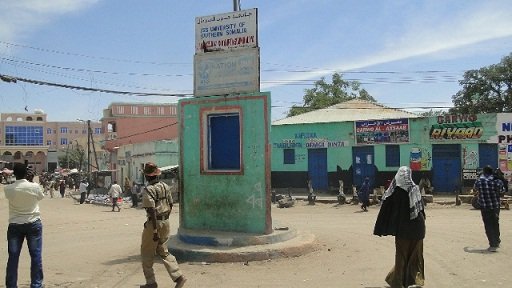
Baidoa (WDN) — The Federal Government is reportedly preparing to deploy additional troops to Baydhaba as fighting and political tensions intensify between forces backing South West State President Sheikh Aden Mohamed Nur (Aden Madobe) and fighters loyal to former South West President Abdiaziz Hassan Mohamed Laftagareen.
People familiar with the situation say the planned deployment follows a telephone conversation between President Hassan Sheikh Mohamud and Aden Madobe focused on the deteriorating security situation around Baidoa and the activities of opposition forces.
According to the sources, Hassan Sheikh has instructed the Somali National Army command to reinforce federal troops already stationed in and around the city and prepare an operation aimed at pushing opposition forces farther from positions used to organize attacks.
The reported plan comes after repeated clashes around Baidoa, including a major attack on September 3 that was repelled by federal and South West forces.
Aden Madobe has repeatedly accused Laftagareen-aligned forces of threatening his administration. On August 22, he also accused former government officials of establishing links with Al-Shabaab, although no independent evidence supporting those allegations has been publicly presented. The administration later called for the political dispute to be resolved through dialogue rather than fighting.
This new development comes amid reports of ongoing dialogue between Laftagareen and Villa Somalia.
More Troops, Same Problem
The planned reinforcement raises a larger question: can additional federal troops actually resolve a conflict that is rooted in a deeply contested struggle over the political future of South West State?
The Federal Government has repeatedly relied on military deployments to strengthen its position in Baidoa. Yet the continued ability of Laftagareen-aligned forces to operate around the city and launch attacks demonstrates the limits of a purely military response.
These fighters are operating on familiar local terrain and presenting their campaign as a struggle to “liberate” South West State from what they portray as outside or federal control. Whether that political narrative reflects the views of the wider population remains contested, but it provides the opposition with a powerful mobilizing message. That creates a fundamental military and political problem for Mogadishu.
A government can send more troops into a city, but defeating locally rooted armed forces requires more than numbers. It requires political legitimacy, local support, intelligence, sustainable logistics and a credible settlement that addresses the grievances driving the conflict.
A Conflict That Cannot Be Solved by Force Alone
The latest deployment could therefore intensify rather than resolve the confrontation.
If federal and South West forces launch a new offensive, Laftagareen’s supporters may retreat from exposed positions while continuing to operate from surrounding areas. Repeated military campaigns could produce a cycle of attack, withdrawal and redeployment without addressing the underlying political dispute.
The central question remains unresolved: who has the legitimate authority to govern South West State, and who gets to determine that legitimacy?
Until that question is addressed through an inclusive political process, every new troop deployment risks becoming another temporary military solution to a fundamentally political crisis.
Baidoa may soon see more soldiers, more checkpoints and more military operations. But after months of confrontation, the evidence suggests that more troops alone may not be enough to defeat a locally rooted opposition determined to keep fighting on its own ground.
WardheerNews