
By Osman Ali Hassan
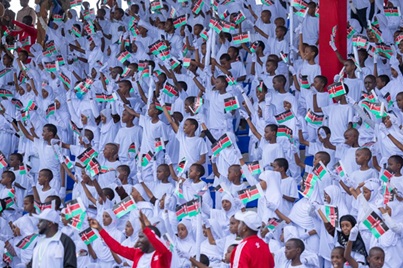
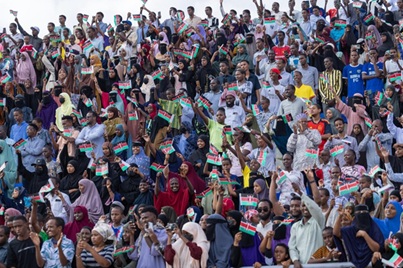
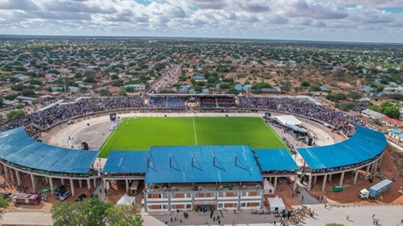
June 1st, 2026, arrives in Wajir like a sunrise struggling to break through clouds that have lingered for decades. It is a day of celebration, hope, political speeches, development promises, cultural pride, and the unveiling of a new soccer stadium where the Kenyan flag flies high above cheering crowds. Young people gather wearing their favorite football jerseys. Elders sit beneath tents discussing the future. Traders move through the streets hoping that development will bring business opportunities. Government officials praise progress and promise a better tomorrow. The atmosphere appears festive and optimistic.
Yet behind the celebrations stands an invisible wall upon which the painful memories of the Waggalla Massacre continue to hang. The contrast between celebration and memory defines the reality of Wajir. The new soccer stadium symbolizes aspiration, unity, youth empowerment, and modern development. The memory of Waggalla symbolizes pain, injustice, trauma, and unresolved historical wounds. Together they create a powerful image of a community caught between a difficult past and an uncertain future. One face looks toward progress while the other continues to carry scars that have never fully healed.
For many residents, the celebration of June 1st, 2026, is not simply about a new stadium or political speeches. It represents a test of whether development can genuinely transform lives or whether it will become another chapter in a long history of promises without delivery. The people of Wajir have heard promises before. They have listened to declarations of change, witnessed grand project launches, and observed politicians arrive with entourages and speeches. Yet many of the fundamental challenges facing ordinary citizens remain largely unchanged. The history of Wajir is inseparable from the history of marginalization experienced by many communities in Northern Kenya. For decades, development lagged behind other regions. Infrastructure investments were limited. Roads remained poor. Access to electricity remained inconsistent. Water shortages became a recurring reality. Educational opportunities lagged behind national averages. Healthcare facilities struggled with inadequate resources. Economic opportunities remained limited.
Citizens of Wajir and the larger Northeast region frequently felt disconnected from decision-making processes affecting their lives. The shadow of the Waggalla Massacre continues to influence the collective memory of Wajir. The massacre remains one of the most painful episodes in Kenya’s post-independence history. Families continue to remember loved ones who never returned. Survivors continue to carry emotional wounds. Entire communities continue to seek acknowledgment, justice, and healing. While development projects may bring visible change, historical wounds require more than physical infrastructure. They require truth, accountability, recognition, and reconciliation. As June 1st celebrations unfold, many citizens ask whether development without justice can truly create lasting peace. Can a stadium erase memories of suffering? Can political speeches replace accountability? Can new buildings substitute for meaningful reforms? These questions remain central to the future of Wajir. The reality confronting many residents remains difficult.
Drought continues to shape everyday life. Wajir sits within an arid and semi-arid region where rainfall remains unpredictable and often insufficient. Communities dependent upon livestock repeatedly face devastating losses when drought strikes. Entire herds may disappear within months. Families lose their primary source of income. Children experience disruptions in education. Food insecurity becomes widespread. Humanitarian assistance often becomes necessary. What frustrates many citizens is not merely the existence of drought but the apparent absence of sustainable and proactive solutions. Drought is not a new phenomenon. It is a predictable challenge. Effective governance requires preparation rather than reaction. Yet government responses frequently remain short-term and emergency-oriented instead of focusing on long-term resilience. Water harvesting systems remain inadequate. Irrigation projects remain limited. Strategic planning often appears disconnected from community realities. As a result, drought continues to return as a recurring crisis rather than a manageable environmental challenge.
Poor infrastructure remains another obstacle to development. Roads connecting rural communities to markets often become impassable during certain seasons. Transportation costs remain high. Farmers and traders face significant difficulties moving goods. Access to healthcare becomes challenging for remote populations. Educational access suffers. Economic growth remains constrained. Infrastructure represents more than concrete and asphalt; it determines whether communities can participate fully in regional and national economies. Drainage and sewage systems remain another major concern. Urban growth has outpaced infrastructure development. Flooding can create sanitation challenges. Poor drainage contributes to environmental degradation and public health risks. Residents often witness significant public investments announced while basic urban management systems remain inadequate. The result is a contradiction between development rhetoric and daily reality. Unemployment continues to threaten the future of many young people. Wajir possesses a youthful population with energy, creativity, and ambition. Yet employment opportunities remain limited. Many graduates struggle to find meaningful work. Others enter informal economic activities characterized by instability and low earnings. Unemployment contributes to frustration, dependency, and social vulnerability.
A soccer stadium may inspire young athletes, but sustainable development requires broad economic opportunities capable of absorbing the region’s growing workforce. Poverty remains deeply intertwined with unemployment. Families facing economic hardship often encounter barriers to healthcare, education, housing, and nutrition. Poverty reduces choices and opportunities. It limits social mobility. It reinforces cycles of disadvantage that may persist across generations. Effective development must therefore focus not only on visible projects but also on expanding household economic security. Electricity remains another challenge. Many residents continue to experience unreliable power supply and periodic rationing. Businesses suffer losses due to interruptions. Students struggle to study during outages. Healthcare facilities face operational difficulties. Investors may hesitate to establish enterprises in areas where electricity remains inconsistent. Modern economies depend upon reliable energy. Without it, development efforts face significant limitations. Security concerns also continue to influence daily life. Citizens seek protection from crime, violence, and instability. Yet fear emerge when security institutions themselves become sources of anxiety. Allegations regarding heavy-handed operations, abuse of authority, and extra-judicial actions create distrust between communities and security agencies. Sustainable security depends not only upon enforcement but also upon accountability, transparency, professionalism, and respect for human rights.
Trust in public institutions depends heavily upon financial accountability. Citizens expect public resources to be managed responsibly and transparently. When allegations emerge regarding misuse of funds, procurement irregularities, or political patronage, public confidence declines. Development projects become viewed with skepticism. Citizens question whether resources intended for public benefit are reaching their intended destinations. Many residents express concerns regarding the relationship between county executives and county assemblies. The political alliances may often weaken oversight mechanisms. When oversight institutions fail to perform effectively, opportunities for mismanagement increase. Public funds intended for infrastructure, education, healthcare, water systems, and economic development failed to achieve their intended impact. The result is a widening gap between budget allocations and lived realities.
Another challenge frequently discussed is what many citizens describe as sugar-coated politics. Political leaders often present optimistic narratives emphasizing achievements while minimizing persistent problems. Celebratory ceremonies, ribbon-cutting events, and public relations campaigns can create an appearance of progress. However, citizens increasingly demand measurable outcomes rather than symbolic gestures. They seek functioning hospitals, reliable water systems, quality schools, transparent governance, and sustainable employment opportunities. Clan politics remains another sensitive issue affecting governance and development. In many parts of the Horn of Africa, and northeast Kenya clan identities continue to influence political competition, resource allocation, and public administration. The development priorities may sometimes become shaped by political loyalties rather than objective needs assessments. Such practices risk undermining social cohesion and creating perceptions of exclusion. Effective governance requires fairness, inclusivity, and equal treatment of all citizens regardless of clan affiliation. The phrase “colonial paddocking politics” reflects concerns that communities may continue to experience forms of division and control resembling historical patterns of exclusion. During colonial periods, administrative structures often categorized, separated, and managed populations through systems that limited political participation and equitable development. Contemporary citizens increasingly reject any governance approach that appears to reproduce those dynamics. They seek citizenship-based governance rather than identity-based favoritism.
The new soccer stadium unveiled on June 1st, 2026-Madaraka Day, carries powerful symbolism. Sports possess the ability to unite communities, inspire youth, and create shared experiences. Football transcends social divisions. It brings together individuals from different backgrounds in pursuit of common goals. The stadium therefore represents more than a physical structure. It symbolizes aspiration, belonging, and possibility. Yet symbolism alone cannot transform society. The true measure of progress lies in whether development reaches ordinary households. Citizens will evaluate success not by speeches delivered during inauguration ceremonies but by improvements in water access, education quality, healthcare services, employment opportunities, infrastructure reliability, public accountability, and personal security. The image of Wajir on June 1st, 2026, therefore contains two powerful scenes. One scene depicts celebration, optimism, a new stadium, waving Kenyan flags, youthful energy, and dreams of progress. The other scene depicts a wall carrying the memory of Waggalla, drought-stricken landscapes, struggling families, inadequate infrastructure, unemployment, governance challenges, and demands for accountability. Both scenes exist simultaneously. Neither can be ignored.
The future of Wajir will depend upon whether leaders and citizens can bridge the distance between symbolism and substance. Development must become more than ceremonial. It must become transformative. Historical wounds must be acknowledged honestly. Public institutions must become more transparent. Economic opportunities must expand. Infrastructure must improve. Water security must become a priority. Governance must serve citizens rather than political interests. Only then can the celebration of June 1st truly represent a new dawn rather than a temporary moment of optimism. Only then can the Kenyan flag flying above a new stadium symbolize not merely aspiration but achievement. Only then can the memories hanging upon the wall of history coexist with a future built upon justice, accountability, inclusion, and genuine development. The people of Wajir deserve not only promises of change but evidence of change. They deserve not only ceremonies but results. They deserve not only remembrance of past suffering but the creation of conditions that ensure future generations inherit hope rather than hardship. In that journey, the new dawn of June 1st, 2026, becomes not an endpoint but a beginning.
Osman A. Hassan
Email: abayounis1968@gmail.com
———–
Osman is WardheerNews contributor who writes about East Africa and Horn of Africa affairs
Leave a Reply