
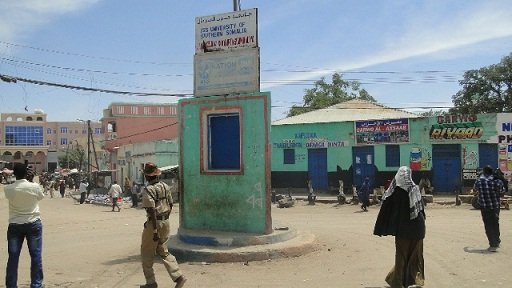
Baidoa (WDN) — The conflict in South West State took a dramatic new turn as forces loyal to former South West President Abdiaziz Hassan Mohamed (Laftagareen) launched another bold assault on Baidoa, the region’s political capital, underscoring the resilience and growing reach of an insurgent-style campaign that continues to challenge the authority of the Federal Government and the administration currently controlling the state.
According to reports emerging from the city, intense fighting erupted late into the night as Laftagareen-aligned fighters mounted coordinated attacks on positions held by South West State security forces and units allied with the Federal Government of Somalia.
The battle was reportedly among the fiercest witnessed in recent months. Local sources indicated that elements of the attacking force succeeded in penetrating parts of Baidoa and engaged government troops in direct urban combat before withdrawing from the city later the same night. While the full extent of the operation remains unclear, the reported ability of Laftagareen’s forces to reach sections of the regional capital has sent shockwaves through political and security circles.
Independent verification remains difficult due to limited access to the battlefield and the absence of comprehensive reporting from neutral observers. As is often the case in Somalia’s conflicts, both sides have claimed success while providing few verifiable details regarding casualties or territorial gains.
What is becoming increasingly evident, however, is the evolving nature of the confrontation. Rather than relying on conventional military engagements, forces loyal to Laftagareen appear to be pursuing a strategy rooted in mobility, surprise attacks, and sustained pressure—tactics more commonly associated with guerrilla warfare than traditional state-to-state conflict.
Security analysts note that such a strategy is not necessarily designed to seize and hold territory immediately. Instead, its objective is often to stretch opponents, undermine morale, disrupt administrative control, and force security forces into a costly and exhausting war of attrition.
The latest assault appears to fit that pattern. Despite the significant military resources available to the Federal Government and the South West State administration, Laftagareen’s supporters have demonstrated an ability to repeatedly challenge government positions, forcing authorities to remain on constant alert and divert resources toward defending key population centers.
The struggle for South West State has evolved into one of Somalia’s most closely watched political and military confrontations.
At stake is not only control of one of the country’s most strategically important federal member states but also a broader contest over political legitimacy, regional autonomy, and the future balance of power between Mogadishu and Somalia’s federal states.
For supporters of Laftagareen, the continuing campaign is viewed as proof that opposition to the current political order remains alive and capable of mounting serious resistance despite the resources deployed against it.
For the authorities in Baidoa and Mogadishu, the attacks represent a persistent security challenge that threatens stability and risks undermining confidence in state institutions. The overnight fighting serves as another reminder that the political disputes consuming Somalia are increasingly spilling onto the battlefield.
As dawn broke over Baidoa, questions remained unanswered: How deep did the attacking forces penetrate? What losses were suffered by either side? And perhaps most importantly, does the latest assault signal a new phase in a conflict that shows little sign of ending?
What is clear is that the battle for influence in South West State is far from over. Each new clash demonstrates that the confrontation has moved beyond political speeches and competing claims of legitimacy. It has become a test of endurance, organization, and willpower—one whose outcome could have consequences far beyond the streets of Baidoa.
WardheerNews