
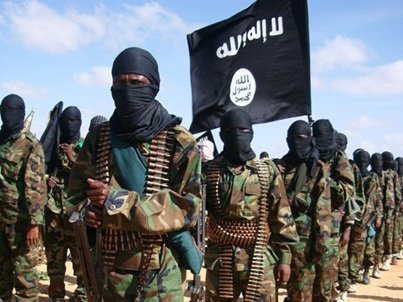
Jowhar (WDN) — Al-Shabaab militants have intensified their tax collection operations in communities commuting between Balacd and Jowhar, the capital of Hirshabelle State, exploiting seasonal flooding and deteriorating road conditions to reassert their presence in areas that government forces have recently claimed to control.
The development highlights a troubling reality facing Somalia: while political leaders in Mogadishu remain consumed by disputes over elections, constitutional legitimacy, and power-sharing arrangements, Al-Shabaab continues to demonstrate an ability to adapt, regroup, and generate revenue across strategic parts of the country.
Recent seasonal rains have left sections of the main highway connecting Balcad and Jowhar submerged, forcing commercial vehicles traveling from Mogadishu toward Jowhar and Somalia’s central regions to abandon the paved road and use alternative dirt routes. According to local residents and drivers, Al-Shabaab has quickly moved to exploit the situation.
The group is reportedly establishing checkpoints along these alternative routes, stopping vehicles and collecting what it describes as “taxes” from travelers and transport operators. The amount demanded reportedly varies according to the type of vehicle and the cargo being transported.
Drivers affected by the scheme say collections are taking place at key junctions near the village of Qalimow, located between Balcad and Jowhar. For many residents, the situation serves as another reminder of Al-Shabaab’s remarkable ability to capitalize on governance gaps, infrastructure failures, and security vulnerabilities.
While government officials frequently announce military successes against the group, Al-Shabaab continues to operate parallel systems of taxation, intimidation, and administration in many rural areas. Reports indicate that the group has recently strengthened its influence in several communities under Jowhar district, including Xawaadleey, Shanloow, Yaaqle, Lama-Koore, Far-Barako, Mukay Dheere, and Mareereey.
The growing activity comes at a time when no visible plan has emerged to rapidly restore transportation routes affected by flooding. The resulting disruption has complicated civilian movement and created opportunities for militant fighters to expand their reach into areas where government authority remains fragile.
Security analysts note that Al-Shabaab’s strategy has increasingly focused on controlling movement and economic activity rather than merely holding territory.
By taxing vehicles, traders, and local communities, the group generates substantial revenue while simultaneously projecting the image of an authority capable of regulating commerce in areas where state institutions struggle to maintain a consistent presence. The situation also underscores a larger contradiction facing Somalia.
Despite continued military operations by Federal Government forces, Hirshabelle security units, and local community militias—supported by international partners through airstrikes and intelligence assistance—Al-Shabaab has managed to re-establish itself in several locations from which it had previously been pushed out.
Military pressure has undoubtedly weakened the group’s ability to openly govern large urban centers. Yet its ability to infiltrate rural areas, exploit local grievances, and maintain revenue-generating networks remains one of the greatest challenges confronting Somali authorities. The resurgence of Al-Shabaab activity around Jowhar is unfolding against the backdrop of a deeply polarized national political environment.
Somalia’s leaders remain locked in disputes over elections, constitutional arrangements, and the future direction of the federal system. Relations between the Federal Government and several political stakeholders remain strained, while efforts to achieve a broad national consensus have repeatedly encountered obstacles.
For many observers, the timing is significant. As political attention remains focused on negotiations, electoral models, and competing claims of legitimacy, Al-Shabaab appears to be taking advantage of the resulting distractions to strengthen its operational footprint in strategically important areas.
The group’s renewed activity around Jowhar serves as a reminder that Somalia’s security and political crises are increasingly interconnected. While politicians debate who should govern the country and under what system, Al-Shabaab continues to demonstrate its capacity to exploit weaknesses on the ground, collect revenue, influence local populations, and challenge state authority.
The events unfolding around Jowhar illustrate a sobering reality: political uncertainty in Mogadishu and security vulnerabilities in the countryside are no longer separate issues. They are becoming two sides of the same national challenge.
Unless both are addressed simultaneously, analysts warn, Somalia risks finding itself trapped in a cycle where political paralysis in the capital creates opportunities for militant expansion elsewhere—a dynamic that has repeatedly complicated the country’s path toward stability.
WardheerNews