
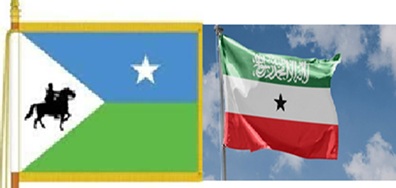
Somaliland and Northeastern Leaders Signal Readiness for Dialogue, But Their Visions for Sool Remain Fundamentally Different
LasAnod (WDN) — A potentially significant opening for reconciliation has emerged between Somaliland and the Northeastern State administration, as President Abdirahman Mohamed Abdullahi “Irro” signals renewed willingness to resolve the long-running dispute over Las Anod through dialogue, while President Abdikadir Ahmed Aw-Ali “Firdhiye” continues to emphasize peaceful relations with Somaliland as neighboring administrations.
Irro has expressed optimism that the people of Sool and Somaliland can overcome their differences, emphasizing their deep family and social ties and saying he has established a peace committee to pursue reconciliation.
“We are related by blood and kinship. We are not people who can live without one another,” Irro said, adding that he hoped the two sides’ peace committees could meet and work toward an understanding.
The initiative is significant. After years of confrontation surrounding Las Anod, a willingness by the two administrations to engage through dialogue rather than military confrontation could provide an important opportunity for de-escalation and reconciliation. Irro has previously called for a comprehensive peace agreement, prisoner exchanges and the restoration of movement and trade.
The Difficult Question Behind the Dialogue
Yet beneath the language of reconciliation lies the central political disagreement that has complicated the issue for years: what happens to Las Anod and the wider Sool area after peace is achieved?
Somaliland’s position is rooted in its claim that the people and territories it considers part of Somaliland should remain within its political framework. Irro has emphasized the shared identity, blood ties and historical connections between Sool communities and Somaliland, while his administration has also welcomed politicians from the Northeastern State who subsequently returned to Hargeisa.
The Northeastern State, by contrast, was formally established as a federal member state of Somalia, with Las Anod as its administrative capital, and President Firdhiye has been operating within that framework. President Hassan Sheikh Mohamud attended Firdhiye’s inauguration in Las Anod in January 2026, reinforcing the federal government’s recognition of the administration. That creates the central challenge.
Irro appears to see reconciliation as potentially leading toward the reintegration of Las Anod and its surrounding communities into Somaliland, while Firdhiye’s position is centered on maintaining the Northeastern State as a separate Somali administration and establishing peaceful relations with Somaliland as a neighbor.
Until that fundamental difference is addressed, even the most encouraging peace initiative will face difficult negotiations.
From Battlefield to Dialogue
The opportunity nevertheless should not be underestimated. For communities that have experienced years of political tension and armed confrontation, an agreement to communicate directly would represent a meaningful departure from the logic of confrontation.
Irro has repeatedly said that his government wants the Las Anod issue resolved through dialogue, reconciliation and consensus rather than renewed conflict.
Firdhiye, meanwhile, has an opportunity to demonstrate that the Northeastern State’s relationship with Somaliland can be defined by practical cooperation, security coordination, trade and peaceful coexistence without requiring agreement on their respective political identities. That distinction could be crucial.
Peace does not necessarily require the two administrations to agree on every constitutional or political question before they can begin working together.
A Chance for Two Brotherly Communities
The people on both sides of the political divide share extensive family, clan, cultural and economic ties. Those relationships create a foundation upon which dialogue can potentially be built.
The immediate objective could therefore be narrower and more practical: preventing renewed violence, facilitating the movement of people and goods, resolving humanitarian and security concerns, encouraging prisoner or detainee arrangements where applicable, and creating mechanisms through which political disagreements can be addressed without armed confrontation. The larger political question can then be addressed through sustained negotiations.
The greatest opportunity in the current moment is that both sides are publicly speaking the language of peace. The greatest obstacle is that they appear to envision different destinations.
For reconciliation to succeed, the dialogue will need to move beyond expressions of brotherhood and determine whether the parties can establish a political formula that respects the realities on the ground while preventing the dispute over Las Anod from returning to violence.
After years of tension, even that first step would be significant. The door to dialogue appears to be open. The real test now is whether Irro and Firdhiye can walk through it without demanding that the other side first surrender its political position.
WardheerNews
Leave a Reply