
By Musse Id
If the Gu rains fail again in April 2026, the livestock deaths across Somalia’s pastoral belt will trigger mass displacement on a scale the region’s humanitarian system cannot handle. I know this because in mid-December 2025, I saw families who have already exhausted every coping mechanism: herders feeding cardboard strips to camels, coastal communities crushing lobster shells for cattle, and displaced families gathering on town outskirts after losing everything. The system meant to help them is severely underfunded, and political barriers are blocking coordinators from traveling a one-hour road between Garowe and Las Anod.
I traveled from Jijiga to Hargeysa, then to Las Anod via Hawd and finally Garowe, with one question: can mediation still work when drought and division are moving faster than diplomacy? What I witnessed convinced me that peace is still possible, but the window is narrow, perhaps only weeks, before coping strategies collapse entirely and suffering becomes irreversible. Leaders need to act with urgency and humility before conflict, trade disruption, and drought push ordinary families toward collapse.
In Jijiga, I met with the President of the Somali Regional State, H.E. Mustafe Mohammed Omer, and I also engaged elders who have been brokering agreements and opening space for a mediated settlement. These elders are not symbolic figures. They carry a government-backed mandate in the Somali Regional State and have led a long, deliberate process of dialogue inside the region — three years of consultations, civic education, and awareness on peaceful coexistence, justice, and community harmony. They represent all major clans in the Somali Region, which means that their legitimacy and influence also resonates across Somali communities beyond Ethiopia’s borders.
That legitimacy matters now more than ever. The fighting between Somaliland and the Northeast ended in places without a durable ceasefire, and prisoners of war remain captive on both sides. A conflict “pause” is not real peace, it’s only a quieter stage of the war. Continued captivity is not merely a political dispute; it is a humanitarian wound that hardens public anger and makes the next escalation easier.
This is why I believe both administrations, Somaliland and the Northeast, should give their confidential consent to an elder-led mediation track anchored in Jijiga’s peace structures. Mediation must deliver tangible outcomes, not speeches: a workable ceasefire framework, an agreed pathway for prisoner release, and the reopening of trade corridors that keep families alive.
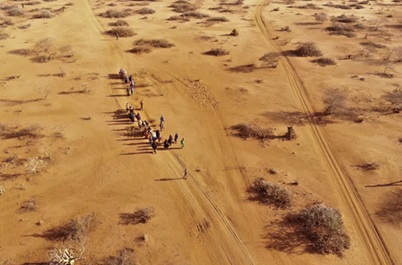
From Jijiga, I continued toward Las Anod through Hawd. Part of this choice was practical: flights between Hargeysa and Garowe were cancelled, and the road became the only option to see the reality between towns rather than only in meeting rooms. What I witnessed along that route was a crisis in motion. I saw many camel herders entering the Ethiopian Somali Region, people pushed across borders by drought and the search for water and pasture. Importantly, I observed and heard how the authorities managed this movement: herders were welcomed, weapons were collected upon entry, and I was told these weapons would be returned when the herders later travel back to Somalia. In a region drowning in mistrust, this kind of pragmatic management shows hospitality without insecurity and is a lesson worth noticing. What works in Jijiga should shame what’s failing 133 kilometers down the road.
In Jijiga, I travelled through Garowe, Hargeysa, and Las Anod. The most immediate consequence of conflict was economic suffocation. The war has disrupted the trade link between the south and the north. When trade slows, everything becomes more expensive: food, transport, medicine, and basic supplies. Jobs disappear, small businesses shrink, and poverty spreads quickly. I did not need a report to see it. It was visible.
Then drought added a second blow.
Multiple rainy seasons have failed, and fear is growing that if the coming Gu season (expected around April 2026) underperforms again, the scale of suffering will become unimaginable. Livestock losses on a massive scale would not just destroy income; they would destroy entire livelihoods and push more families into displacement. I saw desperate coping that I will not forget: communities feeding cartons to cows and camels; coastal communities crushing lobster shells and feeding them to animals because there is little else. When people feed livestock with cartons and shells, it is a loud signal that normal life has already broken.
I met UN staff and asked a direct question: what is the plan when suffering is this visible and spreading? The humanitarian system is severely underfunded, less than 20% of what is needed by some estimates, and the gap is now reflected in the outskirts of towns, where many families have become IDPs after losing livestock, water access, and income. Yet funding is not the only barrier, politics is blocking basic operational logic.
Regional humanitarian teams have been constrained from travelling between Garowe and Las Anod due to tension between administrations. The distance is about 133 km, roughly one hour by road, yet the system is fragmented: humanitarian coordination happens in Garowe for Puntland, while Las Anod officials are sometimes forced to travel far away, even to Jowhar, to participate in nationwide coordination exercises. This is what fragmentation looks like in practice: duplication, delay, and unnecessary suffering, which isn’t created by distance, but rather by ego.
Any humanitarian response must be government-led and locally enabled. International agencies can support, but only authorities can guarantee access, security arrangements, and functioning coordination across territories. When leaders treat aid access as a political weapon, the population becomes the target.
So I asked a government official a practical question: if the UN system is underfunded, will friendly countries, especially Gulf partners, send rapid assistance to people facing this alarming situation? Türkiye and Qatar have reportedly dispatched a humanitarian aid vessel carrying 2,428 metric tons of assistance to Sudan. Somalia needs that kind of speed and scale, quick, sustained support before the next seasonal shock turns into mass loss of livestock, livelihoods, and children.
Finally, leaders and elites across Somali territories must watch their rhetoric. Hate speech on social media is fuel that can shatter months of elder-led peace work in a single viral moment. If we want mediation to succeed, we need disciplined public messaging, zero tolerance for incitement, and deliberate protection of hope.
And Somali youth, at home and in the diaspora, should redirect energy from online division to practical solidarity: fundraising, awareness, and support to drought-hit families. Our people need water, fodder, animal health services, and cash support to survive this climate shock. Beyond drought, environmental pressure is also accelerating in parts of the Somali coast, where moving sand dunes are advancing rapidly threatening homes, roads, and farmland.
Jijiga reminded me that mediation still has a heartbeat. Then Hawd reminded me that survival is forcing movement right now. Garowe, Hargeysa, and Las Anod reminded me that poverty grows faster than negotiations when trade is blocked and rain is absent. The only real way forward is: Reopen the corridors. Release the prisoners. Fund the response. And let elders, backed by real political commitments, do the work of peace before drought and division do the work of destruction. Because the next time I visit, I don’t want to see families feeding garbage to animals while politicians protect their egos.
Musse Id
Email: musse.eid@gmail.com
—–
A former UN official with three decades of experience in development, humanitarian response, and conflict resolution.