
By Abdullahi A. Nor
In the predawn darkness of January 5, 2020, the first explosions ripped through the quiet perimeter of Camp Simba at Manda Bay, on Kenya’s northern coast. American personnel stationed there had grown accustomed to the rhythm of a training installation — aircraft maintenance, intelligence briefings, joint drills with Kenyan counterparts. It was not Baghdad. It was not Kabul. It was considered a manageable front in a long war. Then came the gunfire.
Militants from Al-Shabaab breached the perimeter with rocket-propelled grenades and small arms fire. Surveillance aircraft burned. Defensive positions were overrun. By the time the attack was repelled, three Americans were dead — one U.S. Army specialist and two Department of Defense contractors. It was the first time the Somali militant group had successfully killed U.S. military personnel in a direct assault on a base outside Somalia.
For most Americans, the episode passed quickly through headlines and into obscurity. But for those who have followed the arc of Somalia’s modern conflict, the attack was not surprising. It was the culmination of a trajectory that began nearly three decades earlier — shaped not only by Somali political collapse and militant ideology, but also by a series of international decisions that repeatedly altered the country’s balance of power.
This is not a story of simple causation. Al-Shabaab’s brutality, internal discipline, and ideological commitment are its own. Yet the environment in which it grew was profoundly influenced by external intervention. Over two decades, a movement that began as a marginal faction inside a local Islamist coalition evolved into one of Al-Qaeda’s most resilient affiliates.
Understanding how that transformation occurred requires revisiting Somalia’s collapse, Washington’s early miscalculations, and the unintended consequences of policies that prioritized military containment over political legitimacy.
I. The Collapse and the Vacuum
When President Mohamed Siad Barre’s regime fell in 1991, Somalia’s central state imploded almost overnight. Ministries dissolved. The national army fragmented along clan lines. Courts stopped functioning. Ports and airports became contested assets among militia leaders.
The capital, Mogadishu, fractured into rival zones controlled by warlords who extracted revenue through checkpoints, extortion, and predatory violence. Humanitarian catastrophe followed. By 1992, famine and armed looting prompted international intervention.
The United States led a multinational mission aimed at securing aid distribution. Initially humanitarian in scope, the operation evolved into a confrontation with local militia leader Mohamed Farrah Aidid. In October 1993, two U.S. Black Hawk helicopters were shot down over Mogadishu. Eighteen American soldiers were killed. Graphic images of their bodies being dragged through the streets were broadcast worldwide.
The political consequences in Washington were immediate. The U.S. withdrew. Somalia became, in American strategic culture, a cautionary tale.
For the next decade, international engagement waned. Somalia did not rebuild. Instead, governance devolved into localized power centers. Clan elders, businessmen, and religious leaders filled gaps where they could. But the absence of a functioning state remained profound.
II. The Rise of the Islamic Courts
By the early 2000s, fatigue with warlordism was widespread. In neighborhoods across Mogadishu, informal Sharia courts emerged to mediate disputes and enforce order. These were not initially revolutionary movements; they were pragmatic responses to chaos.
Over time, these courts federated into what became known as the Islamic Courts Union (ICU). In 2006, after defeating a coalition of U.S.-backed warlords, the ICU took control of Mogadishu.
For six months, something rare occurred in Somalia’s recent history: relative stability.
Checkpoints disappeared. Roadblocks were dismantled. The port and airport resumed operations with greater predictability. Commerce revived. While the ICU imposed conservative religious norms, many residents valued the return of security above ideological concerns.
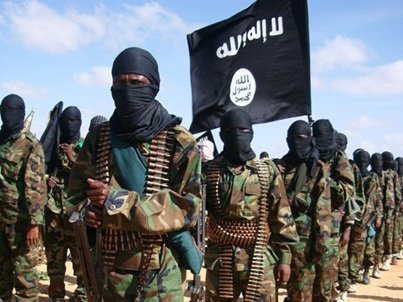
Yet within the ICU structure existed a younger, more radical wing — Al-Shabaab, meaning “the youth.” At the time, it was a small militant cadre, perhaps a few hundred fighters. Somalia’s religious culture had historically been Sufi-influenced and comparatively moderate. Global jihadist ideology had limited resonance.
But global events would change that.
III. The Warlord Strategy and the Ethiopian Intervention
In the post-9/11 security climate, U.S. policymakers viewed Islamist movements primarily through the prism of counterterrorism. The ICU’s rise raised alarm in Washington. Fears that Somalia might become a sanctuary for Al-Qaeda operatives prompted covert engagement.
The CIA supported a coalition of Mogadishu warlords styled as the Alliance for the Restoration of Peace and Counter-Terrorism. The effort was intended to weaken the ICU. Instead, it strengthened it. The warlords were widely resented by civilians; their defeat enhanced the ICU’s legitimacy.
The strategic dilemma intensified.
Ethiopia, Somalia’s historic rival, viewed the ICU as a potential security threat, particularly given border tensions and longstanding regional animosities. In December 2006, Ethiopian forces invaded Somalia, toppling the ICU and installing the internationally recognized Transitional Federal Government (TFG).
The conventional campaign succeeded swiftly. But insurgencies rarely conclude with conventional victories. Ethiopian troops in Mogadishu triggered nationalist resentment. Civilian casualties from urban fighting compounded anger. Entire neighborhoods were damaged. Displacement surged.It was in this environment that Al-Shabaab found its defining narrative: resistance.
IV. From Fringe Faction to Insurgent Vanguard
The Ethiopian presence reframed the conflict. What had been an internal political struggle now carried the optics of foreign occupation. Al-Shabaab capitalized on this shift, presenting itself as the defender of Somali sovereignty and Islamic identity.
Recruitment accelerated. Fighters flowed from rural communities, diaspora networks, and foreign jihadist circles. The group adopted asymmetric tactics — roadside bombs, targeted assassinations, suicide bombings — and began to outmaneuver better-equipped adversaries.
Between 2007 and 2009, Mogadishu became one of the most dangerous cities in the world. Ethiopian forces withdrew in 2009 under mounting costs and political strain.
But Al-Shabaab did not dissolve. It consolidated.
By 2012, the group formally pledged allegiance to Al-Qaeda. It had transitioned from a nationalist insurgency with Islamist leanings into a structured jihadist organization integrated into global networks.
V. The Expansion Beyond Somalia
Al-Shabaab’s strategy evolved from territorial control to regional projection. It targeted countries contributing troops to the African Union Mission in Somalia (AMISOM).
In 2010, bombings in Kampala, Uganda, killed dozens during a World Cup screening. In 2013, gunmen attacked Nairobi’s Westgate Mall. In 2019, the DusitD2 hotel complex was assaulted.
These operations were not random acts of violence. They were strategic communications: a demonstration that intervention in Somalia would carry consequences beyond its borders.
Then came the Manda Bay attack in 2020 — a direct strike against U.S. forces.
VI. The Drone War and Its Limits
As Al-Shabaab entrenched itself, the U.S. escalated air operations. Precision strikes targeted commanders, training camps, and logistics hubs. In 2014, a U.S. airstrike killed the group’s emir, Ahmed Abdi Godane.
Yet leadership decapitation did not collapse the organization. Al-Shabaab proved adaptable. It decentralized command structures and maintained revenue streams through taxation in areas under its control.
In 2017, the Trump administration designated parts of Somalia as “areas of active hostilities,” loosening engagement restrictions. Airstrikes increased dramatically.
But military metrics — number of strikes, number of militants killed — did not translate into strategic resolution. The group retained influence in rural regions and demonstrated continued operational sophistication.
Civilian casualty allegations complicated the campaign. Even when investigations disputed claims, the perception of foreign bombardment reinforced insurgent propaganda.
Counterterrorism achieved tactical disruption. It did not achieve decisive defeat.
VII. The Governance Gap
The endurance of Al-Shabaab cannot be explained solely by foreign intervention. Somalia’s internal political fragmentation has been equally decisive.
Successive transitional governments struggled with corruption, limited territorial control, and disputes with federal member states. Security sector reform lagged. Clan dynamics complicated national cohesion.
In some rural districts, Al-Shabaab provided swift dispute resolution and predictable enforcement — harsh but consistent. In environments where state institutions were weak or absent, predictability could be persuasive.
This governance gap remains central. Military campaigns can clear territory temporarily. Sustainable stability requires administrative legitimacy.
VIII. Strategic Lessons and Unanswered Questions
The history of international engagement in Somalia offers sobering lessons.
First, local political dynamics matter. The conflation of all Islamist actors into a monolithic threat obscured distinctions within the ICU and accelerated radicalization.
Second, foreign occupation narratives carry power. The Ethiopian intervention reshaped the conflict’s emotional terrain in ways that insurgents exploited effectively.
Third, military pressure without political settlement risks perpetuating cycles of adaptation. Al-Shabaab has repeatedly demonstrated resilience under sustained kinetic operations.
None of this absolves the group of responsibility for its atrocities. Its deliberate targeting of civilians, its coercive governance, and its transnational violence are unequivocal.
But acknowledging the complexity of causation is not exoneration. It is strategic realism.
IX. The Present and the Future
Today, Al-Shabaab remains embedded in Somalia’s conflict ecosystem. It collects taxes, conducts bombings, and negotiates power relationships in contested districts.
The United States continues to provide support to Somali forces and African Union contingents. Regional actors remain deeply involved. The conflict endures.
The attack at Manda Bay was not merely an isolated security breach. It was a reminder that unresolved conflicts evolve rather than disappear.
Two decades after the fall of the Islamic Courts, Somalia’s insurgency persists — shaped by internal fractures and external interventions alike.
If history offers guidance, it suggests that counterterrorism strategies divorced from political reconciliation risk reinforcing the narratives insurgents depend upon. Durable stability requires governance reform, economic opportunity, and inclusive political settlements — not only airpower.
Somalia’s story is not finished. Its trajectory remains fluid. But one conclusion is difficult to avoid: policies crafted in moments of urgency can echo for decades.
And in the Horn of Africa, those echoes are still reverberating.
Abdullahi A. Nor
Email: abdulahinor231@gmail.com