
By Faisal A. Roble
This essay is both historical, an appreciation note, and a nod to the concept of “Oodi Abka dhow” or when loosely translated, “proximity is thicker than blood.” has any relevance, this story is a good example.
Context: On March 2, 2026, while the world was busy with the Israeli/US vs. Iran war, Mohamed Kuraase’s short video clip on his Facebook took many of us back to our community’s unmitigated pain. It triggered a repressed memory of the gory story of the public hanging of seven Somalis from the Geri Community on October 22, 1957.
Despite the pain, however, the post reminded us that Somalilanders stood by the community. My nod is to the late Abdullahin Qarshi, Michael Mariam, Salool, Ambassador Awil, and Dr. Hussein Bulhan, who stood by my community. I will come back to the details, but first this.
Historical setting: In 1925, Ras Imuru, a close relative of Haile Selassie, was assigned to settle non-Somali, largely Oromo, farmers in the wheat producing priairi Geri land on the outskirts of Jigjiga. Oromo peasants were conscripted and settled there to cultivate and feed the marauding gun-toting settler soldiers who were sent from Harar to colonize Somalis. The second reason was to alter the demography of the region.[1]
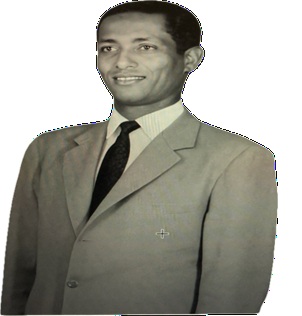
Garad Cusman Garad Ali
Garad Dalal- whom Pamkharust
refers to as Husman
The Geri revolted against the Addis Ababa policy as early as 1941, making them the first organized Somali social group to resist the colonization of the Haud and Reserved Area. The first phase of the struggle was waged between 1941 and 1947.
Sylvia Pankhurst, the wife of Richard Pankhurst Senior, who served as a top advisor to Emperor Haile Selassie, documented the Geri revolt in a book she wrote in 1945. Called colloquially “Dagaalkii Geriga”, or the “Geri war,” it set the tone for future resistance by the Somalis. Sylvia Pankhurst writes the following[2]:
A Somali named Husman is the son of Garad Ali. This Husman, it is alleged, is on the pay of the British Administration and goes to Hargeisa… In 1942, Garad Ali, father to this same Husman, organized a Somali armed force in the Reserved Area and marched from British-occupied territory against the Ethiopian Government. He attacked the post of Giri Kochar…He returned to the Reserved Areas and brought additional forces there to renew his attack on the Giri Kochar post. Deprived of reinforcements, the post at Giri Kochar fell. After the triumph, Garad Ali transported his army in motor Lorries to Fugnabera, the British authorities still closing their eyes to his advance towards Harar.[3]
Mrs. Pankhurst has accused Garad Ali of challenging Abyssinia and its annexation of the Somali Peninsula. She continues to say:
Garad Ali’s forces advanced to within fourteen kilometers of Harar. Lij Andargue Massai could not stand Ali’s forces and therefore called for volunteers to save the town from the tragic fate Gursum had suffered. The entire population responded: everyone got what arms they could and went out to protect the town.[4]
Notwithstanding political grievances, the Geri leadership’s revolt was further encouraged to continue the resistance by a speech that Major Walsh, governor of Barbara, gave in 1942 during a visit to Jigjiga. In that speech, Walsh underscored that Jigjiga was no longer under the jurisdiction of Ethiopia.”[5] According to archives, the region was temporarily liberated.

Garad Ali Garad Dalal Garad Koshin
In the end, though, the Geri could not capture Harar. And that precipitated the pushback as a result of the reinforcement Ethiopians received from Addis Ababa. Also, the British governor of Somaliland reneged on his promise to supply weapons to Garad Ali.
In a letter Emperor Haile Selassie sent to the United Nations, Garad Ali was accused of committing crimes in Gursum against civilians. The letter stated that the Geri killed 700 civilians, which the Garad categorically denied. This accusation catalyzed Major Walsh in Somaliland to cut aid to Garad Ali.
In the middle of the Geri uprising (1941-1942), the “Gulub,” a corrupted word for “Club,” standing for the Somali Youth Club (SYC), came into being and immediately took center stage as the sole political movement throughout the Somali region, including as far as Harar.
In Harar, the Hanoolatoo movement took center stage, which also challenged Emperor Haile Selassie. The Hanoolaato was led by Haji Abdi Boori, father-in-law of Garad Ali’s son, Garad Usman. Hanoolato, which translates into “long life,” was a Somali-Harari coalition that challenged the occupation. Haji Abdi Boori died in one of Ethiopia’s maximum prisons, after which time most of his children moved to Jigjiga.
By 1943, the Somali Youth League (SYL) replaced the SYC, and most of its activities moved to Mogadishu.
Phase 2 of the Geri uprising started in tandem with the 1948 incorporation of the Haud and Reserved Area into the new Ethiopia. By this time, the name “Ethiopia” replaced the historical name of “Abyssinia.” Again, Garad Ali revolted. This time, though, the SYL established cells not only in towns but in the farming communities of the Geri. Other Somali communities in the region became active in SYL. However, the Geri again took arms to chase settlers out of their region. Then, between 1948 and 1957, the Geri revolt resumed.
To quell this phase of the uprising, Haile Selassie unleashed a new atrocious campaign against the farming villages of the Geri. Garad Ali was apprehended and was jailed in “Alambakeign” prison in Showa. It was during the Garad’s imprisonment that farmers, afraid of directly expressing their grief, adopted this song sung during harvest time:
Garad Ali Shawuu tagay;
Shimuu tagay;
Shaluu tagay
The leadership of the uprising was obliterated. Tens of villages were razed to the ground. This was the first time Somalis were hit with cannons. As such, this era is colloquially called “xiligi Kanooniga,” or the “era of cannons.”
Top leaders of the revolt, Garad Yusuf Garad Dalal, Suldan Ali Gudal, the erstwhile liberation movement leader and key fundraiser for SYL,[6] Haji Abdi Buh, whom Dr. Ali Hersi cited in his Desertion, Arab Factor in Somali History, as the most knowledgeable person about the history of the Somali West, escaped and sought asylum in British Somaliland.
Which brings me to the role played and the assistance Somalilanders extended to their brethren across the artificial border. Due to its relationship with the Geri, particularly the Abayonis subclan in the port city of Berbera, a well-respected community hailing from Sheikh Yussuf Aw-Mame, and intimately intermarried with Somaliland clans, Somaliland has been there for the community in the past.
Read more: History and Personalities Deserving Appreciation
By Faisal Roble
Email: faisalroble19@gmail.com
————-
Faisal Roble, a prominent essayist and public intellectual, is writing a book on state formation in Ethiopia and the Somali Peninsula. His past writings have appeared on WardheerNews, where he served as Chief Editor, as well as in The Ethiopian Review and The Horn of Africa Journal, where he was a contributing editor.