

Jowhar (WDN) — Somalia’s federal system is facing another potentially destabilizing political rupture after senior Hirshabelle figures openly challenged President Hassan Sheikh Mohamud’s handling of the regional leadership and electoral process.
Hirshabelle Vice President Yusuf Hagar (Dabageed) and former National Intelligence and Security Agency chief and lawmaker Abdullahi Mohamed (Sanbalooshe) have critically come against the president’s proposed plan for Hirshabelle election.
Sanbaloolshe sharply criticized the president’s decision to support Ali Gudlawe remaining in power despite what Sanbaloolshe said was opposition from the Hawadle community.
Sanbaloolshe warned that if Hassan Sheikh is satisfied to control Jowhar and Balcad without broader political agreement, Somalis could ultimately establish another government. “If Hassan Sheikh and Gudlawe are satisfied with Jowhar and Balcad, Somalis will establish another government,” Sanbaloolshe said.
The warning comes as tensions over Hirshabelle’s political future increasingly expose the limits of Mogadishu’s influence outside the capital.
Dabageed: No Election Without Political Agreement
Hirshabelle Vice President Yusuf Hagar Dabageed has separately challenged the proposed electoral process, saying no election should take place in Hiiraan without a prior political agreement acceptable to the relevant stakeholders.
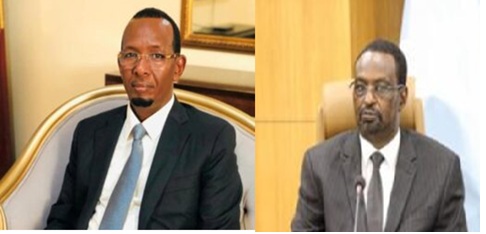
He said the requirement applied even to individual villages, warning that those who attempt to conduct elections without political consensus would bear responsibility for any consequences.
Dabageed’s remarks highlight the depth of disagreement over how Hirshabelle’s next political leadership should be chosen. He also called on the Hawadle community to collectively consider its political future, saying discussions should involve members of the community both inside Somalia and abroad.
Hirshabelle Joins a Wider Federal Crisis
The dispute is unfolding as relations between Mogadishu and several Federal Member States remain strained. Puntland and Jubaland have adopted increasingly independent positions in their disputes with the Federal Government, while Southwest State has faced its own political and security confrontation with Mogadishu. Hirshabelle now appears to be moving toward a similar standoff.
The emerging pattern points to a broader problem for the Federal Government: political authority cannot easily be imposed from Mogadishu when regional leaders and influential communities do not accept the process through which that authority is exercised.
The risk is therefore not necessarily an immediate formal breakup of Somalia. It is the gradual development of de facto political fragmentation, with regional administrations increasingly making decisions independently of the center.
The Test for Hassan Sheikh
For President Hassan Sheikh, the choice is becoming increasingly difficult. Attempting to impose a preferred political outcome could intensify resistance in Hirshabelle. But failing to reach agreement with regional stakeholders could further weaken Mogadishu’s influence.
The most viable path is political negotiation, not coercion as coercion will sure fail like Baidoa. That means clarifying the constitutional basis of the electoral process, addressing the concerns of Hiiraan and other stakeholders, and creating a framework that competing political actors can accept.
Dabageed and Sanbaloolshe’s warning should therefore be viewed as more than another political statement. It reflects a growing challenge to the Federal Government’s ability to maintain a unified political system when regional actors increasingly insist on determining their own political arrangements.
If Hirshabelle follows Puntland, Jubaland in distancing itself from Mogadishu, Somalia’s federal crisis will no longer be a series of separate disputes. It will become a national question about whether the current federal model can survive without a new political settlement.
WardheerNews