
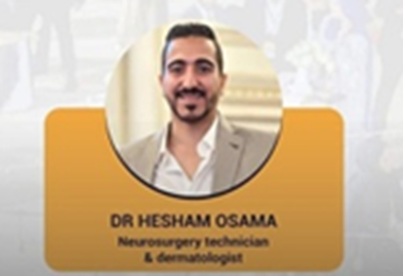
Hargeisa (WDN)- A case that initially appeared to be a routine crackdown on medical fraud has taken a startling and deeply revealing turn in Hargeisa. A man identified as Sheham Osama was recently arrested by the Somaliland Ministry of Health, accused of forging medical credentials and falsely presenting himself as a qualified healthcare professional—an allegation that, in most functioning systems, would carry serious legal consequences.
Authorities claimed he had manufactured unverified medical identification and operated without any recognized training or certification. But what followed has raised far more troubling questions than his initial arrest.
Instead of facing prosecution, Sheham was quietly released on bail. Sources suggest that individuals like him are not anomalies, but part of a wider pattern—brought into the country by business actors embedded in the healthcare sector, where oversight remains weak and profits are high. Then came the most astonishing twist: he was reportedly advised to marry a local Somali woman from Hargeisa, effectively placing himself under the protection of her clan. In a society where kinship can override institutions, the message is clear “he is now our in-law; who can touch him?” Within days, that strategy appeared to bear fruit.
On the very night of his release, Sheham was seen attending a public event in Hargeisa, confidently walking hand-in-hand with his new wife. There was no sign of a man facing serious criminal charges—only the posture of someone who believes the case against him is already neutralized.
Critics argue this is not just an isolated incident, but a symptom of a deeper structural failure—where corruption, manipulation, and social shielding routinely outmaneuver accountability. The implication is stark: in such an environment, legal consequences are negotiable, and justice can be absorbed into clan protection networks.
Those skeptical of such claims are urged to watch closely how the case unfolds. If past patterns hold, it may quietly disappear without resolution.
At its core, this episode has reignited calls for urgent regulatory reform. Without strict oversight and enforceable laws targeting malpractice within the healthcare sector, critics warn that such cases will continue to undermine public trust—not just in institutions, but in the very systems meant to protect lives across Somali regions.
WardheerNews