
By Abdullahi A. Nor
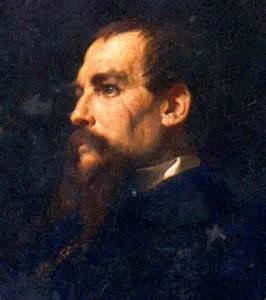
In the middle of the 19th century, when European explorers fanned out across Africa in search of the sources of the Nile, lost cities, and the edges of empire, Sir Richard Francis Burton stood apart. Scholar, soldier, linguist, ethnographer, and provocateur, Burton was no ordinary adventurer. He mastered over 25 languages, translated The Arabian Nights, and slipped undetected into Mecca disguised as a pilgrim — an act that could have cost him his life.
But before his legendary expeditions up the Nile or his clash of wills with John Hanning Speke, Burton set his eyes east — to the Horn of Africa, the land the ancients had called Punt, a world of dunes, camels, and oral kingdoms. His 1854–1855 journey, later immortalized in First Footsteps in East Africa, would make him the first European to set foot inside Harar, the walled city of the highlands, and to describe in detail the intricate tapestry of Somali society that surrounded it.
A Forbidden Land
When Burton landed at Zeila, the sun-scorched port on the Gulf of Aden, he stepped into a region that European maps still rendered as blank space. Zeila was the key to the Somali interior, a bustling, half-ruined hub of trade where frankincense, hides, slaves, and ivory passed between the hinterlands and the Red Sea. But Zeila also marked the boundary of a fiercely independent land — where every hill belonged to a clan, and every camel told a genealogy.
Burton’s mission, sponsored by the Royal Geographical Society, was to survey trade routes and assess the potential for British influence in the interior. But he also sought something more elusive: to understand the people of the Horn on their own terms. Fluent in Arabic, Persian, and Hindustani, Burton disguised himself as Hajj Abdullah, a Muslim merchant from India, and set out with a small caravan inland — toward the legendary city of Harar, “the Timbuktu of the East.”
The Isa: Gatekeepers of the Coast
The first to test him were the Isa (Ciise) clan, who controlled Zeila and the surrounding lowlands. The Isa was renowned for their fierce independence and mastery of the desert trails. They guarded the caravan routes with the vigilance of hawks, exacting tribute from traders who passed through their land.
Burton’s disguise was immediately scrutinized. The Isa elders questioned him in Arabic, probing his knowledge of the Qur’an and his lineage. His responses, calm and fluent, impressed them enough to grant safe passage. Yet they made clear that his safety depended on their protection — and their payment.
In his journals, Burton described the Isa as “a nation of orators and horsemen, whose pride of race is their creed.” To him, they embodied the paradox of the Somali people — at once welcoming and wary, poetic yet practical, and guided by a code of honor older than any written law.
The Gadabuursi: Custodians of Custom
Beyond Isa territory lay the lands of the Gadabuursi, a Dir clan famed for their diplomacy and eloquence. Burton found among them what he called “a parliament without walls,” where disputes were resolved under the shade of acacia trees by councils of elders.
The Gadabuursi were traders, scholars, and judges — guardians of xeer, the Somali customary law that governed everything from blood compensation to water rights. Burton was fascinated by their social structure, remarking that they possessed “the organization of a state without a crown.”
They told him tales of Harar — a city that no infidel had ever entered, ruled by an emir who claimed descent from the Prophet’s family. The Gadabuursi warned him that travelers who approached its gates without permission were never seen again. For Burton, that warning was an invitation.
The Habr Awal: Merchants of the Haud
Crossing the vast Haud steppe, Burton entered the grazing lands of the Habr Awal, one of the great sub-clans of the Isaaq tribe. The Habr Awal was both warriors and traders, dominating the caravan routes between Berbera and the interior. Their wealth was measured not only in camels but in connections — they were the middlemen of the Horn, negotiating between the coast and the highlands, between Somali clans and the Harari kingdom.
Here Burton observed the rhythm of nomadic life: the migration of herds, the recitation of lineage, the poetic duels that replaced warfare. He noted that even feuds (aano) followed strict rules of engagement, governed by codes of compensation and mediation. “In this land,” he wrote, “every man carries his genealogy in his memory, his honor on his tongue, and his sword at his side.”
The Habr Awal was wary of him, suspecting espionage, but his command of Islamic etiquette and his generosity with gifts won him temporary allies — enough to guide him onward.
The Geri Kombe: Guardians of the Frontier
Beyond the Haud stretched the semi-mountainous frontier that led to Harar — the domain of the Geri Kombe, a powerful Darod sub-clan whose reputation as skilled fighters and tacticians preceded them. The Geri controlled the approaches to Jigjiga and the fertile valleys beyond, forming a buffer between the Somali lowlands and the Harari emirate.
At the center of their governance stood the Garaad, the hereditary chief, whose authority rested not on tyranny but on consensus. Burton observed that the Garaad’s court was “a parliament beneath a tamarind tree, where the word of the elder outweighed the wealth of the warrior.”
The Geri Kombe impressed Burton more than any other Somali clan he met. They combined discipline with hospitality, intelligence with independence. Their influence reached deep into Harar’s trade networks, and their cooperation was indispensable for anyone attempting the journey.
Through Geri intermediaries, Burton secured passage to the outskirts of Harar. He realized that without their protection — and the Garaad’s silent consent — he would never reach the city alive. He later wrote that “among the Somali, the Geri are the frontier lords, neither subjects nor slaves, but guardians of their own destiny.”
The Dir and the Oromo Borderlands
Near Harar, the landscape changed — greener, higher, more cultivated. The Dir clans who lived along the frontier were culturally intertwined with their Oromo neighbors, fluent in both Somali and Afan Oromo. They were traders, intermediaries, and sometimes mercenaries, bridging two worlds: the nomadic plains and the settled highlands.
Here Burton’s guides refused to go further, warning that the Emir of Harar executed outsiders on sight. Yet Burton pressed on, determined to see the city that Muslim geographers had long described as the “City of Saints.” His interpreter wept, begging him to turn back, but Burton’s curiosity was stronger than fear.
The Forbidden City of Harar
On January 3, 1855, Burton entered Harar disguised as Hajj Abdullah, a Muslim merchant. The city was unlike anything he had seen in Africa — walled, urban, and deeply devout. Its narrow alleys echoed with the call to prayer, its markets sold coffee, chat, and spices, and its people looked with suspicion upon the stranger in their midst.
The Emir, Ahmad ibn Abu Bakr, summoned him for questioning. Burton’s command of Arabic and knowledge of Islamic law saved him from execution. For ten tense days, he lived among the Harari, observing their customs and architecture, documenting their trade links with Zeila, Berbera, and Aden. He became the first European ever to enter Harar and leave alive.
When he finally departed, he did so secretly — traveling under cover of night, guided once again by Somali escorts who risked their lives for his safe passage.
The Legacy of the Journey
Burton’s First Footsteps in East Africa remains one of the most detailed ethnographic portraits of Somali society ever written by a foreigner. While colored by the colonial assumptions of his age, it reveals a remarkable sensitivity to the logic and dignity of clan-based governance.
He saw in the Somali people “a democracy of equals, where every man is noble, and no man is king.” He admired their poetry, their legalism, and their courage. “The Somali,” he wrote, “fights for his lineage, not for his lord. He is the freest man in Africa, though his freedom is a weapon he wields against himself.”
Burton’s journey also reshaped European understanding of the Horn. His reports laid the groundwork for later explorers like Speke, Grant, and Thomson, and eventually for British and Italian colonial ambitions. Yet Burton himself remained an ambivalent imperialist — more fascinated by cultures than by conquest. His sympathies often lay with the people he studied rather than with the empire he served.
The Man and the Myth
Burton’s life was a paradox — at once a servant of empire and a critic of its arrogance. He translated the Kama Sutra, studied Sufi mysticism, and questioned the moral certainties of Victorian Britain. In the Horn of Africa, he confronted not savagery, as many of his contemporaries imagined, but a civilization of oral law, artistry, and endurance.
The tribes he encountered — Isa, Gadabuursi, Habr Awal, Geri Kombe — taught him lessons no European university could offer: that order can exist without kings, that justice can be spoken not written, and that pride, when rooted in freedom, is its own religion.
Epilogue: Footsteps That Echo Still
More than a century and a half later, Burton’s trail across the Horn remains one of the most remarkable feats of exploration in African history. His writings continue to shape how the outside world perceives Somali society — though time has also revealed how much the Somalis taught him in return.
Standing in Zeila today, one can still imagine the tall Englishman disguised as Hajj Abdullah, squinting into the heat haze of the interior, notebook in hand, daring the unknown. His footsteps may have been the first from Europe, but the path he followed — through clan, custom, and courage — belonged to the Somali people long before him.
Abdullahi A. Nor
Email: abdulahinor231@gmail.com