
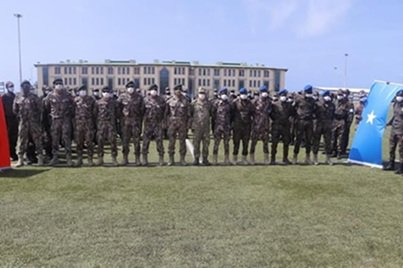
Baidoa (WDN) – In yet another episode highlighting the chronic dysfunction that continues to plague Somalia’s security institutions, reports emerging from Baidoa suggest that members of the elite Haramcad Police Unit, one of the country’s most heavily armed and specially trained forces have turned their frustrations inward after allegedly going unpaid for months.
According to local sources, a group of disgruntled officers staged a mutiny-like protest that quickly escalated into scenes described by residents as disorderly and intimidating, raising fresh concerns about the consequences of deploying security forces without ensuring they receive their salaries.
Witnesses reported that armed officers entered several restaurants and businesses across parts of Baidoa, creating panic among residents and business owners. While conflicting accounts remain regarding whether any actual looting occurred, the mere sight of heavily armed security personnel storming commercial establishments was enough to send a chilling message throughout the city.
The incident has exposed a troubling paradox at the heart of Somalia’s security sector. For years, millions of dollars have been spent by international partners on training, equipping, and professionalizing specialized units such as Haramcad. These forces have often been showcased as symbols of a modern Somali security apparatus capable of confronting terrorism and maintaining public order.
Yet critics argue that even the most sophisticated training cannot compensate for a simpler reality: soldiers and police officers who are not paid eventually become security risks themselves. Residents expressed disbelief that a unit specifically trained to combat crime and protect civilians would find itself accused of behavior that many described as resembling the very lawlessness it was created to prevent.
The situation has also revived longstanding questions about the management of security-sector finances. Government officials routinely announce new security initiatives, operational successes, and donor-supported programs. However, rank-and-file officers across multiple branches of the security forces have repeatedly complained about delayed salaries, unpaid allowances, and poor living conditions.
Observers note that when elite forces begin protesting over wages, the problem can no longer be dismissed as an isolated administrative oversight. “It is difficult to ask officers to uphold discipline when the system responsible for paying them appears unable to uphold its own obligations,” one local analyst told WardheerNews.
Perhaps the most ironic aspect of the incident is that Haramcad officers are among the country’s most respected and extensively trained personnel. Yet, according to reports, even these highly regarded units are not immune from the frustrations caused by salary delays.
The Bay Regional Police Command is expected to issue an official statement regarding the incident and determine whether disciplinary measures will be taken against those involved.
Until then, many residents are left wondering how a government struggling to pay its own security forces expects those same forces to guarantee law, order, and public confidence.
After all, maintaining security requires more than uniforms, weapons, and training. It also requires something far less glamorous but equally essential: paying the people entrusted with carrying them.
WardheerNews