
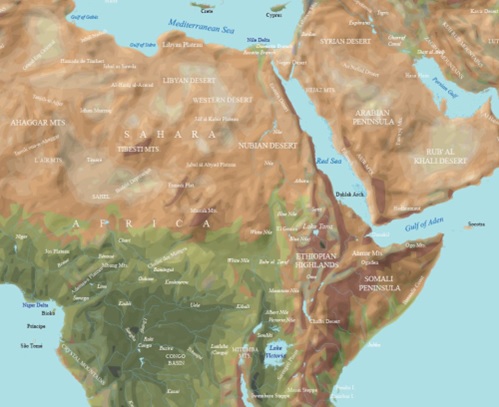
Cairo/Mogadishu (WDN) – Egypt has openly rejected any arrangement that would allow Ethiopia to secure a port facility or military base in Somalia or Eritrea, once again highlighting the intense geopolitical competition unfolding across the Horn of Africa and raising questions about Somalia’s ability to independently shape regional decisions affecting its sovereignty and security.
Egyptian writer and political analyst Emad El-Din Hussein reported that Egyptian Foreign Minister Badr Abdelatty firmly dismissed the possibility of Cairo accepting an Ethiopian maritime presence on the Red Sea or Indian Ocean coast, even if Addis Ababa were to offer a final settlement over the long-running dispute surrounding the Grand Ethiopian Renaissance Dam (GERD).
According to Hussein, reports had circulated suggesting that Ethiopia was exploring a possible deal linking access to a maritime outlet with progress on resolving the GERD dispute. However, the Egyptian Foreign Minister stated that no such proposal had been formally presented to Cairo by the Ethiopian government.
The remarks come amid intensifying strategic competition in the Horn of Africa and the Red Sea, where access to ports, military bases, and maritime routes has become increasingly central to regional power struggles.
Egypt reiterated its support for Somalia’s sovereignty, territorial integrity, and national unity, while opposing what it described as any unilateral actions that could undermine Somalia’s federal government or destabilize the wider region.
For Somalia, however, the episode reflects a broader diplomatic challenge: despite being the country whose coastline and sovereignty are directly affected, major regional powers continue to dominate discussions over maritime access and security arrangements in the Horn of Africa.
Ethiopia’s Search for Sea Access
Ethiopia, Africa’s most populous landlocked country, has intensified efforts in recent years to secure reliable access to the sea. Addis Ababa currently depends heavily on Djibouti for the majority of its international trade, a dependence Ethiopian leaders have repeatedly described as a strategic vulnerability.
The issue became a major regional flashpoint after Ethiopia signed a memorandum of understanding with Somaliland in January 2024, reportedly seeking access to coastal facilities in exchange for possible recognition-related arrangements. Somalia’s Federal Government strongly rejected the agreement, describing it as a violation of its sovereignty and territorial integrity.
Although Somalia and Ethiopia later agreed in late 2024 to resolve their disagreements through dialogue, the question of Ethiopia’s long-term maritime access remains unresolved.
No formal agreement currently exists granting Ethiopia a port or military base in Somalia or Eritrea. Claims that maritime access could be linked to negotiations over the GERD dispute remain based on unverified reports rather than confirmed diplomatic agreements.
A Region of Competing Interests
The dispute illustrates the increasingly complex strategic environment surrounding the Horn of Africa. Egypt views Ethiopia’s expanding regional influence—particularly its control over the Nile through the GERD and its search for maritime access—as a direct strategic concern.
Ethiopia, meanwhile, argues that access to the sea is an economic and security necessity for a nation of more than 120 million people. Caught between these competing interests is Somalia, a country with one of Africa’s longest coastlines but limited political leverage due to internal divisions, security challenges, and dependence on international support.
The growing involvement of Egypt, Ethiopia, Turkey, the Gulf states, and other international actors in Somalia’s affairs has raised concerns that decisions affecting Somalia’s strategic future are increasingly shaped by external powers rather than through a unified national diplomatic strategy.
As competition over the Red Sea and Horn of Africa intensifies, Somalia faces a critical challenge: strengthening its own diplomatic capacity and ensuring that regional agreements involving its territory are determined by Somali interests rather than the agendas of neighboring states.
WardheerNews