
By Isha Qarsoon
Israel’s recognition of Somaliland prompted an immediate response from the Federal Government of Somalia. Parliament convened in a joint session, official statements were issued, and diplomatic objections were formally lodged. The government asserted that Somalia’s sovereignty and territorial integrity had been violated. Both domestically and in external forums, the state acted in the manner expected of a government responding to a challenge to its internationally recognized borders.
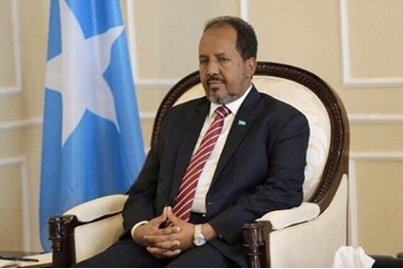
In his address to the joint session of the Federal Parliament on 28 December 2025, President Hassan Sheikh Mohamud condemned Israel’s decision as “a blunt aggression against the sovereignty, independence, territorial integrity, and the unity of the people of the Somali Republic.” He stated that the northern regions commonly referred to as Somaliland “remain an inseparable part of Somalia,” described the recognition as “null and void,” and urged Somalis to defend the unity and independence of their country.
The speech is significant because it confirms that the President publicly asserted Somalia’s sovereignty and stated the constitutional position without ambiguity. That assertion appears to have marked the limit of what the President regarded as required of him. What followed was a failure to enforce that position within the constitutional order.
The constitutional responsibility of the President does not end with public condemnation or formal declarations. Having described Israel’s decision as “a blunt aggression against the sovereignty, independence, territorial integrity, and the unity of the people of the Somali Republic,” and having reaffirmed that Somaliland “remain[s] an inseparable part of Somalia,” the obligation extended beyond stating the position. Once the state’s stance was articulated in these terms, it required internal defense through the constitutional order. That defense necessarily involved addressing conduct by senior officials that contradicted the declared position. The absence of any visible effort to confront or correct such conduct allowed the constitutional assertion to remain rhetorical, tolerating contradiction and defiance within its own institutions.
The Provisional Constitution treats sovereignty and unity as binding commands rather than political preferences. It provides that “all power is vested in the people and can only be exercised in accordance with the Constitution and the law,” and it expressly prohibits “a person or a section of the public” from claiming or using the sovereignty of the Federal Republic for personal or sectional interest. Any remaining ambiguity is removed by the Constitution’s further declaration that “the sovereignty and unity of the Federal Republic of Somalia is inviolable.”
These provisions bind all officeholders and require coherence at the highest levels of the state. Constitutional commands concerning sovereignty and unity do not fail on their own; they lose force when those entrusted with enforcing them treat them as optional, negotiable, or situational. Over time, Somalia’s political leadership has allowed constitutional discipline to erode through inaction, accommodation, and avoidance of internal confrontation.
Somaliland did not emerge as a political actor in late 2025. It has functioned as a de facto polity for more than three decades. That persistence reflects Somalia’s prolonged failure to govern nationally, extend authority beyond limited territory, and build federal institutions capable of holding the country together. The recognition episode followed a familiar trajectory. Yet no sustained presidential reckoning followed on how internal governance failures had made such an outcome foreseeable. Instead, the episode was treated as a diplomatic rupture rather than as the cumulative result of governance failure.
The constitutional breach became unmistakable in the days that followed. Senior federal executive, legislative, and judiciary officials in Mogadishu, widely described in Somali media as Somaliland politicians, issued public warnings against the Federal Government’s response. They cautioned against economic and security measures and framed the situation as one requiring accommodation rather than constitutional assertion. These statements came from holders of senior national office whose authority exists only because Somalia’s unity and sovereignty are protected by the Constitution. After Somaliland politicians’ warnings, the issue was no longer diplomatic. It had become constitutional.
The Constitution defines the territorial scope of the state without qualification or contingency. It provides that “the sovereignty of the Federal Republic of Somalia extends over all the territory of the Federal Republic of Somalia,” and that “the territory of the Federal Republic of Somalia is inviolable and indivisible.” These provisions are not aspirational statements or negotiating positions. They are binding constitutional commands that apply to all organs and officials of the state. Senior officeholders therefore lack any constitutional latitude to publicly condition, dilute, or relativize the state’s sovereign response to a challenge to territorial integrity while continuing to exercise national authority derived from that same constitutional order.
Responsibility for addressing such conduct rests squarely with the presidency. The Provisional Constitution assigns the President specific and affirmative duties. It requires him to be “the Head of State,” “the symbol of the unity of the nation,” and to “carry out his duties in accordance with the Constitution.” These are not ceremonial descriptions. They impose an obligation to maintain internal constitutional coherence and to ensure that the authority of the state is exercised consistently across all branches of government. Those duties extend beyond external representation. They require internal direction and enforcement when constitutional commitments are threatened from within the state itself. Sovereignty and unity cannot be defended abroad if they are permitted to fragment internally. The Constitution therefore places on the President the responsibility to ensure that holders of national office act in conformity with the constitutional order they serve.
Following Israel’s recognition of Somaliland, the President acted decisively toward external actors. He addressed the Federal Parliament, publicly condemned the recognition, and engaged diplomatically to assert Somalia’s territorial integrity. In that respect, the constitutional position of the state was stated clearly and without ambiguity.
What followed exposed the constitutional failure. When senior federal officials publicly positioned themselves as internal restraints on the state’s sovereign response—warning against the exercise of authority that the Constitution declares inviolable—the presidency did not respond with comparable constitutional clarity. No directive was issued reaffirming that all national officeholders remain bound by a single sovereign position. No institutional action followed to address conduct incompatible with the constitutional command that unity and territorial integrity are non-negotiable.
That omission carries constitutional consequence. The President’s oath makes this responsibility personal. Upon assuming office, he swears “to uphold and protect the Constitution of the Federal Republic of Somalia” and to “defend the unity and independence of the nation.” The oath draws no distinction between external challenge and internal defiance. It binds the President to safeguard the constitutional order, including sovereignty, wherever that order is threatened—whether by foreign action or by conduct within the state itself.
The supremacy clause reinforces this obligation. The Constitution declares itself “the supreme law of the country” and provides that it “binds the government and guides policy initiatives and decisions in all sections of government.” Allowing senior officeholders to publicly undermine constitutional unity without correction contradicts that command and weakens the authority of the constitutional order itself.
Sovereignty depends on internal coherence and unity depends on constitutional discipline. When those principles are not enforced at the highest level of government, external recognition of separatist claims becomes easier to rationalize and harder to resist.
A president who asserts sovereignty before Parliament and the international community, yet fails to enforce constitutional loyalty within the state, relinquishes the core function assigned to him by the Constitution. By failing to confront internal constitutional incoherence among senior officeholders, the President allowed the office’s central duty as guardian of unity and sovereignty to lapse, even as its formal powers remained intact. This conduct constitutes abdication of constitutional duty.
Sovereignty is not preserved through declarations alone. It is sustained through institutional enforcement, beginning with the presidency. When that responsibility is not discharged, sovereignty erodes internally long before it is challenged from outside.
Isha Qarsoon
Email: Ishaqarsoon1@gmail.com
————-
Isha Qarsoon- is a platform dedicated to addressing critical issues pertaining to good governance, corruption, and social challenges. It emphasizes investigative journalism as a means to uncover and disseminate information, enabling the public to engage with and understand the realities of the country. Through its focus on transparency and accountability, the forum aims to foster informed public discourse and contribute to societal awareness and reform.