
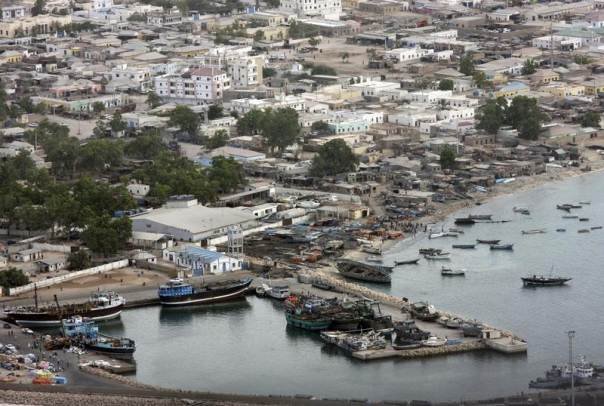
Garowe (WDN) – As the dispute over increased port charges at Bosaso Port continues to disrupt trade and commercial activity, international trade policy expert Eng. Abdullahi Bakayle has defended the revised tariff structure, arguing that much of the public debate has been driven by misinformation and a misunderstanding of how port fees and regional trade systems operate.
Bakayle said recent commentary surrounding the tariff increase has overlooked key facts about the port’s previous fee structure and the economic realities of maintaining modern maritime infrastructure. According to Bakayle, the previous tariff at Bosaso Port was exceptionally low by regional standards.
He explained that a vessel carrying 7,000 metric tons of cargo—equivalent to approximately 140,000 bags of 50 kilograms each—previously paid only $0.70 per metric ton, generating total port charges of $4,900. Spread across the entire shipment, that amounted to just $3.5 cents per bag, a fee he described as virtually unmatched anywhere in the region.
Under the new tariff structure, the charge has increased to $7 per metric ton, raising the cost to approximately 35 cents per bag. Bakayle argued that despite public criticism, the increase remains modest when compared with neighboring ports.
According to his comparison:
- Bosaso Port: $7 per metric ton
- Berbera Port: Approximately $15 per metric ton
- Mogadishu Port: Approximately $18 per metric ton
He maintained that Bosaso’s revised tariff remains well below those charged by competing ports across the Horn of Africa.
Questions Over Pricing Transparency
Bakayle also argued that the debate should extend beyond port charges to include how imported goods are priced once they reach Somali markets. He noted that many countries calculate customs duties using the full cost of doing business—including freight, insurance, handling charges, and commercial invoices—before authorities establish reference prices to help regulate retail markets.
By contrast, he said Somalia lacks effective oversight of import pricing, leaving authorities with little visibility into the actual purchase prices of imported goods or the profit margins earned by traders. “There is no effective mechanism to verify the real import cost of goods or monitor how prices are ultimately set in the marketplace,” he argued.
Using a hypothetical example, Bakayle estimated that if traders earned a net profit of $4 per bag on a shipment of 140,000 bags, total profits would amount to approximately $560,000 after expenses. In some cases, he suggested, profit margins could be considerably higher.
Bakayle further argued that the tariff adjustment reflects the significant investments being made to modernize Bosaso Port. He said the first phase of the port’s expansion has already been completed, substantially improving facilities compared with previous years, while a second phase is expected to transform Bosaso into a port capable of competing with major regional maritime hubs. According to him, maintaining modern infrastructure requires sustainable revenue, and continued reliance on exceptionally low port fees would undermine long-term development.
Business Community
The trade expert also criticized sections of the business community for opposing the tariff increase rather than engaging in constructive dialogue. He argued that instead of presenting detailed economic alternatives, some opponents have resorted to public campaigns that risk misleading the public, assisted by commentators who, he claimed, lack sufficient understanding of international trade and port economics. Bakayle urged Puntland residents to carefully examine the facts behind the controversy rather than relying on what he described as inaccurate or incomplete information circulating in public debate.
Although the rationale for increasing taxes at Bosaso Port may have merit, contrary to the argument of the trade expert, two critical issues warrant careful consideration. First, any adjustment to port tariffs should have been preceded by a comprehensive economic impact assessment to evaluate the likely effects on businesses, consumers, trade competitiveness, and the broader local economy. Implementing significant fee increases without such analysis or wider consultation with the businesses and the community impacted, risks undermining commercial activity, reducing trade volumes, and imposing unintended costs on the community.
Second, regional ports such as Berbera Port has undergone significant modernization, benefiting from substantial investment that has expanded its capacity, improved operational efficiency, and enabled it to handle large-scale containerized cargo and international shipping services. Bosaso Port, by comparison, has more limited infrastructure and service capabilities. Consequently, comparing the tariff structure to Berbera’s without offering similar facilities, efficiency, and value-added services may not be a good case. However, port fees should reflect the quality of infrastructure, operational capacity, and market competitiveness rather than simply mirroring those of a more advanced regional ports.
Nevertheless, the dispute over Bosaso Port tariffs has become one of Puntland’s most significant economic controversies in recent weeks, with merchants arguing that the increased fees will raise the cost of imports and ultimately burden consumers, while supporters of the reforms contend that the revised tariffs remain competitive by regional standards and are necessary to finance the modernization of one of Puntland’s most important economic assets.
WardheerNews
Leave a Reply