

By Abdullahi A. Nor
Relations between Somalia and Ethiopia have been tense ever since Ethiopia signed a controversial agreement with Somaliland, granting it access to the sea—an arrangement that Somalia staunchly opposes, viewing Somaliland as an integral part of its territory. The deal escalated tensions, with Mogadishu accusing Addis Ababa of violating its sovereignty. However, recent mediation efforts by Turkey have opened the door to a possible diplomatic breakthrough.
Despite this, most Somali politicians—except for President Laftagareen—remain skeptical of Turkey’s mediation. Their doubts stem from a deep understanding of President Hassan Sheikh Mohamud’s political maneuvering. Many believe he is willing to trade all his political capital in exchange for Ethiopia’s backing to suppress his opponent. Rather than engaging with his own people, President Hassan continues to rely on external leverage, such as politicizing development funds intended for federal member states (FMS).
Ethiopia, however, is unlikely to allow itself to be used as a tool to crush Hassan’s adversaries. Instead, it is more probable that he will be the one advancing Ethiopia’s political agenda in Somalia. At the end of the day, Ethiopia is far to be manipulated by a leader who struggles to maintain control over even a fraction of Mogadishu, especially when Addis Ababa is fully aware that real power in Somalia lies with the federal member states.
Amid these changing interest, the fate of South West State President Abdiaziz Laftagareen is now sealed. Once a leader with strong backing from both his people and the Ethiopian military, he now finds himself abandoned, isolated, and humiliated. His betrayal of his people’s goodwill, coupled with his political miscalculations, has left him without a power base, and his downfall is only a matter of time.
In a bitter twist of fate, even the Ethiopian army, which had ensured his political survival for years, has now turned its back on him, aligning itself instead with President Hassan Sheikh Mohamud’s administration. This marks the final and most humiliating chapter of Laftagareen’s leadership, as the very forces he once depended on are now working against him.
Ethiopia’s Role: A Shift in Alliances
The dramatic shift in Laftagareen’s fortunes began when President Hassan Sheikh Mohamud called for the withdrawal of Ethiopian troops from Somalia, following the controversial Memorandum of Understanding (MoU) between Ethiopia and Somaliland. This declaration, made during heightened tensions, sparked an uproar across Southwest federal member state (FMS), where citizens rejected Villa Somalia’s stance and demanded that Ethiopian forces remain, recognizing them as the sole guarantors of their security.
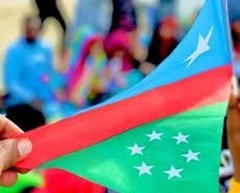
In South West State (SWS), where Al-Shabaab has encircled all major districts, Ethiopian troops have long served as a critical lifeline. The immediate backlash from Mogadishu was swift and aggressive. Elders from the dominant Hawiye clan in the capital launched verbal attacks against the people of SWS, using highly offensive language. The elders publicly disparaged the people of South West State and their Federal MPs, branding them as “boot lickers of Ethiopia.” Even more shockingly, the Director General of the Ministry of Transport, appearing live on television alongside high-ranking civil servants, shamelessly insulted the people of South West State, stating:
“The people of South West State are the illegitimate children of the Ethiopian army that has been stationed there for the past 20 years.”
Laftagareen’s Moment of Strength—And His Greatest Mistake
Outraged, President Abdiaziz Laftagareen took an unyielding stance against Mogadishu, severing cooperation with the federal government. In response to the crises President Hassan dispatched Prime Minister Hamza Abdi Barre to mediate the crisis, hoping to restore ties. However, Hamza returned to Mogadishu empty-handed, failing to sway Laftagareen.
At the time, Laftagareen’s term had already exceeded its constitutional limit by two years. Given the rising tensions and his newfound image as a strong leader defending his people, many believed he would finally initiate the long-overdue electoral process. With overwhelming public support and the Ethiopian army eager to back him, his re-election seemed all but guaranteed.
In fact, Ethiopian officials reportedly urged him to proceed with the elections, assuring him of their full support in every possible way. This was a pivotal moment—a rare opportunity for Laftagareen to cement his political future and secure his legacy.
A Deal with Mogadishu: The Ultimate Reward for Betrayal
However, President Hassan Sheikh Mohamud made a calculated move. He dispatched Laftagareen’s father-in-law (Commander in Chief of the custodial corps) as a mediator, offering Laftagareen financial incentives, including the long-delayed FMS budget support and additional undisclosed funds.
The South West leader, once resolute, accepted the deal without hesitation. In doing so, he alienated not only his own people—who had stood by him unwaveringly—but also the Ethiopian army, whose support had been instrumental to his political survival.
This moment of weakness shattered the trust of his constituents. Rather than standing firm against Mogadishu’s hostility and demanding justice for the insults against his people, Laftagareen chose personal gain over principle.
Ethiopia’s Final Break: The End of Laftagareen’s Reign
As Laftagareen struggled to recover from his political misstep, Ethiopia was quietly shifting its alliances. On February 24, 2025, Ethiopia formalized a new agreement with Villa Somalia under the African Union Support and Stabilization Mission in Somalia (AUSSOM).
This agreement followed high-level talks between Somali President Hassan Sheikh Mohamud and Ethiopian Prime Minister Abiy Ahmed in Addis Ababa from February 14-16. The two leaders agreed to restructure Ethiopia’s military presence, ensuring that Ethiopian forces would now operate under the direct command of Mogadishu, rather than functioning as an independent security force that regional leaders like Laftagareen could rely upon.
The final nail in his coffin came when a high-ranking Ethiopian delegation, led by Field Marshal Birhanu Jula, visited Mogadishu to finalize the deal. The delegation included Redwan Hussein, Ethiopia’s National Intelligence and Security Service (NISS) chief, underscoring the strategic importance of the agreement. They were received by Somali National Army (SNA) Commander General Odowaa Yusuf Rageh and National Intelligence and Security Agency (NISA) Director Abdullahi Mohamed Ali, key figures in Villa Somalia’s push to consolidate federal control.
With this new security arrangement in place, Laftagareen lost the only leverage he had left—Ethiopian military support. The very force that had propped up his administration was now aligned with his adversaries in Mogadishu.
A Leader Without Allies – Nothing is more expensive than missed opportunity
With Ethiopian troops no longer acting as his security guarantee, Laftagareen is now politically vulnerable. His former allies in Ethiopia have no reason to protect him, and his people—already furious over his betrayal—are now calling for his removal.
The situation is worsened by the ongoing presence of the Director General who insulted South West State, a constant reminder of Laftagareen’s failure to stand up for his people.
In the eyes of his constituents, he has become a weak leader who sold out his people for political survival, only to be abandoned by both Villa Somalia and Ethiopia in the end. His compromise strategy has backfired spectacularly, leaving him exposed with no remaining political capital.
Epilogue: – A Humiliating End Awaits
Laftagareen’s departure from office is now inevitable, and it will not be on his own terms. Where he once had the strength to negotiate with Mogadishu and retain Ethiopian support, he is now powerless.
The Ethiopian military, once his greatest asset, has now completely aligned with President Hassan, and his people—who once rallied behind him—now see him as a failed leader who let them down. The Director General’s continued employment, in blatant violation of Civil Service Law, is an ongoing insult to South West State, a symbol of how Mogadishu continues to disrespect them without consequence.
As the Ethiopian forces cement their new partnership with Villa Somalia, Laftagareen’s days in power are numbered. His exit will be humiliating, not as a respected leader, but as a man who betrayed his people and was abandoned by those he trusted. His legacy will not be one of defiance or strength, but one of capitulation, betrayal, and ultimate disgrace.
The final act, observers say, will be less a transfer of power than a collapse—a humiliating footnote in a region where alliances are as transient as the shifting desert sands.
Abdullahi A. Nor
Email: abdulahinor231@gmail.com
__________
Related articles:
The Fallout of Mogadishu Elders and Civil Servants Smears of SWS People By A. A Nor