
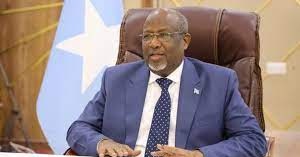
Baidoa (WDN) — In a striking escalation of South West State’s political crisis, President Aden Mohamed Nur (Aden Madobe) has convened an extraordinary cabinet meeting and accused former South West leader Abdiaziz Hassan Mohamed Laftagareen of collaborating with Al-Shabaab—an allegation that would represent a dramatic escalation in the political confrontation surrounding Baidoa.
According to a statement issued after the meeting, the Southwest cabinet claimed to have identified evidence of cooperation between Laftagareen and Al-Shabaab and said it now considers the former regional president to be associated with the militant group. The allegation was announced by the Southwest administration’s spokesperson following the meeting, but no independently verifiable evidence was publicly presented to substantiate the claim.
The timing of the accusation is particularly striking. Aden Madobe’s administration is operating in the midst of an increasingly bitter political and military confrontation with forces loyal to Laftagareen, whose supporters reject the circumstances under which Aden Madobe came to power in Baidoa and maintain that Laftagareen remains the legitimate political figure favored by sections of the local population.
Rather than resolving the dispute through political engagement, the latest declaration appears to open a new front: an attempt to transform a deeply contested political struggle into an accusation of terrorism.
From political dispute to terrorism allegation
The development comes after weeks of escalating tensions around Baidoa. Forces loyal to Laftagareen have reportedly demonstrated sufficient strength to launch repeated attacks against positions in and around the city, despite the presence of Federal Government security forces supporting Aden Madobe.
The persistence of these attacks raises uncomfortable questions about the extent of federal control and the durability of the security arrangements protecting the Southwest administration.
For roughly two weeks, according to reports, the Federal Government has attempted to reach Laftagareen through negotiations. Those efforts have reportedly failed, with Laftagareen refusing to enter the proposed talks.
Against that backdrop, the decision by Aden Madobe’s administration to publicly link Laftagareen to Al-Shabaab could be interpreted as an effort to undermine his political standing and discredit the forces challenging the current administration.
That interpretation remains political analysis rather than an established fact. What is clear, however, is that the language has moved from political confrontation to criminal and terrorist accusations, dramatically raising the stakes.
A battle for legitimacy
The crisis in Baidoa is no longer simply about who controls government offices. It has become a struggle over political legitimacy, territorial authority and the future of Southwest State.
Aden Madobe’s administration insists that it represents the lawful authority in Baidoa. Its opponents argue that the political transition that brought him to power lacked genuine popular legitimacy and was imposed with the backing of federal forces.
The repeated attacks in and around Baidoa suggest that the dispute cannot be resolved by military deployments alone. Even with federal forces supporting the administration, Laftagareen-aligned fighters have continued to demonstrate the ability to challenge security positions and maintain pressure around the city.
That reality makes the latest accusations particularly consequential. If the Federal Government and the Southwest administration possess credible evidence linking Laftagareen to Al-Shabaab, that evidence should be presented publicly and subjected to independent scrutiny. An accusation of terrorism cannot substitute for evidence, particularly when it is made in the middle of a political and military struggle.
Conversely, if the allegations cannot be substantiated, they risk further poisoning an already dangerous confrontation and making a negotiated political settlement even more difficult. For now, Baidoa remains caught between competing claims of legitimacy, armed confrontation and increasingly inflammatory political rhetoric.
The extraordinary cabinet meeting may have produced a forceful political statement, but it has not answered the central question facing Southwest State:
Will Baidoa resolve its crisis through evidence, dialogue and a legitimate political process—or will accusations, armed force and external military backing determine who governs?
WardheerNews