
Mogadishu (WDN) — In what increasingly resembles a government lashing out as it loses its grip, Somalia’s Federal Government has turned its fire not inward—where many argue the real failures lie but outward, blaming opposition figures, foreign actors, and anyone within reach.
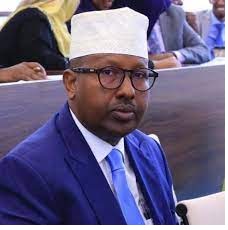
At the center of the latest outburst is Defense Minister Ahmed Moallim Fiqi, better known not for his ministerial duties, but as a chief propagandist for Villa Somalia. His remarks targeting the opposition group “Future Council” have raised more eyebrows than alarm.
In a series of sweeping accusations, Fiqi alleged that members of the council are linked to foreign governments, involved in destabilization efforts, and even indirectly supportive of Al-Shabaab. Yet, like many statements emanating from the current administration, the claims arrived without evidence—broad, serious, and entirely unsubstantiated.
For critics, this is not an isolated incident. It is a pattern. “This is what a drowning government looks like,” a political observer told WardheerNews. “When it runs out of solutions, it starts manufacturing enemies.”
The Federal Government of Somalia is increasingly described by its detractors as the most corrupt administration the country has seen since independence—an accusation fueled by persistent allegations of land grabbing, opaque financial dealings, and the erosion of institutional checks and balances. Against this backdrop, Fiqi’s rhetoric is being interpreted less as a security warning and more as political deflection.
The minister himself has become a controversial figure in this dynamic. Frequently appearing in the media, commenting on virtually every issue—from security to politics to opposition movements—Fiqi is widely viewed by critics as a political mouthpiece rather than a defense official grounded in strategic discipline.
“He speaks on everything, all the time,” one analyst noted. “And that is precisely why fewer and fewer people are listening.”
In a country facing a resilient insurgency, deepening political fragmentation, and mounting economic pressures, the expectation from a defense minister would typically center on military strategy and national security coordination. Instead, Fiqi’s public posture has shifted toward political commentary, often combative, frequently unverified, and increasingly dismissed.
His latest attack on the Future Council followed this same trajectory. He criticized the group for engaging with foreign actors, condemned their political alliances, and accused them of undermining national unity. He even suggested indirect links to Al-Shabaab, one of the most serious allegations that can be leveled in Somalia’s political arena. But again, no proof was offered.
To many observers, such claims—when made without evidence—do more than weaken political discourse. They trivialize real security threats and blur the line between legitimate counterterrorism concerns and political score-settling.
“It becomes noise,” many people stated that talked to wardheerNews. “If everything is labeled a threat, then nothing is taken seriously.”
The opposition, for its part, has dismissed the minister’s remarks as reckless and politically motivated, warning that such rhetoric risks escalating tensions at an already fragile moment. But perhaps the most telling element of this episode is not the content of the accusations—it is the timing.
Somalia stands at a critical juncture: an uncertain electoral process, strained relations between federal and regional authorities, and ongoing insecurity across large parts of the country. Public frustration is rising, and confidence in leadership is eroding.
And yet, instead of addressing these structural challenges, the government appears increasingly focused on assigning blame.
Like a vessel taking on water, the administration is pointing fingers at everything around it; opposition groups, external actors, dissenting voices, while ignoring the cracks within its own hull.
Because in the end, the question is not whether Somalia faces threats. It clearly does. The question is whether those in power are confronting them or simply shouting over them.
And right now, to many watching closely, it sounds less like leadership and more like panic and chaos.
WardheerNews