
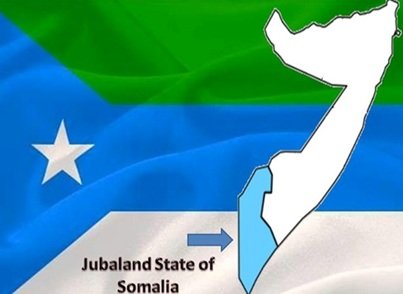
Kismayo (WDN)- As Somalia approaches a critical constitutional deadline, concerns are mounting over a possible military intervention in Jubaland—an escalation that could deepen political instability and fracture an already fragile federal system.
At the center of these fears is the reported redeployment of the elite Gorgor commandos, Turkish-trained forces previously used in South West State during a highly controversial political operation in Baidoa. That intervention, widely criticized as illegitimate, set a troubling precedent: the use of military power to influence political outcomes within federal member states.
Now, similar tactics appear to be resurfacing. Under President Hassan Sheikh Mohamud, these forces are increasingly being positioned not for counterterrorism, but for political enforcement—potentially targeting Hirshabelle and, more alarmingly, Jubaland. The objective, they suggest, is to reshape regional leadership ahead of proposed “one person, one vote” elections.
However, the conditions for such elections remain absent. Somalia continues to face deep security challenges, weak institutions, and a lack of political consensus. Imposing electoral processes under these circumstances risks turning democratic reform into a staged exercise rather than a credible transition.
Jubaland represents a particularly sensitive flashpoint. Any attempt to alter its leadership through force could provoke armed confrontation, strain relations with regional actors, and trigger divisions within the national army itself—especially along clan lines.
There is also a broader institutional risk. The continued use of elite forces in political disputes threatens to erode their professionalism and neutrality. Forces trained with international support, particularly from Turkey, risk becoming instruments of internal power struggles rather than defenders of national security.
Somalia’s challenge today is not a lack of military capacity—it is a lack of political agreement. History shows that coercion in moments of political uncertainty often worsens instability rather than resolves it.
As the May 15 deadline nears, the path forward requires restraint, dialogue, and consensus—not escalation. If crossed, the line between politics and force may prove difficult to redraw.
WardheerNews