
By Eng Mohamed Ali Mirreh
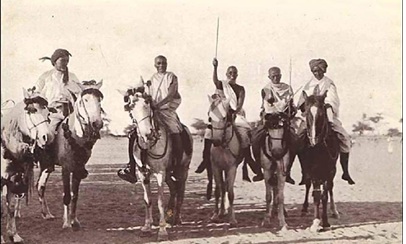
In the early 20t century, American newspapers carried dramatic reports of Britain´s war against the Dervish movement led by Sayyid Mohamed Abdullah Hassan in northern territories of Somalia, then known by the British as “The British Somaliland Protectorate”. Though filtered through colonial dispatches, readers in the United States and elsewhere were introduced to names that would echo through history: Taleh and Buhoodle – symbols of Somali defiance against foreign occupation.
Taleh was portrayed as the fortified desert capital of the Dervishes, its stone forts and defensive walls depicted as a formidable stronghold. Buhoodle and its surrounding were described as battlegrounds of relentless clashes. Yet the media coverage reflected a colonial lens: While Somali resistance was acknowledged, the emphasis was on Britain`s military struggle and innovations rather than the nationalist aspirations of the Dervishes.
American papers, fed by the British correspondents, branded Sayyid Mohamed Abdullah Hassan as “fanatical” and his followers as dangerous “Dervishes”. In 1920, the New York Times reported Britain´s use of airplanes to bomb Taleh, calling it “the stronghold of the Mad Mullah”. This attack became a landmark in military history – one of the first aerial bombardments in Africa. Taleh was immortalized as a fortress destroyed by modern air power, while Buhoodle was remembered as battlefield of cavalry clashes, where the enemy was destroyed in many times.
Internationally, the Dervish struggle was linked to broader Islamic resistance against European colonialization, with moral support from the Ottoman Empire and other Muslim powers – a fact that deeply unsettled Britain. In reality, Britain´s war was not simply against Sayyid`s fighters; it was about protecting its colonial creation, the so-called “British Somaliland Protectorate.” The Dervish war was thus a confrontation between Somali freedom fighters and imperial forces backed by local collaborators.
The legacy of this struggle inspired later Somali independence movements, including the SYL party, which demanded freedom for all Somali territories. This culminated in the independence of the British Somaliland on 26th June 1960 and the Italian Somaliland on July 1st 1960, leading the two territories to form the Somali Republic.
Nearly a century later, history repeated itself. After the collapse of Somalia´s central government in 1990, fighters of the Somali National Movement (SNM) – Drawn exclusively from one clan in Northern Somalia – gathered in Buroa, the second largest city in northern Somalia and unilaterally declared a breakaway state “Somaliland”, reviving the colonial name. This unilateral declaration was immediately rejected by the descendants of Dervishes who hail from the same regions where their forefathers fought against the British and their collaborators. Ironically the secessionists adopted strategies reminiscent of colonial tactic, pressuring pro-union clans to accept separatist demands.
Their justifications for claiming a separate state ranged from claims of marginalization during the union of the two Somali territories, to atrocities committed under Siyad Barre´s regime. While elements of truth may exist, the secessionists themselves carried out massacres in Kalshaale, Hudun and other places inhabited by pro-unionist clans. The last genocide by the secessionists took place during the indiscriminate bombardment of Lasanod city in 2023, which lasted eight months. Yet the people of these regions never sought like, the secessionists independence under the pretext of victimhood, instead, they reaffirmed their commitment to Somali unity.
The secessionists often use a load of baloney to justify recognition of their fictious state. One of the most absurd myths propagated by secessionists is that 35 countries recognized “British Somaliland” as in independent state in June 1960 after gaining independence from Britain. This claim simply collapses under scrutiny: how could countries recognize a territory that within four days, united with Italian Somaliland to form the Somali Republic? There was no flag other than the Somali blue flag raised in Hargiesa on 26th June 1960, no national anthem, no constitution and certainly no fulfillment of the Montevideo Convention`s criteria for statehood. Records from the Lancaster House Conference (2-12 May1960), where Somali leaders like Mohamed Ibrahim Egal, Ali Grad Jama, Haji Ibrahim Nur and Ahmed Haji Duale met Colonial Secretary Ian Macleod, confirm that independence was granted only as a prelude to union.
Today, history is echoing once again. A century ago, the Dervish fighters stood against British colonial rule in northern Somalia, while certain clans, notably the Isaaq who currently seek a separate state, aligned themselves the colonial administration. The Dervishes, on the hand, largely drawn from Dhulbahante fought relentlessly for Somali sovereignty, making place like Taleh and Buhoodle immortal symbols of resistance.
And now, the descendants – daughters and sons of the Dervishes have established the Northeastern federal state together with the communities from Sanaag, once again dwarfing the ambitions of the secessionists` phantom dream of recreating “British Somaliland”. These descendants are carrying forward the same spirit of unity, resisting fragmentation, and defending the integrity of their nation. Unlike the colonial era, they are supported by the wider Muslim world, standing firm against forces of the self-declared “Somaliland” which is today supported by Israel, the only country that recently recognized this fictious state through apocryphal narratives.
At this moment, it is truly euphoric for all Somalis across the country, as Lasanod welcomes top officials – including the president, prime minister of the federal government and other prominent figures – to Lasanod, the capital city of the Northeastern state, for the inauguration of president Abdilkadir Aw Ali as the president of Northeastern federal state of Somalia.
The symbolism is striking: just the Dervishes once fought for unity against colonial division, their descendants are now defending Somalia´s cohesion against modern separatist ambitions. The resilience of the pro-unionist regions- tested in battles past and present – continues to shine. And as before, their struggle for unity will prevail.
Eng Mohamed Ali Mirreh
Email: m.mmirreh@gmail.com