
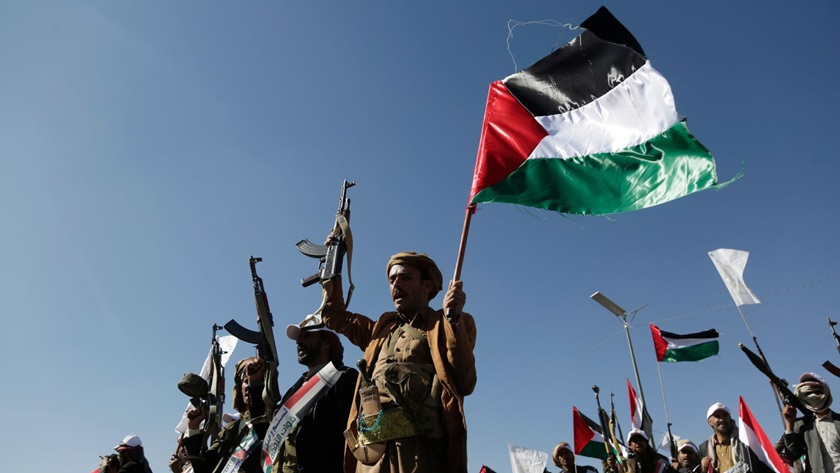
Saudi Air Campaign Backs Yemeni Counteroffensive as Fighting Reaches the Strategic Bab al-Mandab Corridor
MOKHA, YEMEN (WDN) — Yemen’s war has entered a new and potentially decisive phase, with Saudi-backed government forces launching a major counteroffensive along the Red Sea coast and claiming significant gains around the strategic Bab al-Mandab Strait.
The offensive comes weeks after Houthi forces seized Mokha and advanced toward the maritime corridor, threatening a shipping route connecting the Red Sea with the Gulf of Aden.
Yemeni government forces say they have retaken key positions in the Dhubab area, including an airstrip, and advanced toward Mokha. Government officials have also claimed that the city itself has fallen back under their control.
Those claims have not been independently verified. Reuters reported that government forces had reached the outskirts of Mokha and that Houthi fighters were retreating toward the highlands, while the Houthis rejected the government’s account.
Saudi Arabia Opens a Major Air Campaign
The ground offensive has been backed by an intensive Saudi-led air operation. The Saudi-led coalition said 100 fighter jets were participating in the campaign, providing continuous air support to Yemeni government forces and air protection over Bab al-Mandab. Coalition spokesman Maj. Gen. Turki al-Malki said 324 high-value Houthi targets had been destroyed since the operation began.
The campaign represents a sharp escalation after the collapse of the ceasefire that had largely held since 2022. Saudi-backed forces are now attempting to reverse the Houthi advance before the movement can consolidate its position along the Red Sea coast.
Why Mokha Matters
Mokha’s importance lies less in the city itself than in its location. The port sits close to Bab al-Mandab, the narrow passage through which shipping moves between the Red Sea and the Gulf of Aden. Control of surrounding territory can give an armed group greater ability to threaten maritime traffic and the coastal routes supporting military operations.
The Houthis’ September advance therefore represented more than another territorial gain in Yemen’s long-running war. It brought the movement closer to a position from which it could exert greater pressure on one of the world’s most important maritime corridors.
The Saudi-backed counteroffensive is now designed to push them away from that corridor, but the Houthis are still advancing elsewhere. The battlefield picture remains far from one-sided.
While government forces are pushing along the Red Sea coast, Houthi fighters have made gains around Taiz, including positions along routes that have placed additional pressure on government forces there.
Reuters reported that Houthi advances near Taiz had tightened the pressure on the government-held city, although some battlefield claims remained disputed. The Houthis have also threatened Saudi airspace.
That makes the current offensive more complicated than a simple government drive to retake lost territory. The Houthis are being pushed back in one strategic corridor while attempting to strengthen their position on another front.
Washington’s Role Is More Limited Than Direct Combat
The campaign also has an important American dimension, although Washington has stopped short of directly joining the air war.
According to The New York Times, more than 200 U.S. military and intelligence personnel are operating from Saudi command centres, providing intelligence and targeting assistance. Their reported role gives the United States an indirect but significant connection to the campaign.
The distinction matters: American involvement is centred on intelligence and technical support rather than direct U.S. strikes.
The struggle over Bab al-Mandab now extends beyond Yemen’s internal political conflict. Saudi Arabia views Houthi control or influence around the strait as a direct security and economic threat, while the Houthis have used their position and missile and drone capabilities to challenge Saudi interests and maritime traffic.
The renewed fighting is also unfolding amid wider regional tensions and disruption around other major shipping routes, increasing the international significance of developments on Yemen’s western coast.
The UN migration agency said 184,000 people had been displaced since the war resumed, adding a humanitarian cost to the strategic contest.
The War’s Next Test
The immediate objective for Saudi-backed forces is clear: consolidate their gains around Bab al-Mandab, push the Houthis away from the coast and reverse the territorial advances made in September. But holding territory may prove harder than taking it.
The Houthis retain substantial military capabilities and continue to operate across multiple fronts. Their advances around Taiz demonstrate that losing ground near Bab al-Mandab does not necessarily mean losing the wider war.
For now, the battle for Mokha has become a test of whether the Saudi-backed coalition can turn a rapid military counteroffensive into a sustained reversal of Houthi gains.
The Houthis moved toward Bab al-Mandab in a major September advance. Saudi-backed forces are now fighting to push them back — making the Red Sea coast the most important battlefield in Yemen’s renewed war.
WardheerNews