
By Osman A Hassan
The long arc of global conflict teaches a painful but consistent lesson: nations do not collapse solely because of their enemies. They collapse because they trust the wrong allies and foreign powers, intermediaries, donors, political brokers, and internal elites who profit from prolonged instability. The greatest strategic mistake a vulnerable nation can make is negotiating with those who pose as friends while weakening sovereignty, draining resources, and prolonging suffering. This is the central truth that frames advice for Ukraine and Somalia: it is better to negotiate directly with enemies than with cronies who exploit your weakness for personal gain. History demonstrates that enemies may conquer, but exploitative allies quietly own you forever.
Whether in African slavery, colonial occupation, Somalia’s war with Al-Shabab, Libya’s destruction, the mineral plunder of Congo, or Afghanistan’s endless conflict, nations that refused to confront their adversaries often ended up negotiating with opportunists who sold their futures. The U.S. President Donald Trump once stated, “You cannot defeat or win a war with a country or a person who is ten times bigger or more powerful than you.” While controversial in tone, the statement reflects a geopolitical reality often ignored by nations that rely on pride, emotion, or blind trust in foreign alliances to prevail against overwhelming powers. Meanwhile, Western nations maintain the world’s largest weapons markets and extend high-interest loans that enslave vulnerable countries in perpetual debt, turning entire populations into economic refugees.
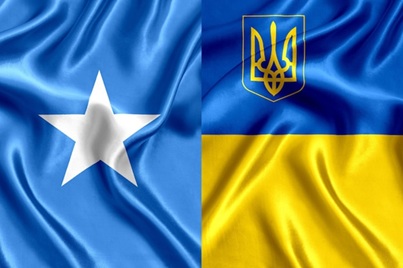
In international politics, alliances are rarely built on equality; they are shaped by power, resources, geopolitical ambitions, and the vulnerabilities of weaker nations. Ukraine and Somalia, though geographically and culturally distinct, share a similar trajectory: both occupy the gray zone between sovereignty and dependency. Both are publicly framed as partners deserving support, yet beneath the diplomatic language lies a harsher truth that they are treated as clients, strategically useful for advancing foreign interests. This illusion traps both nations in cycles of debt, war, and political weaknesses that limit autonomy and prolong suffering.
Ukraine’s relationship with Western powers is defined by geography: it lies at Russia’s doorstep, making it a frontline state in the geopolitical contest with the United States and Europe. While military, economic, and political aid is presented as defense of democracy, the underlying aim is containment of Russia. Somalia, by contrast, faces a multi-layered exploitation: Western governments, Gulf states, and regional neighbors frame their involvement as “security partnership” or “counterterrorism cooperation,” yet the country’s strategic location, maritime corridors, natural resources, and political fragmentation make it a laboratory for external agendas. What unites Ukraine and Somalia is not their conflicts, but the structural dependence created by so-called allies.
Western assistance has helped Ukraine resist aggression, yet it comes with limitations and conditions that do not prioritize long-term independence. Military aid is tied to strategic calculations, financial assistance often arrives as loans, and sanctions or diplomatic decisions affecting Ukraine are debated in foreign parliaments, not Kyiv. Even eventual peace negotiations will be influenced or dictated by powers viewing Ukraine as a buffer zone rather than a sovereign partner. The illusion of allied equality quickly disappears when support becomes conditional or transactional.
Similarly, Somalia’s reliance on external actors runs deeper. Decades of civil war have enabled foreign governments, international NGOs, regional rivals, and global powers to embed themselves in Somalia’s security, economy, and humanitarian sectors. The fight against Al-Shabab has become a profitable industry. Billions of dollars flow into the country in the name of stabilization, yet little strengthens Somalia’s sovereignty. The federal system, elections, security reforms, and constitutional negotiations have all been shaped more by donor agendas than Somali consensus. The result: a client state managed through aid packages, peacekeeping, and debt restructuring, with diminishing national ownership.
At the core lies a simple truth: great powers rarely invest in weak states for humanitarian reasons. They do so for strategic, economic, or ideological advantage. For Ukraine, this means weakening Russia without direct confrontation; for Somalia, this translates into access to trade routes, counterterrorism influence, military bases, oil exploration, and justification for intervention.
Africa’s colonial era, the Cold War, and conflicts in Afghanistan reveal a consistent pattern: external powers speak the language of partnership while reinforcing dependency and extracting value. Slavery destabilized societies to feed foreign economies; colonization dismantled political sovereignty to extract resources; post-colonial manipulation kept nations weak to maintain access to minerals, oil, and strategic lands. Modern aid and military partnerships continue the pattern, allowing subtle but powerful control. Resource-rich nations are rarely allowed to develop independently because their wealth becomes a curse when outsiders profit from instability.
For the western countries, wars and reconstruction provide the perfect conditions for predatory lending. Loans appear benevolent, yet they create long-term dependency, erode sovereignty, and transfer wealth to foreign creditors. Interest rates, exchange fluctuations, and structural conditions often generate an effective burden exceeding 200% over time. Ukraine’s post-war reconstruction loans and Somalia’s IMF-mandated reforms exemplify this cycle, where external institutions dictate fiscal policy, ownership of infrastructure, and economic priorities. Debt becomes a mechanism of control, perpetuating the instability that justified its imposition. The central lesson is simple but profound: enemies end wars; exploitative allies extend them. Nations that negotiate only with allies’ risk selling their future, wealth, and autonomy. Negotiating with enemies is neither easy nor comforting; it is dangerous, politically controversial, and emotionally painful. Yet it is the path to survival, sovereignty, and self-determination.
As Ukraine facing a militarily superior Russia, cannot rely solely on foreign assistance; only direct strategic engagement offers the possibility of lasting peace. Somalia, trapped between internal fragmentation and extremist threats, cannot depend exclusively on foreign donors; negotiation and internal reconciliation are necessary to reclaim agency.The danger of negotiating exclusively with opportunistic allies is severe: aid comes with strings attached, military assistance entails dependency, and reconstruction loans erode sovereignty. Allies may profit from prolonged conflict, allowing war to continue while presenting themselves as partners. In other words, friends can become instruments of enduring vulnerability. And history reinforces the urgency of this lesson. African nations lost control over people, land, and minerals through slavery and colonization aided by internal collaborators. Libya’s destruction, Congo’s endless conflict, and Afghanistan’s decades of war all illustrate the danger of relying on allies whose interests diverge from national survival. Small nations cannot defeat giants through military means alone; strategic negotiation is essential.
For Ukraine and Somalia, the conclusion is clear: enemies may seize territory, but allies can seize everything for political autonomy, economic independence, natural wealth, and the ability to determine a nation’s future. Negotiating with adversaries protects sovereignty; negotiating with cronies sells it as Ukraine and Somalia stand at critical junctions in their histories. To survive, prosper, and reclaim agency, they must confront their true adversaries directly while carefully managing dependence on allies whose interests diverge from national well-being. Wisdom, courage, and strategic negotiation, not blind trust in friends that will determine whether these nations remain sovereign or become permanent clients in a system that profits from their weakness. As determined by history, economics, and human experience converge on the same imperative, negotiate with enemies to survive and avoid giving opportunistic allies the power to destroy your countries.
Osman A Hassan
Email: Abayounis1968@gmail.com