
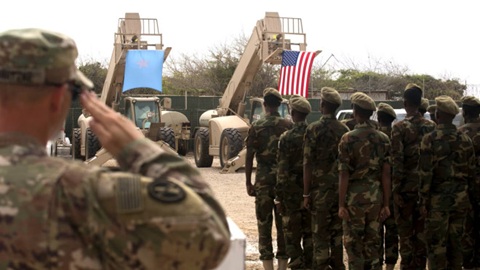
The departure of American troops from one of Somalia’s most important military bases raises deeply troubling questions about the country’s security future. After more than a decade of foreign military assistance, Somalia remains locked in a prolonged war against Al-Shabaab, while its own forces continue to struggle to establish the capacity to defend the country independently.
MOGADISHU (WDN) – American military forces have withdrawn from Baledogle Airfield in Somalia’s Lower Shabelle region after more than 14 years of using the strategic installation to support military operations against Al-Shabaab, marking another unsettling development in Somalia’s already fragile security situation.
The withdrawal took place at the end of October, with American personnel stationed at the facility relocated to other locations inside Somalia, according to US military officials quoted by Task & Purpose, a publication specialising in military affairs.
The officials confirmed that the last operational American troops departed the base late last month, leaving behind only a limited number of personnel responsible for providing military training to Somali forces.
For Somalia, the departure is more than a change of military location. Baledogle has been one of the most important American military installations supporting the campaign against Al-Shabaab. Its loss as an operational hub raises uncomfortable questions about the direction of the country’s counterterrorism campaign and the preparedness of Somali forces to fill the gap.
A Security Transition Somalia Can Ill Afford
The timing could hardly be more sensitive. Somali National Army forces are reportedly increasing their military activities in Lower Shabelle, seeking to assume greater responsibility for territorial security and operations against Al-Shabaab. But the fundamental question remains: are they genuinely prepared to shoulder that responsibility?
After years of receiving international military assistance, Somalia continues to face a formidable insurgency. Al-Shabaab remains capable of conducting deadly attacks, maintaining territorial influence and challenging government authority. Meanwhile, the country’s security institutions continue to depend heavily on foreign training, intelligence, logistical assistance and operational support.
The departure from Baledogle therefore exposes a troubling reality: Somalia is being pushed towards greater security responsibility at a time when serious questions remain about its ability to sustain military operations independently.
What makes the situation particularly concerning is that the country has spent more than a decade receiving international military support without achieving the level of self-sufficient security capability that its circumstances demand.
American Troops Are Relocating, Not Leaving Somalia
US officials have clarified that the withdrawal from Baledogle does not represent a complete American military departure from Somalia. The personnel have been relocated to other military installations within the country, and a limited American presence remains at Baledogle for training purposes.
Nevertheless, the loss of an established operational centre is significant. The relocation of troops does not automatically guarantee that the same operational capabilities, coordination and support will be maintained at the same level.
For Mogadishu, this should be a moment of serious reflection. Somalia cannot indefinitely rely on foreign forces to provide the military capabilities that its own institutions have yet to fully develop.
The greatest danger is that any reduction or restructuring of foreign military support could create opportunities for Al-Shabaab to exploit weaknesses in government-controlled areas, particularly if Somali forces cannot sustain pressure on the insurgency.
Fourteen Years Later, Somalia Still Cannot Stand on Its Own
Perhaps the most depressing aspect of this development is the broader question it raises about Somalia’s security record.
More than 14 years after Baledogle became an important centre for American military operations, Somalia remains deeply vulnerable to an insurgency that continues to threaten its political stability, economic development and territorial security.
A country cannot build lasting security around the permanent presence of foreign military forces. International assistance can strengthen national capabilities, but it cannot replace the responsibility of building a professional, properly equipped, adequately funded and accountable national army.
The departure from Baledogle should therefore be treated as a warning rather than an ordinary military relocation. Somalia needs to accelerate the development of its own military capabilities, strengthen command structures and establish a sustainable security strategy before further changes in international military commitments expose existing weaknesses.
Fourteen years of American military engagement at Baledogle, and Somalia is still struggling to secure itself. That is the sobering reality facing Mogadishu. The departure of US forces does not mean America has abandoned Somalia, but it raises an increasingly urgent question: how long can a country continue to depend on foreign troops to fight a war that its own national institutions should ultimately be capable of winning?
WardheerNews
Leave a Reply