
By Abdullahi A. Nor
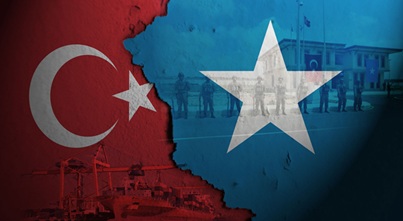
At moments of deep political uncertainty, nations often require trusted intermediaries capable of bringing rival sides back to the negotiating table. For Somalia, which is once again facing rising political tensions and growing security concerns, Turkey’s reported efforts to facilitate dialogue between former President Hassan Sheikh Mohamud and opposition leaders may represent an important opportunity to prevent further escalation and restore confidence in the political process.
According to emerging reports, Ankara has launched a new diplomatic initiative aimed at bringing together the Federal Government of Somalia and members of the Somali Future Forum, an opposition alliance that has expressed concerns about the country’s political direction, electoral arrangements, and governance challenges.
Although the opposition has demonstrated a willingness to engage in dialogue and political compromise, former President Hassan has thus far maintained a far more rigid and uncompromising position, deepening concerns over the prospects for a consensual political settlement.
The Turkey initiative reportedly follows a series of meetings held in Istanbul between Turkish officials and representatives of the Somali opposition. While details remain limited, the discussions appear to have laid the groundwork for a broader effort to encourage direct engagement between the two sides. Turkey’s role in Somalia makes it uniquely positioned to facilitate such dialogue. Over the past decade, Ankara has become one of Somalia’s most significant international partners, investing heavily in infrastructure, education, healthcare, security sector reform, and institutional development. Turkish support has contributed to rebuilding key public facilities, strengthening state institutions, and training Somali security forces.
Unlike many external actors, Turkey enjoys relatively strong working relationships with both government officials and a wide spectrum of Somali political stakeholders. This gives Ankara a level of credibility that could prove valuable in helping bridge the widening political divide. Senior Turkish security officials is said to have engaged directly with former President Sharif Sheikh Ahmed, encouraging restraint and urging all parties to pursue political solutions rather than confrontation. Similar messages have reportedly been conveyed by representatives of the United States and the United Kingdom, reflecting growing international concern over the possibility that political disagreements could evolve into a broader security crisis.
These diplomatic efforts underscore a reality that many Somalis already recognize: no side stands to benefit from a return to political instability or violence. Yet international mediation alone cannot solve Somalia’s political challenges. Sustainable solutions must ultimately come from Somali leaders themselves. The responsibility for preserving peace, protecting democratic institutions, and maintaining national unity rests first and foremost with Somalia’s political class.
The current dispute reflects genuine concerns on multiple sides. Government officials argue that stability and state authority must be protected in an increasingly fragile security environment. Opposition leaders, meanwhile, have raised concerns regarding electoral processes, political inclusivity, and the concentration of power. These issues deserve serious discussion rather than dismissal.
History offers an important lesson. Somalia’s most successful political breakthroughs have emerged not from coercion or military pressure, but from dialogue, compromise, and consensus-building. Lasting political settlements have always required leaders willing to place national interests above immediate political advantage.
This is precisely why Turkey’s initiative deserves careful consideration. Its success will depend not on diplomatic influence alone, but on whether Somali leaders demonstrate the political maturity necessary to engage constructively with one another. The coming days or weeks may prove critical. If the government and opposition accept the opportunity for meaningful dialogue, Somalia could move away from confrontation and toward a negotiated understanding on key issues including elections, governance, security, and constitutional processes.
Such an outcome would not produce clear winners or losers. Instead, it would represent something far more valuable: a victory for national stability and democratic politics. Somalia does not need another cycle of political polarization. It needs leaders willing to listen, compromise, and work together to address the challenges facing the country. The international community can facilitate this process, but it cannot substitute for Somali ownership of the solution.
Ultimately, the future of Somalia will be shaped not by the strength of any individual politician, but by the willingness of all political actors to embrace dialogue over division and consensus over confrontation. There remains a window of opportunity. The challenge now is whether Somalia’s leaders will seize it before the current tensions deepen into a crisis that serves no one’s interests.
For the sake of the nation, one hopes they do.
Abdullahi A. Nor
Email: abdulahinor231@gmail.com