
Garowe (WDN) — Turkey Denies Role in Puntland Airstrikes, but Questions Over Its Presence Refuse to Disappear allegedly targeting individuals linked to the hijacking of the M/V LUTUF. Yet Ankara’s denial has done little to quiet the questions surrounding the attack.
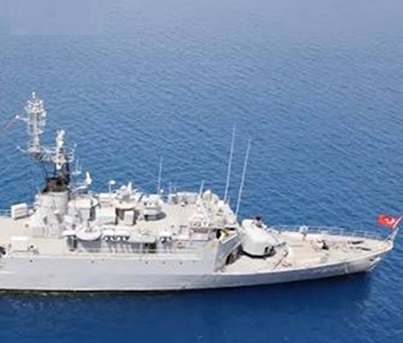
A Turkish Foreign Ministry official told BBC Somali that Ankara had no information about airstrikes carried out by Turkish fighter aircraft or drones along the Puntland coast. The statement came amid reports that Turkish aircraft and naval assets had been operating in the vicinity of the vessel after it was hijacked.
That coincidence has raised an uncomfortable question: If Turkey was not involved, why were Turkish military assets reportedly operating so close to the scene of the incident?
The M/V LUTUF, sailing under the Cameroon flag, was seized by an armed group near Marraya in Puntland’s Eyl district on August 17. According to reports, including an account by the Associated Press, the vessel was allegedly carrying weapons, communications equipment and satellite technology destined for a Turkish military training facility in Mogadishu.
Following the hijacking, reports indicated that vessels linked to Turkish interests, along with helicopters and drones, appeared in the area and monitored movements connected to the hijacked ship. Then came the airstrike.
The following day, an attack was reported near Garmaal, where a small boat approaching the coast was hit. Four people were reportedly killed and two others wounded. Puntland authorities identified the victims as fishermen, while security sources claimed that those targeted were connected to the group responsible for the M/V LUTUF hijacking. No party has officially claimed responsibility for the strike.
A Denial That Raises More Questions
Turkey’s denial is striking because, according to available reports, Turkey was the only country whose military assets were publicly reported to have been deployed in the immediate vicinity of the incident.
That does not, by itself, establish Turkish responsibility. The presence of Turkish vessels or aircraft does not constitute proof that Ankara ordered or carried out the strike. But it makes the question of who conducted the operation—and under whose authority—all the more difficult to ignore.
Puntland has demanded a clear explanation from any foreign government or military force involved in operations along its coastline, particularly regarding who authorized the strikes and what targets were being pursued.
Puntland’s Deputy Information Minister, Bile Mohamud Qabowsade, argued that even suspected pirates must be dealt with through established legal procedures and that individuals should not simply be attacked without due process.
The Federal Government of Somalia has also acknowledged that military operations and shelling took place along Puntland’s coast. State Minister for Defence Omar Ali Abdi said the federal government was preparing a comprehensive report on the incidents. He further indicated that if military operations against piracy are being conducted along Somalia’s coastline, the Federal Government is the legally authorized institution responsible for approving such operations.
That statement introduces another important question: Was Mogadishu informed of the operation, and if so, did it authorize it?
If the operation was conducted by a foreign military without authorization from Somalia’s federal authorities, the incident could raise serious questions about national sovereignty. If authorization was granted, the government would be expected to explain the circumstances and the legal basis for the operation.
The M/V LUTUF Mystery
The controversy cannot be separated from the unusual circumstances surrounding the M/V LUTUF. The vessel was reportedly carrying equipment allegedly destined for a Turkish military facility in Mogadishu. Shortly after its seizure, Turkish-linked military assets reportedly appeared in the area. An attack then occurred in which Puntland says civilians were killed.
Turkey now says it has no information about the airstrikes. That sequence of events does not prove Turkish involvement. But it makes an independent investigation all the more necessary.
The central questions remain unanswered: Who conducted the strike? Who authorized it? What intelligence was used to identify the target? Were the victims fishermen or suspected pirates? And what role, if any, did Turkish military assets in the area play?
Until those questions are answered with credible evidence, speculation will inevitably continue. The incident has also deepened anxiety among coastal communities in Nugaal. Fishermen reportedly fear returning to some of their traditional fishing grounds, worried that they could once again be mistaken for suspected pirates or armed groups.
Somalia has every legitimate interest in combating piracy and protecting international shipping. But those objectives cannot come at the expense of civilian lives or national sovereignty.
Turkey may insist that it had nothing to do with the attack. But given the reported presence of its military assets near the scene, that denial alone is unlikely to put the controversy to rest. What is now needed is evidence—not denials, accusations or speculation.
WardheerNews