
By Abdulkadir Osman Farah, PhD
“A government is an institution which prevents injustice other than such as it commits itself.”
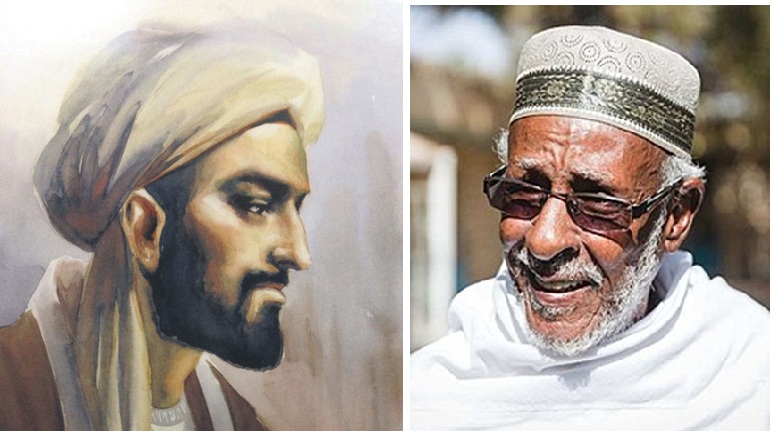
Ibn-Khaldun’s definition of a government[i]
| [Bulshadeenu waa duul Daacad iyo xishood badan Dun xariira weeyaan Cidna uma darraadaan Dar Allay ku dhaqantaa Dareen waw dhegweyn tahay Ogow doqonse maahee Qofka maamul dalabliyo Dabbaal-joogto hoosiyo Dibindaabyo ugu maqan Degdeg uma tilmaamaan Nabar kulama duulaan Dib bay ugu muddaystaan Dulmigiisu waw kayd Umad yahay daryeelkaa isku duubnidaa iyo Adigiyo dedaalkaa Dawadaadu waa taas Dhan hadday ka debecdana Gabbalkaa dam weeyaan][i] | [Our society is renowned for its honesty, for humility; woven from a silken thread our people would harm no-one; fearing Allah, their feelings are slow to stir – still, they are not so easily deceived: those immersed in misrule, pretending to stand tall while swimming in its depths, weaving their unseen nets – our people do not rush to blame nor to lash out at them, but they keep an excellent account of such misdeeds and store it well. People, you prosper as one unit, as you share in your shouldering of the burden – that is the only balm. If it weakens in one wing then its whole end is woe. |
[i] Mohamed Ibrahim Warsame Hadraawi.Daalacan. (https://www.poetrytranslation.org/poem/clarity/)
Ibn-khaldun suggests that societies evolve when a strong, cohesive group with assabiya (feeling of intense group solidarity) imposes its influence on fragmented communities. The weaker constituents often lack organized assabiya with charismatic leadership of their own. The better organized group projects coercion providing security in exchange for legitimacy and subordination from the wider society. Fearing the consequences, the society tolerates such arrangement. However, following the dominant group’s subsequent inattentiveness and public misdeeds, the group’s monopoly to rule declines. Witnessing the diminishing of societal tolerance, another group with stronger emerging assabiya maneuvers to replace the disgraced rulers.
Hadraawi, on the other, considers people at the bottom and middle levels of the society, from diverse constituents and biographies, equally mobilizing and enforcing their capabilities.
These groups do not necessarily aim to dominate and rule, but to counter public mischiefs and reduce suffering. With persistence and curiosity, such constituents eventually succeed in diversifying political rule. They might potentially establish a society prioritizing persuasion and commonalities.
History changes when communities organize
Once a traditional Somali ruler called Geeddi Baabow exercised extended power over the province under his rule. The leader heavily taxed his followers and viciously excluded and oppressed opponents. No longer tolerating such transgressions, communities held consultations to remove the unpopular ruler. Among the ideas presented included the recruitment of his deputy to join the revolt. In accepting the proposition, the deputy shared the community tricks he knew of making the weapons carried by the guards dysfunctional. He also told the community the appropriate time for an effective assault. Caught in bewilderment, the ruler and his supporters panicked over the failure of their defenses. Wounded and captured, Geedi Baabow, in final testament, blamed his deputy (called Kume) for the downfall: “Kume waa kula joogaa, kashiisuna waa kaa jirtaa” (meaning deputies/advisors sticking with you physically/in appearance, while conspiring with adversaries).
The wisdom of this classic Somali story contradicts the canonized explanations of how political transformation occurs (particularly by Hobbes, Machiavelli, and others). The idea that in politics the end (the ruler’s position, wishes and command) justifies whatever means the ruler might deploy. The process could be the reverse. The coordination and the collaboration of the diverse means applied by the wider public resulting in an alternative inclusive end. Subsequent historic political transformations, including revolutions in America, Europe, Asia and Africa, have since confirmed the core point of the Somali traditional story. The existence of constant instability and uncertainties regarding political rule and public mobilization. The story also tells us that the public (the supposedly ruled passive people) remain active in contributing to the transformation of political rule. Initially they observe and tolerate. Then they grow suspicious and distrustful of authorities. Eventually they mobilize and respond to the correction of existing public deficiencies.
Ibn Khaldun takes a position different from both the society centered Somali story and the elite (ruler) centered narrative presented in canonized European stories. He points out that the progress and the stability of a society depends not necessarily on a dominant singular ruler or a collective public mobilization. Political rule emerges from the ambitions and actions of a well-organized dominant group. This group initially possesses a strong internal assabiya (social cohesion/solidarity)[iii]. Such traditional commitment allows the group to exert both coercive and persuasive influence over potentially competing groups as well as in the wider society.
The dominant group claims to represent authenticity and commitment for the wellbeing of the society. However, with the group accessing power and privileges, misgovernance/mismanagement becomes prevalent. The process then erodes not just the group’s integrity and internal unity, but also the group’s public image and trust[iv]. This decline creates an opportunity for ambitious rival groups with emerging assabiya of their own. The emerging group challenges the establishment and might potentially replace the ruling group. This cycle of repetitive dominance and subordination characterizes the dynamics of actualizing the society.
Read more: Tolerating Misrule while Accounting/Un-accounting Misdeeds: Ibn-Khaldun with Hadraawi
By Abdulkadir Osman Farah, PhD
Email: osmanfaraha@gmail.com
———
Dr. Abdulkadir teaches at Copenhagen University and is associate of Urban Sanctuary, Migrant Solidarity and Hospitality in Global Perspective with Aalborg and Ryerson Universities. Dr. Farah is also currently associate researcher of Tswane University of Technology, Pretoria, South Africa
——————–
Reference:
[i] Ibn Khaldun (1967) The Muqaddimah: An Introduction to History. Translated by Franz Rosenthal. Princeton, NJ: Princeton University Press. [ii] Mohamed Ibrahim Warsame Hadraawi.Daalacan. (https://www.poetrytranslation.org/poem/clarity/)
[iii] Ibn Khaldūn, Al-Muqaddimah [I, 285].
[iv] (Alatas, S. F. (2014) Applying Ibn-Khaldūn: The recovery of a lost tradition in sociology. Routledge).