
By Ali Haji Warsame
As a young man eager to learn in the 1970s, I frequently heard the term “dowladdii musuqmaasuqa”, or “the corrupt government”, used in reference to the civilian administration of 1960-1969. This derogatory term was often employed by those who sought to discredit that period, and I was no exception. At that time, my generation was largely unaware of the historical reality. However, as I have grown, I have become more exposed to the political, economic, and educational culture of that era. I have come to realize that what we have lost was so significant that it outweighs any drawbacks the country faced then. As recently noted by Prof. Abdi Ismail Samatar in his thought-provoking book, “Africa’s First Democrats: Somalia’s Aden A. Osman and Abdirazak H. Hussen”, that era was, in reality, a time of rule-based governance. It featured a respected constitution that had undergone a public referendum, a stable economy, and a systematic approach to building the laws intended to govern the nation.
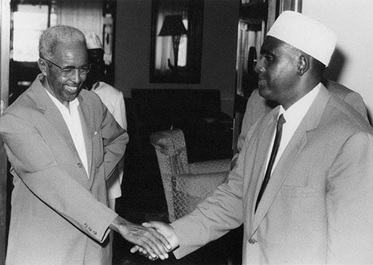
I recently delivered a lecture to a group of youth leaders at East Africa University in Garowe on the importance of leadership. As part of the training, I provided them with an audio recording of a public speech by the late President, Dr Abdirashid Ali Sharmarke. In this public rally speech, the President outlined the system of checks and balances that exists among the three branches of government: The Executive, the Judiciary, and the Legislature. He emphasized his role as a trusted leader and elder statesman, responsible for harmonizing these powers and safeguarding the constitution. He also described, in simple terms, the responsibilities of the President of the Republic and how he conducts himself in this critical position.
He praised the people of Adan Yabal for their support and warm welcome of the President. However, he acknowledged their rightful demands for more government services, but at the same time emphasized that his powers do not allow him to assume the role of the executive branch or to interfere in the executive function. He humbly requested the accompanying Ministers convey this message of the people of Adan Yabal (Khudbad uu jeediyey Madaxweyne Cabdirashiid Cali Sharmaake 1969).
My ears still echo with the theme of his speech, which focused on the areas of unity and peace, as he consistently called for overcoming clan divisions and building a cohesive Somali identity. He emphasized the importance of development, as he stressed that his administration will focus on the development of rural areas, education, and infrastructure, especially in marginalized districts. Regarding democracy and governance, he expressed a strong desire to promote parliamentary democracy, aimed at balancing power between Mogadishu and the regions. He clearly outlined the duties and responsibilities of the various organs of the state to ensure checks and balances. Overall, it was reminiscent of the kind of political discourse one expects to hear in advanced democracies in the world today.
I do strongly encourage everyone interested in Somalia’s governance history to listen, particularly today’s youth, who may view the current status quo as the norm rather than the exception. I was deeply fascinated by how he presented his case without misleading the public or providing false promises. It became clear to me that his message was not only intended for those in front of him in that gathering, but also for the coming generations, including those who, at times, were vindicating this legacy. As a matter of fact, I don’t want to suggest that everything was rosy and that nothing was wrong, but at least, what we have seen and heard for this era as we grow older, was a rule-based government where the constitution is upheld and the rights of the people were preserved.
After the military junta overthrew the democratically elected government led by the Prime Minister, Mohamed Haji Ibrahim Egal, following the assassination of the President Sharmarke, they began ruling the country through executive orders made directly from the office of the Supreme Revolutionary Council (SRC) after suspending the constitution. Initially, they stripped citizens of their rights to free speech, political association, and assembly. The 1969 military coup in Somalia, led by Major General Mohamed Siad Barre, immediately suspended the 1960 constitution, dissolved parliament and the Supreme Court, and banned all political parties. This effectively eliminated citizens’ constitutional rights to free assembly, demonstration, and political participation, replacing them with military rule by decree.
The further measures taken included abrogating the country’s democratic framework, dissolving the National Assembly and Supreme Court – removing checks and balances, banning all political parties – ending multiparty democracy, and ruling by decree – laws and policies were issued directly by the military council. The vilification of the civilian government and holding the citizens hostage for unlawful practices, military courts, and systematic isolation and victimization of a broad segment of society led to the uncontrollable public uprising that eventually took down the government in Somalia and pushed the country into anarchy and lawlessness.
The Somali civil war that erupted in 1991 after the fall of Siad Barre’s regime unleashed one of the darkest chapters in Somalia’s history: clan-based militias fought for control, Mogadishu was devastated, famine killed hundreds of thousands, and the social fabric of Somali society was torn apart. The leading causes of the civil war could be described as authoritarian rule under a dictatorship that alienated clans through repression, nepotism, and favoritism; a power vacuum: the collapse of central authority, leading to violent competition among clan-based militias; and clan rivalries, as militant groups such as the United Somali Congress (USC), Somali National Movement (SNM), Somali Patriotic Movement (SPM), and Somalia Salvation Democratic Front (SSDF) fought for dominance and subjugation, not for compromise and leadership. They all missed the chance to save the country, just like the EPRDF did in Ethiopia in 1991, as they seized Addis Ababa.
The immediate outcome was mass killings and absolute violence, whereby Inter-clan fighting and indiscriminate attacks devastated Mogadishu and other regions. According to Jeffrey Clark (1992) and others such as de Waal (1997) and Menkhaus (1997), the famine and starvation in Somalia during 1992, caused by looting, destruction of farms, and blocked aid routes, killed approximately 200,000 – 300,000 Somalis and displaced nearly two million, who fled their homes, creating one of the most significant refugee crises in East Africa.
The worst form of the civil war was marred by the collapse of institutions, whereby the courts, schools, hospitals, and government offices ceased functioning, and looting and destruction of the economic infrastructure led to state collapse, leaving Somalia without functioning markets or services. I have recently chronicled various aspects of these atrocities in a series of articles titled “A Journey of Two Thousand Miles: Lessons from Somalia’s Civil War- Part I – WardheerNews”.
The long-term consequences of the civil war include the rise of warlords as local militia commanders carved territories, ruling through violence, fragmentation of Somalia since the north-west regions of Somalia, which is known now as Somaliland, declared independence (1991), and the north-eastern part of the country, which is now known as Puntland, was established as autonomous (1998). The severe outcome of the civil war also includes the emergence of extremist groups such as al-Shabaab, which grew out of the chaos, prolonging instability.
The eventual outcome was a torn social fabric as clan mistrust deepened, weakening traditional mechanisms of reconciliation. The demise of Somali nationalism and the loss of being a citizen have taken their toll on the people, which the corrupt politicians later misused to control their gains and hold power. The political elite has instead to bring people together, use it to rapture the social fabric further, and focus on embezzlement from the public coffers instead of fighting for the rights of people with low incomes, uplifting them, providing social services, and securing public livelihood.
After 35 years since 1991, Somalia continues to suffer from entrenched corruption, clan-based patronage, and kleptocracy that have eroded institutions, diverted public funds, and fueled clan wars for over three decades. These dynamics perpetuate fragility, block reforms, and keep citizens trapped in cycles of poverty, insecurity, and mistrust. As a matter of fact, the root courses of that long lsit of issues is the bureaucratic inefficiencies evolved into systemic rent-seeking and misuse of public funds, military misuse as the regime institutionalized nepotism and clan favoritism, embedding corruption into governance, and the prolonged Civil war, which led to the collapse of the state allowing warlords and militias to exploit resources, deepening kleptocracy.
The President Sharmarke’s speech laid the foundation for a functioning democracy, where power and authority are not limited or confined to a single office, the presidency, as we are currently witnessing, where every President elected since 2000 acts and wants to be seen as Mohamed Siad Barre in his heydays.
The division of power between government bodies serves as a check and balance; however, this principle has been short-lived, and we continue to long for proper governance in our country. Now is the right time to reflect on history and learn from it, as doing the same thing and expecting different results is sheer madness.
In 2026, we have the opportunityto set the record straight once more.
Are we ready?
Ali Haji Warsame MBA MA CPA CGMA
Email: ali.warsame@hiilinstitute.org
———-
Ali Haji Warsame is the Executive Director of Hiil Institute for Governance, the former Puntland Minister of Education, and WardheerNews contributor.
___________
References:
- Atalay, G. (2019). The Somalia civil war from 1988–1991. IOSR Journal of Humanities and Social Science, 24(4), 88–94.
- Clark, J. (1992). Famine in Somalia and the international response: Collective failure. Council on Foreign Relations.
- Ingiriis, M. H. (2016). The suicidal state in Somalia: The rise and fall of the Siad Barre regime, 1969–1991. University Press of America.
- Ingiriis, M. H. (2017). Who assassinated the Somali President in October 1969? The Cold War, the clan connection, or the coup d’état. African Security, 10(2), 131–154.
- Menkhaus, K. (1997). International peacebuilding and the dynamics of local and national reconciliation in Somalia. International Peace Academy.
- Mudey, M. H., & Arshad, R. (2025). Corruption impedes good governance in Somalia’s public sector. Journal of Financial Crime.
- Ojjeh, H. A.-K., & Abd, H. F. (2021). Causes of the Somali civil war 1991. Res Militaris.
- Payton, G. D. (1980). The Somali coup of 1969: The case for Soviet complicity. The Journal of Modern African Studies, 18(3), 493–508.
- Samatar, A. I. (2022). Africa’s first democrats: Somalia’s Aden A. Osman and Abdirazak H. Hussen. Indiana University Press.
- Scek, A., & Issa, A. (2019). Assessing state of corruption and anti-corruption strategy in Somalia. National Economic Council Policy Brief.
- United Nations. (1992). Report of the Secretary-General on the situation in Somalia. United Nations.
- World Bank. (2021). Governance and corruption in Somalia: Challenges and opportunities. World Bank Publications.
- de Waal, A. (1997). Famine crimes: Politics & the disaster relief industry in Africa. Indiana University Press.