
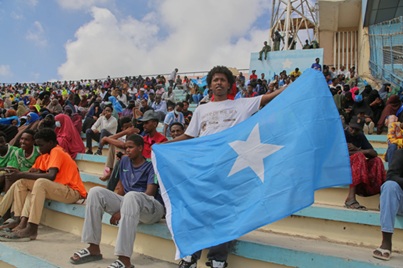
By Ali Haji Warsame
The unilateral recognition of Somaliland by Israel on December 26 is not merely an isolated diplomatic incident. It highlights a broader trend where Somalia’s ongoing and unresolved internal divisions intersect perilously with regional ambitions and historical injustices. At its core, this episode exposes a fundamental truth: Somalia’s greatest vulnerability lies not in external pressure, but in the persistent fragmentation of its political elite, a condition rooted in colonial history and exacerbated by contemporary geopolitical rivalries.
To understand the gravity of the current moment, one must consider two broader contexts: the artificial division of the Somali people by European colonial powers, and the renewed regional scramble for access to the Red Sea, particularly Ethiopia’s long-standing demand for sovereign or guaranteed access to the sea. According to reliable sources, the Somali federal government was aware of Israel’s move. It had been engaged in ongoing negotiations for weeks, attempting to take pre-emptive measures or mobilize local resources by bringing all stakeholders together.
Without the political friction among the FGS and FMSs, and the FGS as well as the tensions between the FGS and the political elite or presidential hopefuls, it becomes challenging to establish a national dialogue. This lack of cohesion allows the ongoing infiltration of Somali society to flourish. When Prof. Ali Khalif, the former Prime Minister of the TNG, stated that it is the South, not the North, that is dividing the country, he aimed to highlight the lack of enthusiasm among Southern leaders regarding the dark forces that seek to split Somalia. These forces are motivated by the country’s strategic location as a key maritime route, with a history of colonial partition leading to its current fragmentation.
The division of the Somali nation did not occur naturally. Rather, it was engineered by external forces. In the late nineteenth and early twentieth centuries, European colonial powers, Britain, Italy, France, and Ethiopia, partitioned territories inhabited by Somalis into five separate administrations during their imperial expansions. This colonial cartography disrupted social, economic, and political continuity, embedding fragmentation into the Somali political landscape long before independence. The territories established as British Somaliland, Italian Somaliland, French Somaliland (now Djibouti), the Somali Region in Ethiopia, and the Northern Frontier District in Kenya were the products of external design rather than Somali consent. The legacy of this partitioning is not merely a historical fact. It persists in contemporary disputes regarding borders, sovereignty, and recognition.
Somaliland’s secessionist project, regardless of internal justifications, cannot be separated from this colonial inheritance. Tragically, post-independence Somali elites failed to dismantle these imposed divisions. Instead, successive political breakdowns entrenched them further, transforming colonial fault lines into internal political realities.
Recent developments in the Horn of Africa, specifically, Israel’s unilateral recognition of North Western regions (aka Somaliland), along with alleged proposals for military presence in Berbera and the relocation of displaced Palestinians without Somalia’s consent, represent a significant escalation of these issues. For the Federal Government of Somalia, this situation represents a direct violation of its sovereignty, territorial integrity, and established principles of international law.
Legally, Somalia’s position is clear. The UN Charter prohibits actions that undermine the territorial integrity of states. Similarly, the African Union Charter rejects the recognition of secessionist entities and affirms the importance of respecting inherited colonial borders. The jurisprudence of the International Court of Justice supports the principle of non-intervention, while the Fourth Geneva Convention raises serious concerns about the transfer of populations without the consent of the host state. However, it is important to note that while laws are crucial, political unity is essential for defending sovereignty.
This new episode unfolds against the backdrop of Ethiopia’s quest for access to the sea. Since becoming landlocked in 1993, Ethiopia has consistently sought alternative maritime outlets, framing sea access as an existential economic and security necessity. As a senior member of Somalia’s Presidential Committee for Sovereignty and Territorial Integrity, I believe that Ethiopia’s quest can be resolved through a bilateral agreement between Somalia and Ethiopia regarding commercial access, which is the right of all landlocked countries.
While commercial port access through Somalia or Djibouti is not inherently illegitimate, recent rhetoric and actions indicate a growing willingness to bypass Somali sovereignty altogether. When Somalia’s political elite are divided, Ethiopia and other regional actors are incentivized to pursue bilateral arrangements with subnational authorities instead of the federal government. This dynamic normalizes the treatment of Somali territory as negotiable and reinforces the perception that Somalia is a space to be managed, rather than a sovereign nation to be respected.
In this sense, Somaliland’s cessation diplomacy, Ethiopia’s maritime ambitions, and Israel’s reported recognition are interconnected. They operate in a context where Somalia struggles to present a unified voice. The Horn of Africa has re-emerged as a strategic region, where ports, military bases, and security agreements are traded for recognition, leverage, or influence. For Somalia, the stakes are existential. This establishment of military or demographic arrangements in disputed territory without federal consent risks turning the country into a bargaining chip in wider geopolitical contests, particularly those related to Red Sea security, Middle Eastern rivalries, and great-power competition. This situation is not unprecedented.
History demonstrates that weak, divided states often become theatres for external agendas. Somalia is perilously close to repeating this pattern. The country’s political elite have repeatedly failed to rise above factionalism during the critical moments of national consequence. Rivalries between the federal and regional governments, clan interests, and personalized power struggles consistently overshadow the national interest.
The political culture in Mogadishu, characterized by “loo joojin maayo”, unilateral constitutional amendments and blockade of aid from peripheral areas, including international support for social services and the military offensive against extremism, has increasingly alienated the country’s political forces from one another, especially during this period of national crisis and calamity.
Instead of coordinated diplomacy, Somalia sends conflicting and contradictory statements, and the institutions meant to uphold sovereignty take delayed actions. This fragmentation undermines international confidence in Somalia’s ability to govern itself and strengthens external narratives suggesting that the country’s unity is provisional or negotiable.
It is no secret that the leaders of FGS have been aware of these developments for some time, yet failed to take preemptive action or communicate this information to the rest of the political elite. They also neglected to engage in constructive dialogue with the FMSs, including those with the least good terms, like Puntland and Jubbaland. The President of FGS did not hold timely emergency consultations with Federal Member States, opposition groups, civil society organizations, and independent intellectuals to demonstrate unity across political divides. This represents a significant failure of leadership at the highest level, with potentially dire consequences.
In conclusion, the current crisis is not solely about one single issue, but it is fundamentally about whether Somalia will continue to be shaped by external ambitions and internal disunity, or if it will finally overcome the colonial legacy that has divided its people. Ethiopia’s demand for sea access, renewed foreign interest in Somali ports, and the ongoing secessionist diplomacy all hihglights a central issue: a fragmented and divided Somali political elite that lacks the capacity for sustained collective action. Sovereignty is not lost overnight. It erodes gradually and incrementally through silence, division, and compromise. Unless Somalia’s leaders recognize that unity is the final line of defence, the country risks becoming, once more, an object of history rather than its author.
The choice is ours. We can either rise above division and complete the project of Somali statehood, or we risk allowing both history and current colonial influences to repeat themselves with irreversible consequences.
The moment is critical; it is now or never.
Ali Haji Warsame, MBA, MA, CPA and CGMA
mail: ali.warsame@hiilinstitute.org
———–
Ali is the Executive Director – Hiil Institute for Governance and the former Puntland Minister of Education