
By Ali H. Abdulla
President Abdirahman Irro’s American visit raised Somaliland’s diplomatic profile. It also highlighted a deeper problem: international recognition cannot by itself resolve contested history, disputed territory and the absence of political unanimity within the borders Somaliland claims.
Introduction
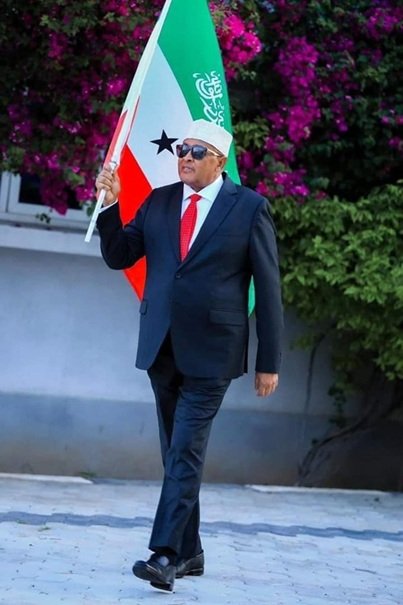
President Abdirahman Mohamed Abdullahi “Irro” travelled to the United States in September 2026 carrying the central foreign-policy objective pursued by successive Somaliland administrations for more than three decades: international recognition.
The journey nevertheless gave Somaliland valuable diplomatic visibility. On 14 September, Irro delivered a keynote address at the Hudson Institute in Washington before participating in a discussion with senior fellow Joshua Meservey; ten days later, he appeared before the Council on Foreign Relations in New York. These were significant platforms for an administration that has spent decades attempting to persuade influential American policymakers that Somaliland should be treated as an independent state. Hudson itself framed the Washington discussion around Somaliland’s potential strategic value to the United States in an era of Red Sea insecurity and growing Chinese, Iranian and Russian activity in the region.
Exposure, however, is not the same as persuasion. The Hudson appearance also revealed the difficulty Somaliland still faces in converting its familiar arguments for recognition into a compelling case for American policymakers. Meservey, who has himself written favorably about closer U.S.–Somaliland relations, subsequently observed that Somaliland had not consistently explained why recognition would advance American national interests. His criticism is particularly significant because it came not from an opponent of Somaliland’s aspirations but from an analyst broadly sympathetic to greater American engagement. The problem exposed in Washington was therefore not simply gaining access to influential audiences; Irro had achieved that. It was using that rare opportunity to answer difficult questions convincingly and demonstrate why recognition, rather than merely closer cooperation without recognition, would serve American strategic interests.
Yet the visit also raises a more fundamental question. The central difficulty facing Somaliland may no longer be simply persuading Washington, London or other foreign capitals to accept its interpretation of history. It is determining whether the political community contained within the borders Somaliland claims possesses sufficient internal agreement about its own future. That question begins not in Washington, but in the history of the Somali territories themselves.
Before the Colonial Map
Somali society did not begin with the British Protectorate, Italian Somaliland or the borders drawn by European powers in the late nineteenth century. Long before colonial partition, Somali communities across the Horn were linked by language, Islam, kinship, customary institutions, commerce and pastoral movement. Clan identities were—and remain—important, but they existed within a much wider Somali cultural and linguistic environment.
For pastoral communities in particular, political geography was historically determined less by fixed borders than by access to water and grazing. Families and livestock moved according to ecological necessity. Colonial frontiers subsequently divided populations whose economic and social lives crossed the boundaries European governments had negotiated.
This history matters because Somaliland’s contemporary territorial claim relies heavily upon the boundaries of the former British Somaliland Protectorate. Those boundaries are historically real. But their existence does not mean that they represented an ancient frontier separating two historically distinct peoples.
Following the withdrawal of Egyptian forces from the northern Somali coast, Britain negotiated a series of agreements with Somali clan elders during the 1880s. British parliamentary records later described agreements made with elders of several tribes between 1884 and 1886. The territorial reach of these arrangements into the hinterland was itself not precisely defined. In a 1955 parliamentary debate, Britain’s Minister of State for Colonial Affairs acknowledged that the exact area covered by the agreements had never been clearly delineated inland. This is important when colonial treaties are invoked today as evidence of immutable political geography.
The Eastern Territories and British Protection
There is an additional historical complication that deserves greater attention. Britain’s establishment of the Somaliland Protectorate was not based on a single agreement collectively concluded by all the inhabitants of the territory it eventually claimed. Rather, British protection developed through a series of separate agreements with different communities during the 1880s, and those agreements were neither uniform nor universal.
This distinction is particularly important in the eastern territories. The principal inhabitants of much of present-day Sool and adjoining areas did not conclude a formal treaty of protection with Britain. Their historical relationship with British authority therefore differed significantly from that of neighboring communities whose elders entered into formal protection agreements, including an agreement concluded on 27 January 1886. Such distinctions matter because contemporary territorial arguments frequently treat the boundaries of the former British Protectorate as though all the populations within them had entered into an identical political relationship with Britain.
The subsequent history of the eastern interior makes that assumption still more difficult to sustain. From 1899 until 1920, the Dervish movement led by Sayyid Mohamed Abdulle Hassan waged a prolonged armed struggle against colonial powers in the Somali territories. The movement drew substantial support from communities inhabiting the eastern interior, although its membership and alliances extended well beyond any single community. Important centers of Dervish political and military activity included Taleh and Buuhoodle.
The significance of this history is not that the Dervish movement can be retrospectively enlisted on either side of today’s dispute. It cannot. Rather, it demonstrates that the peoples incorporated within the boundaries of the British Protectorate did not all experience, accept or resist British authority in the same way. That historical complexity should be acknowledged whenever colonial boundaries are invoked as the principal foundation for contemporary territorial claims. Colonial boundaries are historical facts. They are not necessarily historical verdicts.
Colonial Administration Did Not Create Two Unrelated Peoples
After defeating Italian forces during the Second World War, Britain administered former Italian Somaliland as well as British Somaliland for part of the 1940s, albeit under different legal arrangements.
In 1950, Britain transferred administration of the former Italian territory to Italy under a United Nations trusteeship arrangement. This was not simply restoration of Italian colonial sovereignty. The territory was placed under an international trusteeship intended to lead to independence.
British Somaliland became independent on 26 June 1960. The former Italian-administered Trust Territory became independent days later, and the two united on 1 July to establish the Somali Republic. Somaliland’s advocates can therefore reasonably point out that British Somaliland briefly possessed separate independence before union. But there is another side to that history.
The union occurred during an era in which Somali nationalism regarded colonial partition itself as something to be overcome. Somali populations had been divided among British, Italian, French, Ethiopian and Kenyan jurisdictions. Independence was consequently intertwined with a broader aspiration for Somali political unity.
The fact that Britain administered one territory and Italy another undoubtedly produced different administrative experiences. It did not, however, establish that northern and southern Somalis had thereby become culturally unrelated peoples.
What Germany Can—and Cannot—Teach Us
Post-war Germany offers a useful illustration, although not a legal precedent. Germany was divided after the Second World War into two states with radically different political systems, economies and international alliances. Four decades of separate administration did not permanently extinguish the concept of a shared German national identity. When circumstances changed, reunification followed in 1990.
Somalia is obviously different. Its divisions arose through colonial partition, failed state institutions, dictatorship, civil war, state collapse and competing claims of self-determination. German reunification therefore provides no legal formula for resolving Somaliland’s status.
It illustrates only a narrower principle: a period of separate administration does not necessarily determine the permanent national identity of a population. The reverse is equally true. Sharing ethnicity, religion and language does not automatically require populations to inhabit one sovereign state. History alone therefore cannot resolve Somaliland’s status. Contemporary consent matters. And that is precisely where Somaliland now faces its most difficult challenge.
Las Anod Changed the Argument
The 2023 conflict in Las Anod fundamentally altered the political landscape. After months of fighting, SSC-Khaatumo forces consolidated control of Las Anod following the withdrawal of Somaliland forces in August 2023. The political movement that emerged there did not seek recognition as another independent Somali state. It instead pursued integration within Somalia’s federal structure.
That process culminated in the establishment of North East State in July 2025, which Somalia’s federal government subsequently recognized as a federal member state. Territorial control, however, remains more complicated than the competing political maps suggest. NES claims Sool, Sanaag and the Buuhoodle/Cayn area, but its effective administration does not extend uniformly throughout all the territories it claims because of the lack of the resources required to extend its authority.
Political alignment within the wider eastern territories is similarly diverse. Some communities and local authorities support North East State, while others retain political and institutional ties with Puntland or maintain different positions concerning their future. The eastern regions therefore cannot accurately be treated as a single, politically homogeneous constituency.
These distinctions are important. They reinforce a central argument of this essay: neither contemporary political allegiance nor effective territorial control corresponds neatly with the colonial boundaries invoked in competing sovereignty claims. The political geography of northern Somalia is considerably more complex than the lines inherited from colonial administration might suggest
Ali H. Abdulla
Email aliegeh@gmail.com