
By Prof. Abdinasir Osman
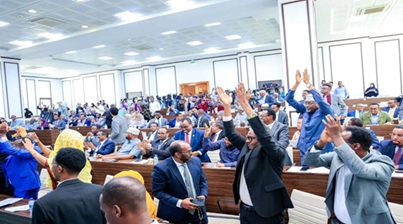
The chaotic scenes that unfolded within Somalia’s Federal Parliament on April 30, 2025, were not merely a regrettable breach of decorum; they were a visceral manifestation of a legislature teetering on the brink of collapse. As lawmakers engaged in a physical melee, with Speaker Adan Mohamed Nur (Madobe) struggling in vain to restore order, the world witnessed the stark reality of an institution crippled by years of systemic corruption, blatant political coercion, and a profound decay of its foundational principles.
Our in-depth investigation uncovers the insidious mechanisms through which entrenched clan patronage, the pervasive influence of bribery, and the overreaching hand of the executive branch have transformed Somalia’s parliament from a beacon of democracy into a volatile battleground. The explosive events serve as a stark warning, threatening to derail the nation’s already fragile democratic transition and plunge it further into instability.
April 30: The Day Parliament Descended into Anarchy
Unconstitutional Expulsion Ignites Fury
The immediate catalyst for the parliamentary pandemonium was Speaker Madobe’s unilateral and highly contentious decision to expel MP Abdullahi Hashi Abib. Critics across the political spectrum swiftly condemned the move as a blatant violation of established parliamentary procedure and the fundamental rights of an elected representative.
- MP Abib’s Constituency Silenced: The parliamentary seat representing HOP#201 was abruptly and inexplicably revoked without any semblance of due process, effectively disenfranchising the constituents who elected him.
- Failed Impeachment, Lingering Resentment: The Speaker’s heavy-handed action triggered a swift backlash, with over 100 MPs vehemently denouncing the expulsion as illegal and mounting a failed attempt to impeach Speaker Madobe. This failed effort, however, has left deep fissures and simmering resentment within the legislative body.
- A Transparent Tactic of Delay: Speaker Madobe’s subsequent referral of MP Abib’s case to the toothless Committee on Rules, Ethics, and Privileges was widely dismissed by dissenting MPs as a cynical stalling tactic, designed to quell immediate outrage while avoiding genuine accountability.
Chaos Unleashed in the Hallowed Chamber
Eyewitness accounts and leaked footage from the parliamentary session paint a disturbing picture of an institution in utter disarray:
- A Descent into Physical Confrontation: Heated verbal exchanges rapidly degenerated into physical altercations between enraged MPs and security forces deployed within the chamber, highlighting the breakdown of civility and the increasing militarization of the legislative process.
- The Scars of Disrespect: The sanctity of the parliamentary chamber was violated as parliamentary equipment, including microphones and chairs, were deliberately damaged and destroyed in the ensuing melee, symbolizing the profound disrespect for the institution itself.
- Speaker’s Inflammatory Tirade: Amidst the chaos, Speaker Adan Madobe further inflamed tensions with inflammatory remarks, singling out specific MPs like Hassan Yare as “troublemakers” and even alluding to past transgressions, showcasing a vindictive approach rather than one of impartial leadership. His condescending tone, as evidenced by his dismissive remarks directed at veteran MPs, underscored the deep divisions and the Speaker’s perceived authoritarian tendencies. “MP Caano-nuug Jiis, take your seat! MP Jesow, show your age some respect and sit down! As for MP Hassan Yare, remember the pardon you received for past misdeeds – yet you persist in your disruptive behavior.” — Speaker Adan Madobe, during the tumultuous parliamentary session.
A Speaker Under a Cloud of Suspicion
Speaker Madobe, a former influential warlord from Southwest State, has long been the subject of serious allegations, raising concerns about his impartiality and commitment to democratic principles:
- Weaponizing Procedure to Silence Dissent: Critics accuse him of consistently abusing parliamentary procedures to stifle opposing voices and suppress any form of dissent that challenges his authority or the interests he represents.
- Favoritism Undermining Legislative Integrity: Allegations of him favoring political allies in crucial legislative votes have further eroded trust in the fairness and integrity of the parliamentary process.
- A Puppet of the Executive? Perhaps most concerning is the widespread perception that Speaker Madobe operates not as the head of an independent legislative branch, but rather as a pliable extension of the executive branch, undermining the crucial separation of powers essential for a functioning democracy.
The Toxic Roots: Corruption and Clan Politics Choking Democracy
A Parliament Bought and Sold
Damning reports from the United Nations Office on Drugs and Crime (UNODC) and Transparency International paint a grim picture of Somalia’s parliament functioning alarmingly like a marketplace where votes are traded for bribes and political favors are dispensed through clan patronage.
- The Price of Legislation: Critical pieces of legislation, including the highly contentious 2024 Petroleum Law, have allegedly seen MPs being offered substantial sums, ranging from $15,000 to $50,000 per vote, exposing the blatant commodification of the legislative process.
- The “Motion Industry” of Extortion: No-confidence motions, a legitimate tool for parliamentary oversight, have been perverted into instruments of financial extortion rather than genuine accountability, with MPs allegedly leveraging these motions for personal gain.
- The Debt of Power: The exorbitant costs associated with securing a parliamentary seat – with many MPs reportedly spending up to four times their official salary during often corrupt election campaigns – create a perverse incentive to recoup these “investments” through illicit means once in office, perpetuating a cycle of graft.
Accountability: A Hollow Promise
The mechanisms designed to ensure accountability within Somalia’s parliament are demonstrably weak and ineffective:
- A Paltry Record of Justice: Despite an estimated $1.3 billion in public funds unaccounted for (according to a 2024 International Monetary Fund report), there have been a mere two corruption convictions since 2012, highlighting the pervasive culture of impunity.
- A Toothless Watchdog: The Anti-Corruption Commission, the very body tasked with combating this menace, alarmingly lacks the legal authority and political backing to effectively investigate sitting Members of Parliament.
- The Drain of Donor Funds: A staggering 37% of donor funds specifically allocated for legislative reforms were reportedly diverted to private accounts, as revealed by the European Union Anti-Fraud Office, underscoring the deep-seated corruption that even international aid struggles to circumvent.
Federal Member States’ Grip
The leaders of Somalia’s Federal Member States (FMS) exert significant and often detrimental influence over the composition and functioning of the parliament, effectively handpicking compliant MPs who prioritize regional loyalties over national interests and legislative competence.
- Clan Loyalty Over National Duty: A disturbing 68% of legislators admitted in a 2024 Transparency International survey to channeling state resources back to their respective clans, further fragmenting national unity and undermining equitable resource distribution.
- The Illusion of Unity: The suspiciously frequent unanimous votes on critical legislation, such as the improbable 275-0 passage of the 2023 Anti-Corruption Bill, are statistical anomalies in a deeply divided political landscape and strongly suggest the prevalence of coercion and undue influence rather than genuine consensus.
The Crippling Fallout: A Parliament Incapable of Governance
Legislative Paralysis Grips the Nation
With over 100 MPs now actively boycotting parliamentary sessions in protest against Speaker Madobe’s actions and the prevailing climate of impunity, the legislative machinery has ground to a virtual halt. Critical tasks vital for Somalia’s future remain stalled, including:
- The Imperative of Electoral Reform: The passage of crucial electoral laws necessary for the planned 2026 transition to universal suffrage hangs precariously in the balance, threatening to derail the entire democratic process.
- Economic Lifelines at Risk: Essential economic reforms tied to crucial funding from the International Monetary Fund and the World Bank are delayed, jeopardizing Somalia’s already fragile economic recovery.
- Security Oversight in Peril: Even the critical task of security sector oversight, particularly concerning given the persistent threat of Al-Shabaab infiltration into political structures, remains neglected amidst the parliamentary turmoil.
A Looming Constitutional Crisis
Legal scholars are increasingly warning that Speaker Madobe’s unilateral actions and the ensuing parliamentary paralysis could trigger a full-blown constitutional standoff, plunging Somalia into uncharted legal territory.
- Ambiguity Exploited: Vague and poorly defined parliamentary rules allow Speakers to exploit loopholes and exercise expulsion powers with minimal accountability.
- A Void of Recourse: The absence of a clear and effective impeachment mechanism leaves MPs virtually powerless to remove even demonstrably rogue leaders who act against the interests of the institution and the nation.
International Patience Wearing Thin
Key international partners, including the European Union and the World Bank, are reportedly losing patience with the persistent dysfunction and corruption within Somalia’s parliament. There are growing discussions about reconsidering aid conditions, with proposals to:
- Freezing Funds for Farces of Unity: Impose a freeze on funding for parliamentary sessions that consistently exhibit suspiciously high rates of unanimous votes (above 90%), signaling a lack of genuine debate and likely coercion.
- Demanding Financial Transparency: Mandate comprehensive forensic audits of MPs’ asset declarations to identify and prosecute illicit enrichment.
Charting a Perilous Course: Pathways to Reform (If Time Remains)
Immediate First Aid
- Suspension for Scrutiny: Suspend Speaker Madobe from his duties pending a thorough and independent review of the circumstances surrounding MP Abib’s expulsion, ensuring due process and accountability.
- International Mediation: Deploy United Nations mediators to urgently broker talks between the warring parliamentary factions, de-escalating tensions and seeking a pathway towards a functional working relationship.
- Protecting the Truth-Tellers: Implement robust measures to protect whistleblowers who dare to expose corruption and malfeasance within the parliamentary system, fostering a culture of transparency.
Fundamental Overhauls
- Technology Against Temptation: Implement blockchain-based voting systems (which have shown promise in regions like Puntland) to create an immutable and transparent record of votes, significantly hindering bribery.
- Breaking the Clan Cartels: Enforce a mandated 30% gender quota for parliamentary representation to challenge the dominance of clan-based power structures and bring diverse perspectives to the legislative process.
- Sunlight as Disinfectant: Implement publicly accessible vote records for all legislative decisions to increase transparency and hold individual MPs accountable to their constituents.
Leveraging International Influence
- Conditional Commitment: Tie a significant portion (e.g., 50%) of future International Monetary Fund funding to the verifiable achievement of concrete anti-corruption benchmarks within the parliament.
- Targeted Sanctions: Impose sanctions on individual MPs and FMS leaders credibly implicated in vote-buying and other corrupt practices, demonstrating a commitment to accountability.
Conclusion: The Precipice of Authoritarianism?
The violent eruption in Somalia’s parliament on April 30th was not an isolated incident; it was the predictable and deeply troubling culmination of a legislature held captive by corruption and clan interests. If Somalia’s leaders, both domestic and international, fail to act decisively and with genuine commitment to reform, the nation risks sliding into an irreversible state of authoritarianism, where parliament becomes nothing more than a rubber stamp for decisions made in the shadows of backroom deals and clan allegiances.
Key Indicators: A Litmus Test for Somalia’s Future
| Issue | Current Status | Reform Target |
| MP Independence | 22% free votes (2024) | 60% by 2026 |
| Women’s Representation | 15% seats | 30% by 2026 |
| Corruption Convictions | 2 since 2012 | 10+ annually |
| Unanimous Votes | 89% in 2024 | <50% threshold |
The coming weeks and months will be critical in determining whether Somalia’s parliament can be salvaged from the clutches of corruption and clan dominance – or if the nation is already on a perilous path towards a future where democratic institutions exist in name only. The world watches with bated breath.
Prof. Abdinasir Ali Osman
Email: ipi2024@hotmail.com