

By Mohamed A. Hashi
Former Chief of Mission Support, UN Peace Keeping Operations and International Sr. Consultant
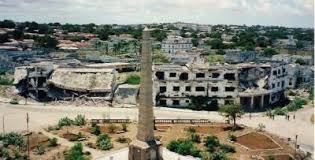
Somalia has been “rebuilding” its state for so long that reconstruction has itself become the national institution. In 1991, when Siad Barre was ousted and the central government dissolved into clan-based warfare, few imagined that the rebuilding process would outlast most Somali citizens’ working lifetimes. Yet three decades on, the state remains permanently under construction: scaffolding without walls, blueprints without bricks.
Foreign donors arrive with strategies, acronyms, and optimism. Somali leaders promise reforms, issue speeches, and open ministries. Then reality intervenes: unpaid or poorly soldiers, destroyed schools, broken judiciary, and ministries operating more like clan offices than state institutions. Progress is always on the horizon—visible in glossy reports, less so on the ground.
This is the paradox of Somalia’s reconstruction. The country has achieved notable milestones: a federal constitution, partial debt relief, and a national army in training. But these victories are undercut by enduring failures: corruption, weak institutions, and political fragmentation. Somalia’s recovery is a performance perpetually stuck in rehearsal.
The Rise and Fall of Everything
Somalia’s collapse in 1991 was spectacular in its totality. When Siad Barre’s regime fell, the central state evaporated almost overnight. Ministries closed, the army disbanded, intellectuals & civic leaders executed and police disappeared. What replaced them were warlords with checkpoints, militias with RPGs, and a capital divided by clan affiliation rather than governance.
International actors scrambled to fill the vacuum. The 1992 UN mission brought soldiers, aid, and television crews but little stability. Images of American troops in Mogadishu, dramatized in Black Hawk Down, cemented Somalia’s reputation abroad as the world’s failed state par excellence.
Since then, transitional governments have come and gone. The Transitional National Government (2000) was hamstrung by weak authority. The Transitional Federal Government (2004) was more about titles than governance. The Federal Government of Somalia (FGS), established in 2012 under a new provisional constitution, was meant to be different. More than a decade later, it remains a state in theory more than in practice.
Somalia is not unique in struggling after conflict. What makes it stand out is the persistence of its struggles. Many post-conflict countries stagger forward; Somalia has spent decades circling.
Education: Doctors Without Schools
Every Somali politician agrees: education is the foundation of the future. The numbers, however, disagree. Somalia allocates less than 0.2% of GDP to education—lower than nearly every country on Earth. For context, many countries spend more on paper clips than Somalia does on schools.
The consequences are clear. As of 2022, Somali boys could expect just 1.7 years of schooling, 1.48 years for girls or even less, According to the Federal Government’s recent National Education Sector Analysis. Classrooms are overcrowded, curricula outdated/ or non-application of standards, and teachers are unqualified and underpaid when they are paid at all. Schools in rural areas are especially scarce; in some districts, the nearest functioning classroom may be several kilometers’ walk away.
Yet Somalia is a country rich in honorifics. “Doctor,” “Engineer,” “Professor,” and “Ambassador” are freely claimed, regardless of actual training. In Mogadishu, it is not uncommon to meet taxi drivers, traders, or militia leaders who insist on being addressed by professional titles. In a country with so few degrees, credentials seem to multiply.
The irony is cruel. An education system in tatters coexists with a culture of inflated titles. The war destroyed schools and scattered teachers, but it did not dampen Somalis’ appetite for prestige. Donors continue to hold workshops on “curriculum reform” in Nairobi hotel/ or in “Halane”— heavily fortified UN camp; meanwhile, Somali children still sit under trees or in bullet-riddled classrooms.
Without serious investment in education, other reforms—whether in security, governance, or justice—are built on quicksand. Yet education continues to be treated as a slogan, not a priority.
Federalism: Everyone a President
Federalism was designed to reconcile Somalia’s regions and prevent the return of dictatorship. On paper, it is a solution. In practice, it resembles a political bazaar.
Federal Member States (FMS) such as Puntland and Jubaland, with varying degrees of autonomy. Their leaders frequently clash with Mogadishu over money, authority, and international recognition. Some FMS cut their own deals with foreign governments, leaving the federal center looking more like a negotiator than a sovereign authority.
The Provisional Constitution, drafted in 2012, was supposed to clarify powers. Instead, it left crucial questions unresolved:
Who owns the oil and gas reserves off the coast?
Who controls lucrative ports and airports?
What is the status of secessionist Somaliland, which has declared independence since 1991 but still features in Somali international donor frameworks/or (International Donor Conferences for Somalia)?
Institutions meant to arbitrate—such as the National Independent Electoral Commission and the Boundaries and Federation Commission—are underfunded and politicized. Expecting them to manage Somalia’s constitutional disputes is like asking a village referee to officiate the World Cup. The result is a constant tug-of-war between Mogadishu and the regions. Far from uniting Somalia, federalism has entrenched its divisions. It has created multiple centers of power, each jealously guarding its turf and aspiring to greater autonomy. In effect, Somalia has not one president but several.
Security: Guns Without Salaries & Loyalty
Security sector reform (SSR) is the holy grail of Somalia’s reconstruction. Without functioning army and police, all other reforms are fragile. Yet despite years of training and billions in foreign tax payer ‘s funds, Somalia’s security remains precarious.

The Somali National Army (SNA) exists, but its capabilities are patchy. Units are often unpaid for months, prompting soldiers to desert or sell their weapons. Loyalty to clan leaders remains stronger than loyalty to the central command. The Somali Police Force faces similar problems, with limited reach beyond major cities. For over a decade, security has been propped up by the African Union Transition Mission in Somalia (ATMIS). Its scheduled withdrawal in December 2025 raises an existential question: can Somali forces fill the gap? Officials in Mogadishu insist yes. Many citizens quietly prepare for the opposite.
A July 2025 U.S. congressional memo raised alarms about arms trafficking and financial irregularities within Somalia’s security sector. Weapons meant for the army have a way of vanishing, only to resurface in markets or in the hands of the very insurgents they were meant to fight. In Somalia, security is less about protecting the state than surviving within it.
Finances: Debt Relief Meets Donor Fatigue
Somalia’s financial sector offers a rare glimpse of progress. The introduction of the Treasury Single Account and the Integrated Financial Management Information System have impressed international partners. In 2020, Somalia achieved eligibility for debt relief under the Heavily Indebted Poor Countries (HIPC) initiative—a milestone hailed in donor circles as proof of reform.
But progress is undermined by corruption. Oversight bodies such as the Auditor General’s office exist but lack independence, while the country still has no functioning Anti-Corruption Commission. Political elites remain largely untouchable. Donor funds, meanwhile, are increasingly tied to conditionalities.
The recent freeze of U.S. aid has already disrupted humanitarian programs, leaving millions without food or medical assistance. Donors now encourage Somalia to “mobilize domestic resources.” But how does one mobilize resources in a country where the majority live in poverty? The state’s tax collection is minimal, and citizens are already burdened by informal payments to militias, local authorities, and clan structures.
Somalia’s finances are thus a paradox: reform on paper, corruption in practice, and austerity imposed on the poor.
Justice: Courts Without Judgments
The Somali justice system is fragmented, underfunded, and compromised. Courts often lack basic infrastructure. Judges are underpaid, politically influenced, and occasionally threatened into compliance.
As a result, many citizens bypass the state entirely. Disputes are taken to clan elders or religious authorities, who offer faster resolutions but often reinforce discrimination—especially against women and minorities.
The Ministry of Justice has launched a Justice Sector Strategy (2025–2029), promising to harmonize Somalia’s plural legal systems. Yet without enforcement, the strategy risks becoming another glossy report destined for donor conferences rather than Somali courtrooms.
Justice in Somalia is thus less a system than a patchwork: fragmented, uneven, and quite often inaccessible.
Civil Service: A Bureaucracy in Name Only
No state can function without a bureaucracy. Somalia has one, but only just. Recruitment is heavily politicized, shaped more by clan balance than by merit. Salaries are low, training rare, and professionalism elusive.
The Civil Service Commission has introduced reforms—job classification, performance evaluation but implementation is inconsistent. Donors have spent years on capacity-building, yet the primary capacity built has been for organizing workshops rather than running ministries.
Somalia’s bureaucracy is often described as an “engine of governance.” In reality, it is an engine without fuel: sputtering, unreliable, and prone to breaking down. Without a capable civil service, even well-designed policies remain stuck on paper.
Conclusion: A State in Perpetual Draft
Somalia’s reconstruction is both remarkable and tragic. The country has survived over three decades of collapse, civil war, and insurgency. It has built institutions where none existed. It has achieved milestones in finance, federalism, and international recognition.
Yet the broader picture remains one of fragility. Education is neglected, federalism contested, security uncertain, justice compromised, and civil service hollow. Donors praise progress while quietly scaling back support. Somali leaders issue plans faster than they can implement them.
From afar, Somalia looks like a state in motion. Up close, it resembles a mirage—visible on the horizon, but vanishing on approach. Until reforms are not only announced but lived, until politics becomes inclusive rather than exclusionary, and until institutions are freed from patronage, Somalia will remain what it has long been: a state forever “under reconstruction,” with no completion date in sight.
Mohamed A. Hashi
Email: xmohashi@gmail.com
——–
Mohamed is a Former Chief of Mission Support, UN Peace Keeping Operations and International Senior Consultant