
By Wilo Abdulle Osman
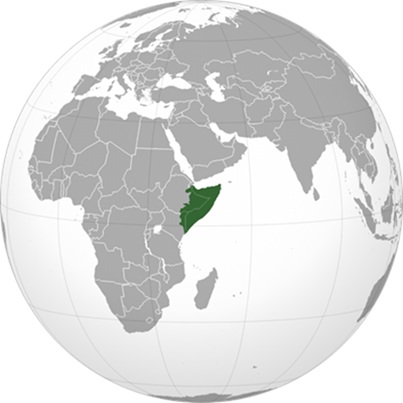
Somalia stands at a perilous crossroads where a generational humanitarian emergency and deep-seated political dysfunction have converged to threaten the very fabric of the nation’s sovereignty. As the world watches, the country teeters on the edge of irreversible fragmentation, driven by a “catastrophic convergence” of climate change, systemic corruption, and a relentless insurgency.
This article delineates the converging existential threats currently destabilizing the Somali Republic. The analysis examines the intersection of a climate disaster of historic proportions, a record-breaking flight of capital, systemic diaspora marginalization, and macroeconomic shocks to remittance channels. Furthermore, it addresses the institutional paralysis within the federal structure and the escalating maritime insecurity in the Red Sea corridor.
Governance Betrayed: The Anatomy of a Political Crisis
In the heart of Mogadishu, the federal administration is besieged by allegations of misleading and incompetent leadership. Expert analysis and mounting public dissent point toward a state where systemic embezzlement and nepotism have hollowed out the institutions meant to protect the Somali people. Reports suggest a dark collusion between external actors and domestic “politically connected gangs” to siphon national resources, a practice that not only fuels violence but effectively silences opposition through intimidation, targeted divisions and amateurish tactical eliminations.
The internal political architecture is characterized by a critical deficit of consensus between the Federal Government of Somalia (FGS), Federal Member States (FMS), and organized male dominated elites of “opposition blocs”.
The political stakes are particularly high as the nation faces its “2026 Mandate Test.” While the Federal Government of Somalia (FGS) officially maintains a push for “direct, multi-party elections”, researchers at the Rift Valley Institute and Heritage Institute warn that the transition from clan-based politics to universal suffrage remains a distant dream due to a critical lack of legislative framework and security.
Meanwhile, tensions between Mogadishu and the Federal Member States—notably Puntland and Jubaland—have reached a boiling point. Disputes over centralized power-sharing have stalled counterterrorism coordination, allowing Al-Shabaab to reconsolidate strongholds in central Somalia and maneuver closer to the capital.
The Somaliland-Israel Pivot and the Red Sea Threat
The geopolitical landscape was seismically shifted on December 26, 2025, when Israel became the first UN member state to formally recognize Somaliland’s independence. This move, described as being “in the spirit of the Abraham Accords,” has drawn fierce condemnation from Mogadishu, which views it as an illegal violation of its sovereignty.
1) The Somaliland Gambit: For Israel, Somaliland offers an 850-kilometer strategic coastline, providing a potential naval logistics hub near the Bab al-Mandab strait to counter Houthi threats.
2) Diplomatic Ties: On January 6, 2026, Israeli Foreign Minister Gideon Sa’ar visited Hargeisa to meet with President Abdirahman Abdullahi to cement ties.
3) Proxy Risks: There is a concern that the recognition transforms the Horn of Africa into a new front for Middle Eastern rivalries. Israel’s interest in Somaliland is largely driven by the region’s 850-kilometer coastline on the Red Sea and Gulf of Aden. By securing a strategic outpost in Somaliland, Israel seeks to counter Houthi threats and extend its operational reach at a time when Red Sea security is increasingly volatile. However, this “Israeli node” in the Horn likely invites hostile attention from regional actors, potentially escalating proxy conflicts and threatening the vital Berbera port corridor.
A Humanitarian Nightmare Unleashed
Parallel to this political and geopolitical decay is a climate disaster of historic proportions. Following the failure of the 2024 Deyr rains and an exceptionally dry 2025, nearly 4.5 million people have been left vulnerable. The data as of early 2026 is staggering:
- 4.4 million people face high acute food insecurity.
- 1.85 million children under five are battling acute malnutrition, with projections lasting into mid-2026.
- 120,000 individuals were displaced in the final months of 2025 alone, flooding into already strained IDP sites in Baidoa and Kismayo.
In the epicenter—Gedo, Mudug, and Hiran—the cost of survival has skyrocketed. A 200-liter barrel of water now fetches up to $6, a price point that is insurmountable for families whose livestock and crops have already perished. The social toll is equally devastating, with 75,000 students forced to drop out of school as survival takes precedence over education.
The Flight of Capital: Nairobi as a Safety Net
While the hinterlands starve, a different kind of movement is occurring in the regional financial hub of Nairobi, Kenya. Due to the pervasive instability and political rot in Mogadishu, Somali capital is fleeing the country at record rates. Market estimates now suggest that Somali investors account for over 35% of new hotel and real estate investments in Nairobi’s South B, Eastleigh, South C and Parkland districts, seeking the security that Mogadishu can no longer guarantee.
Sociopolitical Marginalization and the Remittance Shock
Somalia is currently experiencing profound social and legal pressure directed at its global diaspora, locally termed fuquuq ummadeed (systemic societal marginalization). This precarity not only threatens the security of millions of Somali nationals abroad but also undermines the transnational social capital that historically serves as a stabilizing force for the domestic economy.
1) Diaspora Challenges: In the US, Immigration and Customs Enforcement (ICE) actions have targeted Somali immigrants and their businesses, causing fear and uncertainty.
2) Macroeconomic Shocks: The Somali economy remains fundamentally dependent on personal inward transfers, which constitute approximately 12% to 15% of thenational GDP. The implementation of the 1% federal excise tax via the U.S. One Big Beautiful Bill Act (OBBBA) represents a significant external fiscal shock.
3) Fiscal Correlation: Modeling suggests a negative elasticity where every 1% increase in transaction costs results in an estimated 1.6% reduction in formal remittance volumes. This contraction directly degrades household resilience in drought-affected regions.
The Secret Deportation Agreements
In a highly controversial move, reports indicate that the Office of the Prime Minister of the Federal Government of Somalia has entered into confidential bilateral arrangements with specific EU member states to facilitate the involuntary return of Somali nationals. These secret agreements bypass traditional legislative oversight to maintain diplomatic favor, often linked to continued budgetary support or security assistance from the EU.
1) Targeted Populations: The agreements reportedly focus on Somali immigrants whose legal status is precarious or who have been denied asylum in Europe.
2) The Office of the Prime Minister is identified as the primary domestic authority coordinating these returns, bypasssing traditional legislative oversight to maintain diplomatic favor with European partners.
3) Diplomatic Incentives: The agreements are often linked to continued budgetary support or security assistance from the EU, creating a “quid pro quo” environment where the government accepts deportees in exchange for institutional aid.
Rise United: The Call for a Somali-Led Future
Amidst this gloom, several reformist movements such as Gurmad Qaran are sounding a clarion call for “unity over negotiation”. Advocating for Somali-rooted governance models, the movement argues that the status quo is a machine for dismantling the Somalia state. They emphasize that sovereignty is under siege not just by climate change, but by a lack of political will within Somalia.
Experts agree that Somalia’s future depends on a swift transition from rhetoric to a genuine, unified resolve to reclaim national resources and rebuild public trust before the clock runs out on the 2026 mandate.
In conclusion, to mitigate a potential systemic state collapse, immediate de-escalation of internal political friction between the FGS and Federal Member States is required. This must be accompanied by national and international advocacy for the 2025-2026 Humanitarian Response Plan, which remains critically underfunded at only 23.7%, forcing drastic aid cuts and necessitating the removal of fiscal barriers to remittance flows.
The pervasive legitimacy deficit fueled by a lack of transparency regarding secret deportation agreements from the Prime Minister’s office must be addressed to restore transparency and public trust. Furthermore, the government must reconcile the flight of capital to regional hubs like Nairobi and the security “pincer” created by the Somaliland-Israel pivot.
Ultimately, Somalia’s future depends on a swift transition to a genuine, unified resolve to reclaim national resources and address the fuquuq ummadeed marginalization of the diaspora before the clock runs out on the 2026 mandate.
Wilo Abdulle Osman
Email: Wilo.abdulle@gmail.com
——–
Wilo is a Nairobi-based regional analyst specializing in Horn of Africa political dynamics, social and humanitarian affairs. With an extensive background in human rights, gender equality, and social inclusion, she provides an intersectional lens on the region’s complex challenges. Her research focuses on the intersection of conflict, governance, and the rights to protection of vulnerable populations.
—————
References
- UN OCHA/ReliefWeb: 2025–2026 Humanitarian Needs and Response Plan, 23.7% funding gap.
- Arab Center Washington DC: Israel’s recognition of Somaliland and Arab security (Jan 2026).
- Critical Threats/Amani Africa: Emergency session on Israel–Somaliland (Jan 6, 2026).
- The Reporter Ethiopia: “Somaliland Recognition Sheds New Light On Geopolitical Interests” (Jan 10, 2026).
- Responsible Statecraft: Strategic value of Israeli outpost on the Red Sea (Jan 2026).
- International Crisis Group: “Helping Somalia Move Beyond a Shaky Status Quo” (Oct 2025).
- Rift Valley Institute & Heritage Institute: “2026 Mandate Test” and federal tensions.
- IFRC/IOM: Somalia’s drought and displacement dynamics (2025–2026).
- Key takeaways on Israeli-Somaliland diplomatic relations (Jan 2026).
- Israel Ministry of Foreign Affairs: Official statement on FM Gideon Sa’ar’s visit to Hargeisa (Jan 6, 2026).
- RSM US: “One Big Beautiful Bill Act imposes 1% excise tax on cross-border remittances” (2025-2026).
- Business Day: Reports on U.S. aid suspension to Somalia (Jan 10, 2026).
- World Bank: Data on Somali remittance volumes and GDP impact (2023–2026).