
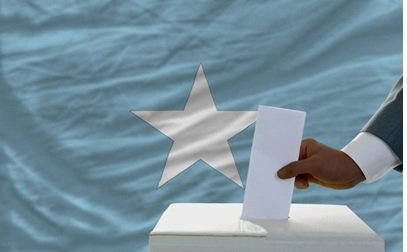
Mogadishu, Somalia (WDN) — Somalia’s already fragile electoral process is facing another serious obstacle after the presidents of Jubaland and Puntland reportedly rejected efforts to bring them to Mogadishu for the final stage of negotiations between the Federal Government and the opposition-led Future Council.
The proposed meeting, facilitated by international partners, was intended to bridge the widening political divide and produce an agreement on the country’s electoral roadmap. But the refusal by Jubaland President Ahmed Mohamed Islam (Madobe) and Puntland President Said Abdullahi Deni underscores a deeper problem: there is still no political settlement broad enough to command national confidence.
Jubaland and Puntland have questioned the reliability of proposed guarantees and are reluctant to participate in an electoral process they believe could ultimately be shaped unilaterally by Villa Somalia.
Their position reflects a growing concern that promises made during political negotiations may not provide sufficient protection once an electoral timetable is formally adopted.
Why the Guarantees Matter
The disagreement is not simply about whether leaders should travel to Mogadishu. It is about whether the political commitments reached there would actually be honoured. Jubaland and Puntland reportedly want any final agreement to contain clear guarantees and to include a formal role for international partners in witnessing or supporting its implementation.
The Federal Government, by contrast, is understood to favour continuing negotiations without attaching special external guarantees to the final electoral agreement. That difference goes to the heart of Somalia’s political impasse.
A political agreement that depends entirely on assurances from the same authorities whose decisions are being contested is unlikely to convince all sides. Trust cannot be created by asking opponents to rely on promises they have already questioned.
There is another issue that must be addressed before Somalia can credibly move toward elections: the status of the South West State electoral process.
Any roadmap that leaves the disputed South West election arrangements intact risks deepening rather than resolving the crisis. If the objective is a genuinely national election, the South West process should be annulled and reconsidered within a broader political settlement accepted by the concerned parties.
The same principle should apply to Hirshabelle and Galmudug. Their elections should proceed only after the major political stakeholders reach and sign a comprehensive agreement establishing the electoral rules, guarantees, timelines and institutional responsibilities. Otherwise, Somalia risks holding elections that are technically organized but politically rejected.
No One Will Accept a Villa Somalia Controlled Election
The central lesson from Somalia’s current crisis is that an election imposed by one political centre will not automatically become a national election. No major political actor is likely to accept a sham or predetermined process designed unilaterally by Villa Somalia and presented afterward as a national consensus.
For an election to have legitimacy, the rules must be negotiated before the vote—not rewritten around the interests of whoever controls the executive institutions.
The Federal Government may argue that elections cannot be delayed indefinitely. That is true. But speed without political consensus could produce a more dangerous outcome: an election that deepens division, triggers institutional confrontation and leaves its legitimacy contested from the first day.
The constitutional impasse must be part of the deal. The electoral dispute cannot be separated from Somalia’s unresolved constitutional crisis.
Questions surrounding constitutional amendments, the distribution of powers between the Federal Government and Federal Member States, the mandate and authority of national institutions, and the legal framework governing elections must be addressed alongside the electoral roadmap.
Holding elections while leaving those fundamental questions unresolved would merely postpone the crisis. A durable settlement therefore requires one political package: an agreed electoral framework, a mutually accepted constitutional process and clear guarantees for implementation.
What a Credible Roadmap Would Require
For the electoral process to regain credibility, the concerned political forces should agree on several basic principles:
- Annul and reconsider the disputed South West election process.
- Hold Hirshabelle and Galmudug elections only after a comprehensive political agreement is reached and signed by all major stakeholders.
- Establish clear and mutually accepted electoral rules and timelines.
- Resolve the outstanding constitutional disagreements through an agreed process.
- Provide credible guarantees for implementation and dispute resolution.
- Ensure that no single institution or political faction can unilaterally control the electoral process.
International partners can facilitate, witness and support such an agreement, but the settlement must ultimately be owned by Somalis.
President Hassan Sheikh Mohamud’s administration has repeatedly presented dialogue and elections as the path out of Somalia’s political crisis. But the growing reluctance of key Federal Member States to rely on government assurances illustrates the central problem: political promises have lost much of their credibility.
The answer is not another round of verbal commitments. Somalia needs a written, signed and enforceable political settlement in which every major stakeholder knows the rules before the electoral process begins.
Without that, the country risks moving from a constitutional impasse into an electoral confrontation. The choice before Somalia is therefore stark: negotiate a genuine national agreement and hold elections that the major political forces can accept—or proceed with a process designed in Villa Somalia and face another disputed election whose legitimacy may be rejected before the ballots are even counted.
Somalia does not need an election merely because a timetable has been announced. It needs an election whose rules are accepted, whose constitutional foundation is agreed, whose process is transparent and whose outcome the country can live with.
WardheerNews