
By Ali A. Warsama,
Minister of Energy, Water Resources and Minerals, SSC-Khaatumo State of Somalia
Abstract
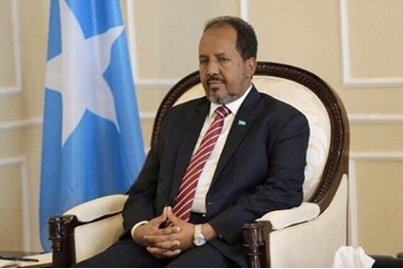
Somalia, a country long affected by state collapse, insecurity, and political fragmentation, is undergoing a critical transformation under the leadership of President Hassan Sheikh Mohamud. Re-elected in 2022, President Mohamud has prioritized national reconciliation, institution-building, and the restoration of democratic governance. Central to his political agenda are the development of political parties and the reintroduction of universal suffrage Somalia’s first one person, one vote election since 1969. This article examines how President Mohamud is laying the foundations for a democratic and stable Somalia, assessing the potential of these reforms to contribute to long-term peace and prosperity.
Introduction
Somalia’s political history is characterized by a brief democratic experiment in the 1960s, followed by a military dictatorship, civil war, and three decades of state fragility. The last time Somalia conducted a one person, one vote election was in 1969, prior to the military coup led by General Mohamed Siad Barre. Since the collapse of the Somali state in 1991, governance has been shaped by transitional arrangements, clan-based power sharing, and externally mediated processes.
President Hassan Sheikh Mohamud, who was first elected in 2012 and returned to office in 2022, has signaled a new chapter. His government aims to break the cycle of political dysfunction by advancing institutional reforms, promoting political pluralism, and committing to a credible electoral process based on direct voting. These developments signify a major turning point in Somalia’s trajectory toward democratic governance.
The Importance of Political Parties in Democratic Consolidation
Effective political parties are essential to democratic systems, providing a platform for political competition, policy articulation, and citizen representation (Lipset & Rokkan, 1967). In Somalia, however, the dominance of clan-based representation through the 4.5 formula has impeded the growth of national, ideologically driven parties.
President Mohamud’s administration is actively working to change this dynamic. In cooperation with the National Independent Electoral Commission (NIEC), the government has initiated a political party registration process to shift away from identity-based politics. The objective is to build a multi-party democracy where political organizations reflect policy platforms rather than clan loyalties (Institute for Security Studies, 2023).
By encouraging the formation of political parties, the President is promoting inclusivity, national unity, and accountability critical ingredients for sustainable democracy in Somalia.
Reviving One Person, One Vote Elections
President Mohamud’s most ambitious reform is the commitment to reintroduce universal suffrage. The Somali electoral system has, since 2000, relied on indirect elections facilitated by clan elders and electoral colleges. While this has offered a pragmatic approach in a fragile post-conflict setting, it has excluded many Somalis from participating directly in selecting their leaders.
President Mohamud aims to hold one person, one vote elections by 2026. This initiative involves several strategic steps:
Voter registration infrastructure: Building the technical capacity to manage a national electoral roll.
Civic education: Informing citizens of their rights and responsibilities in a democratic system.
Electoral law reform: Creating a legal framework for direct elections.
Security measures: Ensuring safe electoral processes, particularly in regions vulnerable to al-Shabaab.
The President’s approach is grounded in democratic theory, which holds that legitimacy arises from the consent of the governed (Dahl, 1971). A popular vote is not only a symbol of democratic maturity but a practical means of reinforcing government credibility and citizen trust.
Federalism, Inclusion, and National Unity
Somalia’s federal model remains a work in progress. Relations between the Federal Government of Somalia (FGS) and Federal Member States (FMS) have often been marked by tension and competition for power and resources. President Mohamud’s second term has been characterized by efforts to improve coordination and build consensus around national priorities, including security sector reform, constitutional review, and resource sharing.
The President’s support for the recognition and engagement of emerging administrations—such as SSC-Khaatumo—is indicative of his inclusive approach. Federalism, if properly managed, can accommodate diversity while promoting unity (Elazar, 1987). President Mohamud’s leadership shows a commitment to a more balanced and participatory form of governance.
Leadership for Peace and Stability
President Mohamud’s philosophy of leadership is grounded in reconciliation, civic engagement, and peacebuilding. His approach emphasizes consensus-driven dialogue, particularly with civil society, religious leaders, and marginalized communities. He has also initiated outreach to armed groups willing to pursue peaceful integration, while strengthening the security sector to combat terrorism and organized crime.
Mohamud’s leadership has contributed to a political environment more conducive to reform, despite persistent challenges. His track record includes initiating the National Consultative Council, restoring ties with regional leaders, and championing Somalia’s debt relief under the Heavily Indebted Poor Countries (HIPC) Initiative (World Bank, 2023).
Challenges and Opportunities
While President Mohamud’s vision for democracy is ambitious, its realization is contingent upon several factors:
Security: Al-Shabaab remains a threat to electoral stability.
Institutional capacity: Electoral bodies need continued support.
Political will: Consensus among Somali elites and regions is crucial.
International support: Technical and financial aid is needed for democratic transition.
Nonetheless, the ongoing reforms offer a unique opportunity to consolidate gains made over the last decade and move Somalia beyond its fragile status.
Conclusion
President Hassan Sheikh Mohamud is guiding Somalia toward a more democratic and peaceful future. His support for political parties, commitment to one person, one vote elections, and inclusive federalism represent a significant departure from past political practices. While Somalia’s challenges are formidable, the current leadership has provided a blueprint for progress grounded in democratic principles and national unity.
If sustained, these reforms could mark a historical turning point transforming Somalia from a nation defined by conflict to one characterized by participatory governance, institutional resilience, and collective prosperity.
Ali A. Warsama, Minister of Energy, Water Resources and Minerals, SSC-Khaatumo State of Somalia
Email: aawasama@gmail.com
______
References
Dahl, R. A. (1971). Polyarchy: Participation and Opposition. Yale University Press.
Elazar, D. J. (1987). Exploring Federalism. University of Alabama Press.
Institute for Security Studies. (2023). Somalia’s political transition: Building institutions beyond clans. Retrieved from https://issafrica.org
Lipset, S. M., & Rokkan, S. (1967). Party Systems and Voter Alignments: Cross-National Perspectives. Free Press.
World Bank. (2023). Somalia Reaches HIPC Decision Point. Retrieved from https://www.worldbank.org/en/news