
By Amb. Abshir Hassan Abshir
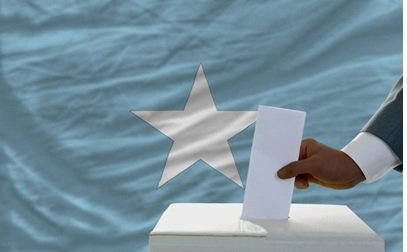
As Somalia approaches the 2026 parliamentary and presidential elections, warning signs are already visible. Political mistrust between federal and regional leaders is deepening, disagreements over the electoral model remain unresolved, and security concerns persist. Unless these issues are addressed urgently and collectively, the country risks sliding into yet another election crisis. Somalis have seen this before. When political leaders fail to agree on clear, inclusive, and constitutional election arrangements, the result is delay, contested legitimacy, and national uncertainty. In past transitions, such failures have weakened institutions and opened space for instability and external interference. The 2026 elections must break this cycle.
These elections are not merely about who occupies office. They are a test of whether Somalia can consolidate state institutions and manage political competition peacefully. No single actor; federal or regional can impose an electoral formula without undermining its credibility. Only a broadly agreed roadmap, owned by all key stakeholders, can deliver elections whose outcomes are accepted. Unity does not require uniformity. Political disagreement is normal. What Somalia urgently needs is agreement on the rules of elections that are fair, transparent, and firmly anchored in the Provisional Constitution. National interest must take precedence over short-term political advantage and clan calculations.
Somalia’s own history offers a clear democratic lesson. The country’s first president, Aden Abdulle Osman, was a committed constitutionalist, a principled democrat, and a unifier. He presided over a system that respected competitive elections and, when he lost the 1967 presidential vote, peacefully handed over power. Were he alive today, Aden Adde would almost certainly prioritise strong institutions, the rule of law, federalism, and national unity over clan or factional politics, even when it would have been politically costly. His example demonstrates that legitimacy comes from respect for the constitution and the ballot, not from manipulation or force. This is a tradition worth reclaiming.
A credible roadmap for the 2026 elections should rest on four principles:
1) Constitutionalism: all arrangements must follow the Provisional Constitution and existing political agreements.
2) Inclusivity: federal member states, political parties, women, youth, and minority communities must be meaningfully involved.
3) Realism: progress toward one-person, one-vote should continue, but in a sequenced and consensus-based manner that reflects security and logistical realities. Finally, transparency: clear timelines, independent electoral institutions, and open public communication are essential to build trust.
Turning these principles into action requires leadership. Somali leaders should urgently convene an inclusive national political conference inside the country and establish a joint technical committee to develop a detailed electoral roadmap for 2026. There must also be a public commitment that no actor will seek unconstitutional term extensions and that elections will be held on time. Independent electoral bodies and the judiciary must be protected from political interference.
Citizens also have a role to play. Communities should demand dialogue over boycott and ballots over bullets. Elders, religious leaders, women’s organisations, and youth movements can help safeguard the process by insisting on inclusion, accountability, and peaceful participation.
As a Somali who has served the nation, I believe the choice before us is clear. If Somalis unite now around a clear, inclusive, and constitutional roadmap for the 2026 elections, the country can turn a page toward stability and democratic order. Somalia has done this before, it can and should do it again.
Amb. Abshir H Abshir
Email: Amb.abshir@gmail.com
————–
Amb. Abshir is a former Member of the Federal Parliament.