
Eng Mohamed Ali Mirreh
In 2015, I arrived at Berbera after returning to Somalia for the first time since leaving Somalia in the early 1970s to pursue my studies abroad. The journey back was deeply personal—not only a homecoming filled with nostalgia, but also the fulfillment of a mission entrusted to me: to help establish a small utility company in my hometown.
The centrepiece of this effort was the development of a solar power plant in Lasanod—an initiative designed to reduce reliance on costly diesel generators through a solar–diesel hybrid system, which I named Tamarta Isku Sidkan in Somali. This pioneering project, the first of its kind in Somalia, became a model that inspired similar initiatives across the country. In the years that followed, I had the privilege of leading several larger projects in multiple cities, further advancing renewable energy solutions. For me, these endeavours were more than technical achievements; they were a modest but meaningful way of giving back to a nation that had once invested in my education through the sacrifices of its people.
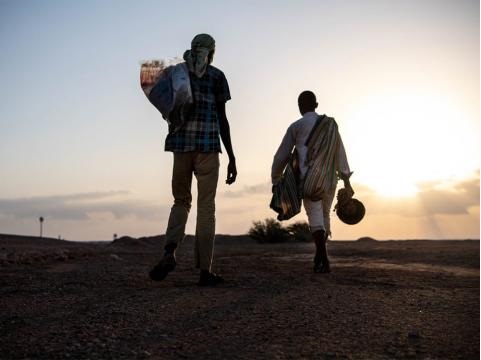
Upon leaving the Berbera airport, I was warmly received by relatives and we set out by car toward Lasanod, the capital of now, the newly formed Northeast State. Along the road, I observed groups of men and women trekking in long columns. They were identified as Oromo migrants from Ethiopia, heading toward Bosaso—a coastal city some 500 kilometers or more from Berbera—after traveling more than 2,000 kilometers on foot. I was told their intention was to reach the Arabian Gulf by sea. Yet I was skeptical. Their resilience and demeanor suggested a hardened background, possibly military.
With subsequent visits to Somalia, twice a year since that first return, I noticed this movement of people intensifying. Oromo communities appeared in greater numbers across Somali cities, gradually blending into society. Many of their descendants are now in their thirties, fluent in Somali, and indistinguishable in appearance from ethnic Somalis. Alarmingly, some now assert that Somali cities such as Hargeisa are their ancestral lands—and it is only a matter of time before similar claims emerge elsewhere.
If such trend goes unchallenged, it is not unthinkable that demands for territorial autonomy, or even a referendum, could follow. History offers precedents: in Malaysia, Chinese migration facilitated under British rule culminated in the creation of Singapore in 1965. Somalia cannot afford to ignore the parallels.
Obviously, this phenomenon is not ordinary migration. It reflects a deliberate, long-standing Ethiopian strategy—rooted in history and geopolitics—to expand influence over Somalia. The approach has unfolded in phases: first, through political manipulation, when Somali leaders were persuaded to adopt federalism after the collapse of the central government in 1990; and now, through demographic shifts that gradually reshape Somalia’s social and cultural fabric.
Somalia is not facing only this problem. There are other equally alarming problems. Somalia’s natural wealth—its marine resources, minerals, and strategic location—are being exploited by foreign powers, often with the complicity of corrupt local leaders.
Still worse, the country is being compartmentalised along clan-based entities that masquerade as states but function as pseudo-states. Nationalism has withered, and the collective will to preserve Somalia’s unity is fading. The prevalence of such problems pushes thousands of young people to risk their lives crossing deserts and seas in search of refuge abroad, with many perishing along the way.
If unchecked, Somalia risks disappearing from the world map—not through sudden collapse, but through gradual erosion, both internal and external. While leadership is often blamed for this crisis, the deeper truth is more sobering: the problem originates within Somali society itself. Leaders reflect the divisions, clannishness, and collective failures of their people. As the saying goes, every nation gets the leadership it deserves.
For Somalia to survive and thrive, a profound change of mindset is essential. We must break free from the destructive cycle of clan politics and rekindle a shared national identity. Only by acknowledging our responsibility and confronting these challenges directly can we prevent Somalia’s slow disintegration and preserve its rightful place among nations.
This transformation must be led by young Somalis, who comprise more than 70 percent of the population, both at home and across the diaspora. This generation is better educated and more globally connected than those before it. History reminds us of the sacrifices of leaders such as Sayid Mohamed Abdulle Hassan and the Somali Youth League pioneers, who fought tirelessly for independence. Today, what is required is the rebirth of such patriotism—a new generation willing to rise above division, reclaim national dignity, and safeguard Somalia’s future.
Eng Mohamed Ali Mirreh
Email: m.mmirreh@gmail.com