

Baidoa is the epicentre of a humanitarian crisis. Vital lifelines keeping infants alive may soon be forced to close, thanks to aid cuts.
Liz Cookman in Baido; The Telegraph
At a stabilisation centre in Baidoa, southern Somalia, Amina anxiously watches over her one-year-old son, Shariif, who is suffering from a deadly combination of severe malnutrition and multiple health complications.
Skinny and underdeveloped for his age, Shariif sits blank-faced and still on Amina’s lap, a pale mosquito net hanging over them like a cloud.
“He was so sick, I thought I would have to give up on him,” Amina, 22, says. She walked several miles from a displacement camp to get medical help.
“I prepared myself for the worst,” she says. “I prayed to God.”
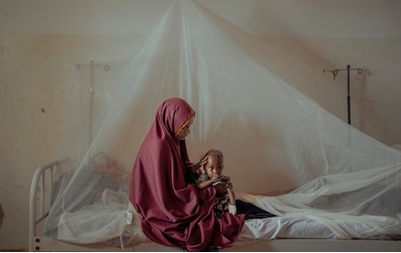
are treated at a clinic in Baidoa, Somalia Credit: Emre Caylak
After twelve days of treatment, Shariif is now ready to be discharged. Doctors say they were able to save him only because of the specialised care offered at this main stabilisation centre.
Once known as the “City of Death”, Baidoa is the epicentre of Somalia’s neglected and under-reported humanitarian crisis. When rains fail, or funding falters, the fragile infrastructure and sprawling camps quickly become the front line of hunger.
All along the colourless walls of the clinic, there are metal beds with mothers wrapped in long, vibrant hijabs, holding tiny malnourished infants.
The children are those too sick to be treated anywhere else – suffering from severe malnutrition coupled with deadly illnesses like diarrhoea, pneumonia, malaria or anaemia.
Yet, in the coming weeks, this vital lifeline may close its doors.
It is one of more than 120 health facilities across Somalia that are at risk due to cuts in international aid, according to Save the Children. Some have already shut, services have been scaled back, and supplies of medicine and therapeutic food are running perilously low.
President Donald Trump’s administration abruptly froze large chunks of foreign aid in January and it was fragile places like Somalia that suffered first. Lifesaving projects were shuttered almost overnight, with vulnerable women and children paying the heaviest price.
The US Agency for International Development (USAID) was the world’s biggest aid donor, accounting for around 40 per cent of the global humanitarian system and a fifth of development assistance.
The Lancet warned last month that the cuts could cause more than 14 million preventable deaths by 2030 – a third of them among children under five.
For those who were already living on the edge, the threat is real and immediate.
Shariif has already been admitted twice in the past few months for lifesaving nutritional care.
“He is much stronger than he was, but he needs therapy food,” said Dr Mustafa Mohammed. “After this month, I don’t know if he will have it.”
While Trump’s cuts have been felt deeply across the globe, Somalia is among the most aid-dependent countries on Earth.
The country lies at a grim crossroads of deep poverty, protracted conflict and climate change, which brings both severe droughts and floods.
Read the full article: Sickness and starvation stalk Somalia’s children in the ‘City of Death’.
Source: The Telegraph